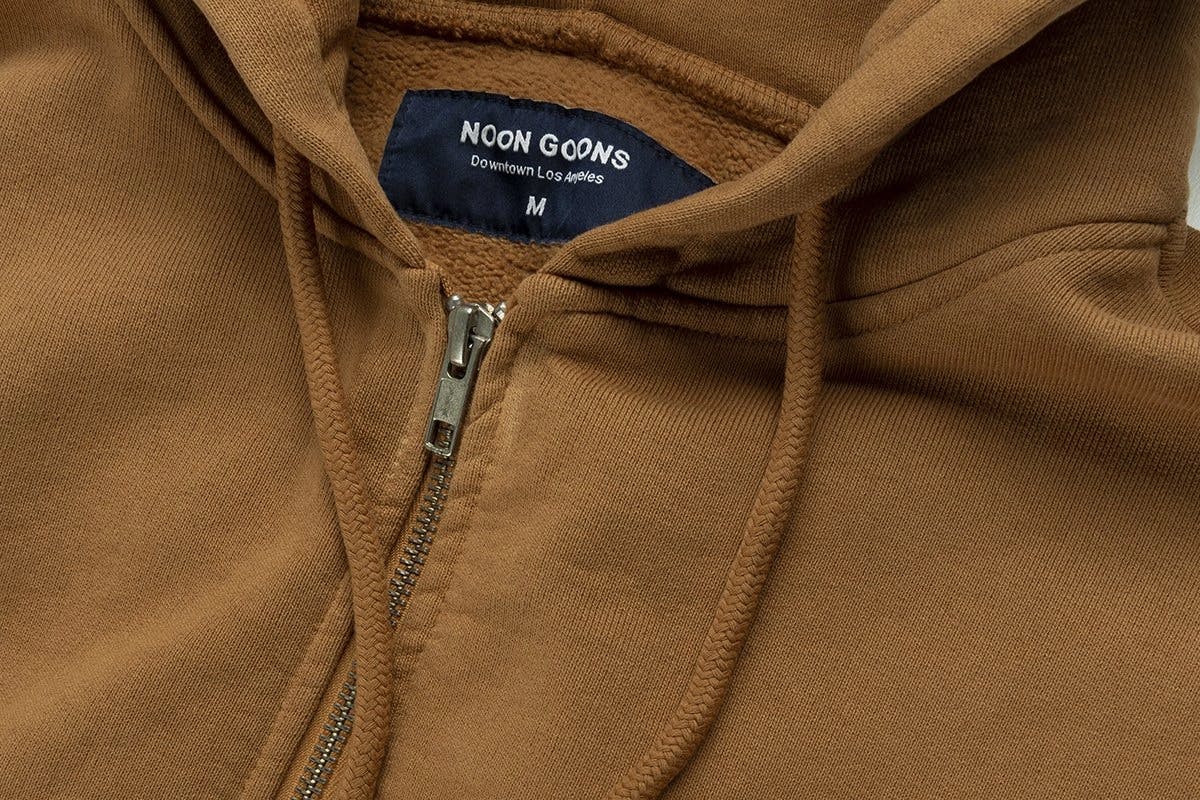
You probably have three of them. Maybe four. One is the "gym" hoodie that smells faintly of old pre-workout no matter how many times you wash it. Another is the high-end one you bought because a YouTuber said it was "essential," and the last is the raggedy grey marl one your girlfriend or wife keeps trying to throw away. Zip up hoodies for mens are arguably the most over-worked, under-appreciated items in a modern wardrobe. It's the Swiss Army knife of clothes. But honestly? Most of them look like garbage after six months.
Fabric matters more than the brand name on the chest. If you're buying a 100% polyester zip-up from a fast-fashion giant, you're basically wearing a plastic bag that traps sweat and pills if you look at it too hard. Cotton is king, but even then, it's not all the same. You've got your ringspun cotton, your French Terry, and your heavy fleece. Each serves a purpose, yet we often use them interchangeably, which is why you end up shivering at a breezy outdoor bar or overheating in the mall.
The mid-layer crisis: Is it a jacket or a shirt?
The weird thing about the zip-up is its identity crisis. Pull-over hoodies are clearly "athleisure" or loungewear. But the zip-up? It's a transitional tool. When you're looking at zip up hoodies for mens, you have to decide if you want it to act like a lightweight jacket or a cozy base.
High-end designers like Brunello Cucinelli or even more accessible "premium" brands like Reignchamp have spent years perfecting the "structured" hoodie. This isn't the saggy, baggy thing you wore in middle school. It’s got a double zipper—crucial for sitting down without the fabric bunching up into a weird belly-pouch—and a hood that actually stays up.
Cheap hoodies use single-track zippers that wavy-up after one wash. It’s annoying. You know the look—the "bacon zipper." It happens because the cotton shrinks but the plastic or metal zipper tape doesn't. To avoid this, look for brands that pre-wash their fabrics or use high-quality YKK hardware. Honestly, if a brand doesn't brag about their zippers, they’re probably using the cheap stuff.
Heavyweight vs. Lightweight: The GSM factor
If you want to sound like you know what you’re talking about, check the GSM. That stands for Grams per Square Meter.
- 200-300 GSM: This is your "t-shirt" weight hoodie. Good for a summer evening or layering under a denim jacket. It won't keep you warm in a drafty room.
- 350-450 GSM: The sweet spot. This is what most "quality" zip up hoodies for mens aim for. It feels substantial. It hangs off the shoulders instead of clinging to them.
- 500+ GSM: The "tank" category. Brands like Camber USA or Iron Heart make these. They are stiff. They are heavy. They can practically stand up on their own.
Some people hate the weight. I love it. A heavy hoodie feels like armor. It hides the fact that maybe you skipped the gym for three weeks. It provides a silhouette that actually looks intentional rather than lazy.
Why the "Perfect Fit" is a lie
There is no "perfect" fit because your body changes and so does the trend cycle. Right now, we’re seeing a massive shift away from the "slim-fit" era of the 2010s. Remember when everything had to be skin-tight? That’s over. The current vibe is "relaxed but cropped."
What does that mean for you? It means the shoulder seams should drop slightly past your actual shoulder, but the waistband shouldn't hang down past your fly. If it’s too long, you look shorter. If it’s too tight, you look like you’re wearing a wet suit.
Check the "ribbing" on the cuffs and hem. This is a massive tell for quality. If the ribbing is flimsy and loses its stretch after you pull your sleeves up once, the whole garment is doomed. You want "1x1" or "2x2" heavy ribbing with a bit of spandex (elastane) mixed in so it snaps back. Nothing looks sadder than a zip-up hoodie with sleeves that won't stay pushed up your forearms.
The color trap
Everyone goes for black. It’s safe. It hides coffee stains. But black fades. After ten washes, your "crisp" black hoodie is now a weird, dusty charcoal color.
If you’re going for longevity in zip up hoodies for mens, look at "Heather Grey" or "Navy." Heather Grey is the GOAT (Greatest of All Time) because it’s a mix of different colored fibers. It hides lint, it hides wear, and it looks better as it ages. Navy is a close second, though it also suffers from the "fade" issue if you don't wash it inside out on cold.
And for the love of everything, stop washing your hoodies with towels. The friction from the heavy towels acts like sandpaper on the soft cotton fibers of your hoodie, causing that "pilling" (those tiny little balls of fuzz) that makes a $100 hoodie look like a $5 thrift store find.
Real-world durability: What the pros wear
When you look at guys who actually work in their gear—carpenters, stagehands, photographers—they aren't wearing the trendy stuff. They’re wearing Carhartt or Dickies.
There's a reason the Carhartt Rain Defender zip-up has a cult following. It’s not just a "zip up hoodie for mens"; it’s basically a soft-shell jacket. It’s heavy, it’s water-resistant, and it has a dedicated pocket for your phone that actually keeps it from flying out when you bend over.
On the flip side, if you're in an office environment (or a "work from home" Zoom gauntlet), you probably want something from American Giant. Their "Greatest Hoodie Ever Made" marketing might be a bit much, but the construction is undeniably solid. It’s made in the USA, uses heavy-duty combed cotton, and the elbows are reinforced so they don't get those weird "bubbles" after a month of leaning on your desk.
The hood shape matters
Have you ever put on a hoodie and the hood is so small it pulls the whole jacket up when you wear it? Or it's so big you look like a medieval monk?
A good hood should be "three-piece" or "contoured." Cheaper hoodies just sew two flat pieces of fabric together. This creates a "point" at the top of your head. You look like a lawn gnome. A three-piece hood has a center panel that allows it to sit flat against your head and shoulders. It's a small detail, but it's the difference between looking "put together" and looking like you rolled out of bed.
Caring for your investment
If you've spent more than $60 on a zip-up, stop treating it like a rag. Heat is the enemy of cotton. The dryer is where hoodies go to die. It bakes the fibers, making them brittle and scratchy.
- Zip it up before washing. This prevents the metal teeth from snagging other clothes or the hoodie's own fabric.
- Turn it inside out. This protects the outer face of the fabric from friction.
- Cold water only. 4. Air dry. If you must use a dryer, use the "low heat" or "air fluff" setting.
It takes longer. It’s a pain. But your hoodie will last five years instead of five months.
Actionable steps for your next purchase
Don't just click "buy" on the first sponsored ad you see. Most of those "Instagram brands" are just dropshipping $5 blanks with a $40 markup.
- Check the fabric weight. If it doesn't list the weight (GSM or Oz), it’s probably thin.
- Look at the zipper hardware. YKK is the industry standard for a reason.
- Examine the drawstring. Cheap hoodies have flat, shoelace-style strings that fray. Quality ones use round, braided cords with metal "aglets" (the tips).
- Read the "composition" tag. Aim for at least 80% cotton. A little polyester (20%) can actually help with durability and shrinkage, but once you hit 50/50, it’s going to pill and smell.
Go to a physical store if you can. Feel the inside. Is it "brushed fleece" (fuzzy) or "French Terry" (loops)? Brushed fleece is warmer but can shed lint. French Terry is more breathable and better for layering. Choose based on your climate, not just the color.
If you're in a humid place like Florida or Houston, a heavyweight 500 GSM fleece is a mistake. You'll never wear it. If you're in Chicago or NYC, that thin "fashion" hoodie is useless four months out of the year. Match the gear to your environment.