Wrestling with a mattress is a special kind of hell. You've probably been there: sweating, swearing, and breaking a fingernail while trying to hook that fourth corner of a stubborn cotton sheet over a heavy hybrid mattress. It's honestly ridiculous. We have self-driving cars and instant delivery for everything, yet we still struggle with a piece of fabric designed in the 1950s. This is exactly why the zip up fitted sheet has basically become a cult favorite for people who are tired of the "corner snap-back" routine.
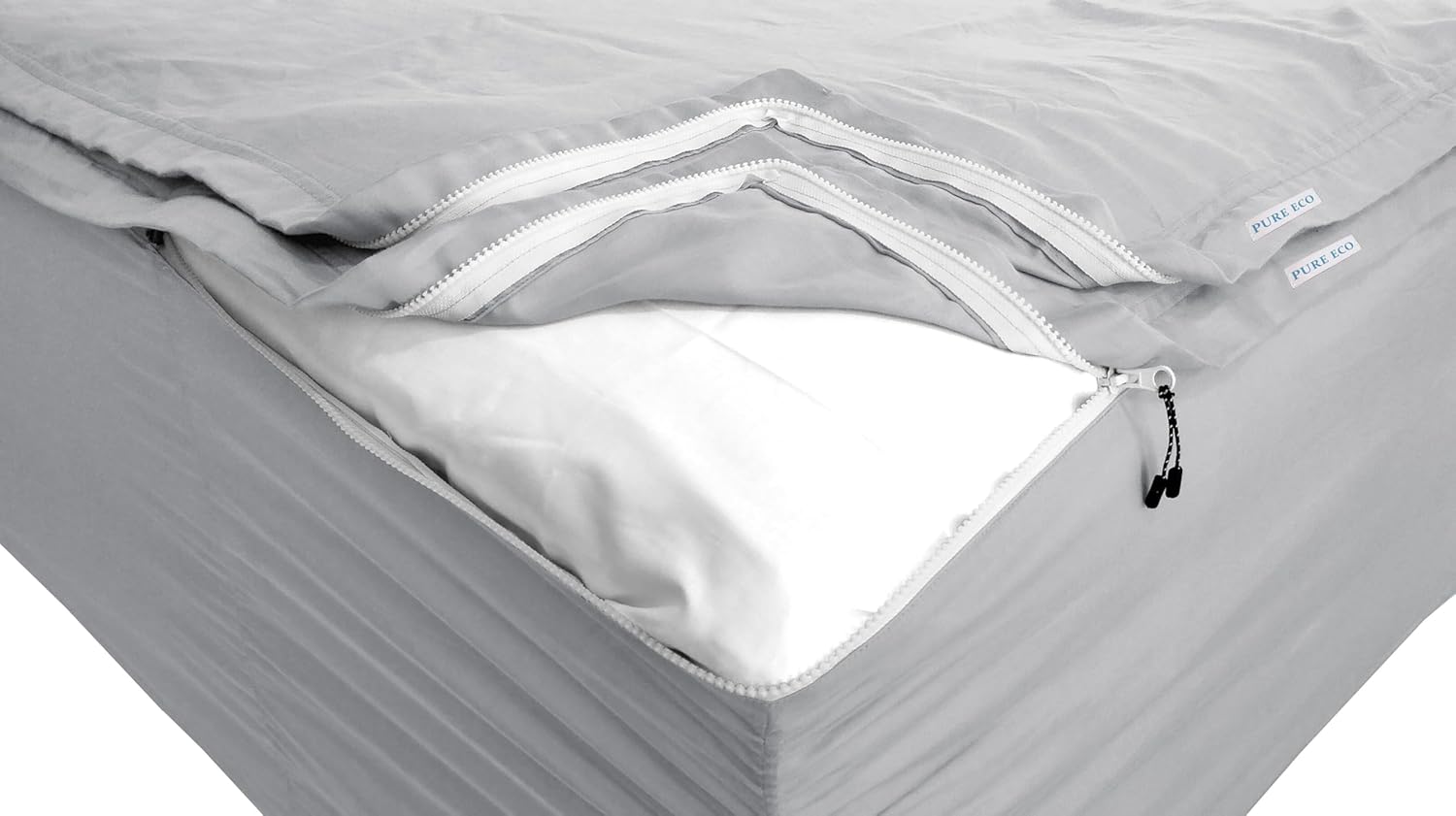
Let's be real. Standard fitted sheets are flawed by design. They rely on cheap elastic that loses its grip after twenty washes, leading to that annoying bunching in the middle of the night. A zip up fitted sheet changes the geometry of the bed. Instead of a single piece of fabric that you have to stretch and tuck, it’s a two-part system. You have a base that stays on the mattress—sort of like a permanent wrap—and a top part that just zips off when it’s time for laundry.
The physics of why your sheets keep popping off
Traditional sheets fail because of mattress depth. In the last decade, mattress companies like Casper, Purple, and Saatva started making beds much thicker, often adding pillow tops that push the height to 14 or 16 inches. Most "deep pocket" sheets are just lying to you. They have the depth, but not the tension. When you sleep, you move. That movement creates lateral force. Since a standard sheet is only held by the friction of a small elastic band under the corner, it eventually gives way.
A zip up fitted sheet handles this tension differently. Because the base encases the sides of the mattress fully, often using a sturdy spandex or heavy-duty knit, it creates a literal anchor. You aren't relying on a tiny strip of rubber to hold everything together. You're relying on the mechanical strength of a zipper.
Stop lifting your mattress every Sunday
The health aspect of this is actually underrated. Think about the physical toll of lifting a 100-pound king-sized mattress every time you want clean linens. For people with chronic back pain, arthritis, or even just a tight bedroom space where you can't easily reach the headboard, it's a nightmare. Occupational therapists often recommend "adaptive bedding" for seniors, but honestly, why should everyone else suffer?
I talked to a friend who uses a brand called QuickZip—they’re kind of the pioneers in this space—and she mentioned how it changed her guest room prep. Instead of the 10-minute struggle, it’s a 30-second zip. It’s the difference between a chore you dread and a task that’s barely a blip on your radar.
What about the "feel" of the zipper?
This is the biggest hang-up people have. You're probably thinking, "I don't want to feel a cold metal zipper against my leg at 3 AM." That's a fair point, but the engineering has mostly solved it. High-quality zip up fitted sheets place the zipper track along the side of the mattress, usually an inch or two down from the top edge. There’s almost always a fabric "garage" or a wide flap that covers the zipper teeth. Unless you’re intentionally jamming your toes into the edge of the bed, you’ll never know it’s there.
Material matters more than the zip itself
You can find these in all the standard fabrics, but you need to be picky.
- Long-staple cotton: This is the gold standard. It doesn't pill as easily as the cheap stuff you find at big-box stores.
- Tencel or Bamboo: If you’re a hot sleeper, go this route. It’s more slippery, which actually makes the zipping process even smoother.
- Flannel: Great for winter, but be careful with the zipper. Flannel sheds lint, and you don't want that getting stuck in the teeth of the zip.
One thing people get wrong is thinking they can just buy any "zippered mattress protector" and use it as a sheet. Don't do that. A protector is designed for hygiene, usually with a plastic-like polyurethane layer. It’s loud. It’s hot. A dedicated zip up fitted sheet is designed for skin contact.
The environmental ripple effect
It sounds a bit "extra," but these systems can actually last longer than traditional sets. When a normal fitted sheet gets a hole or the elastic snaps, the whole thing is trash. With a zip system, the base—which doesn't see much wear and tear—lasts practically forever. You only really need to replace the "zip-on" top portion. It’s a modular approach to bedding that reduces textile waste, even if only by a little bit.
Dealing with the "proprietery" problem
Here is the catch: once you buy into a specific brand's zip system, you're usually locked in. A QuickZip top won't fit a different brand's base because zipper lengths and tooth sizes vary. It’s like the Apple vs. Android of the bedroom. Before you commit, make sure the company offers the colors and thread counts you actually like. Check their "open stock" availability too. You want to be able to buy just the top sheets without buying a whole new base every time.
How to wash them without breaking the zipper
Laundry is where these things can go south if you're reckless.
- Zip the sheet back onto itself or at least close the zipper before throwing it in the machine. This prevents the metal teeth from snagging other clothes or getting bent in the agitator.
- Avoid high heat. Excessive heat can warp the nylon or plastic components of the zipper.
- Check for hair. If you have pets, hair can get trapped in the zipper track. A quick brush-off before washing keeps things moving smoothly.
Making the switch: A practical plan
If you're ready to stop the mattress wrestling match, start with one bed. Don't go out and replace every sheet in the house immediately.
- Measure your mattress height accurately. Don't guess. Use a ruler. If your mattress is 12 inches and you buy a 16-inch base, it’ll be baggy and ruin the whole "fitted" feel.
- Look for YKK zippers. They are the industry standard for a reason. If a brand doesn't specify the zipper quality, it’s probably a cheap knock-off that will split within six months.
- Try the "starter pack." Most companies sell a base and two tops. This is the sweet spot because you can have one top in the wash while the other is on the bed.
Honestly, the zip up fitted sheet is one of those things you don't realize you need until you use it once. Then, looking back at your old elastic sheets feels like looking back at dial-up internet. It’s just an old, frustrating way of doing things that we’ve collectively accepted for too long.
The real value isn't just in the time saved. It's the lack of annoyance. It's not having to wake up at 4 AM because the corner of the sheet snapped off and is now tickling your shoulder. It's about a bed that actually stays made, looking crisp and sharp without the military-style tucking. Once the base is on, the hard work is over for good.
Actionable next steps for better sleep
- Audit your current mattress depth: Use a tape measure from the bottom seam to the top edge to ensure you buy a base that actually fits.
- Prioritize the "Primary" bed: Switch your own bed first, especially if you have a heavy mattress or limited mobility.
- Clear the track: Before zipping a new sheet on, ensure your mattress protector (if you use one) is tucked flat so it doesn't snag the zipper mechanism.
- Invest in a spare top: The whole benefit is the quick change, so having a second zip-off top ready to go is what makes the system truly effective.