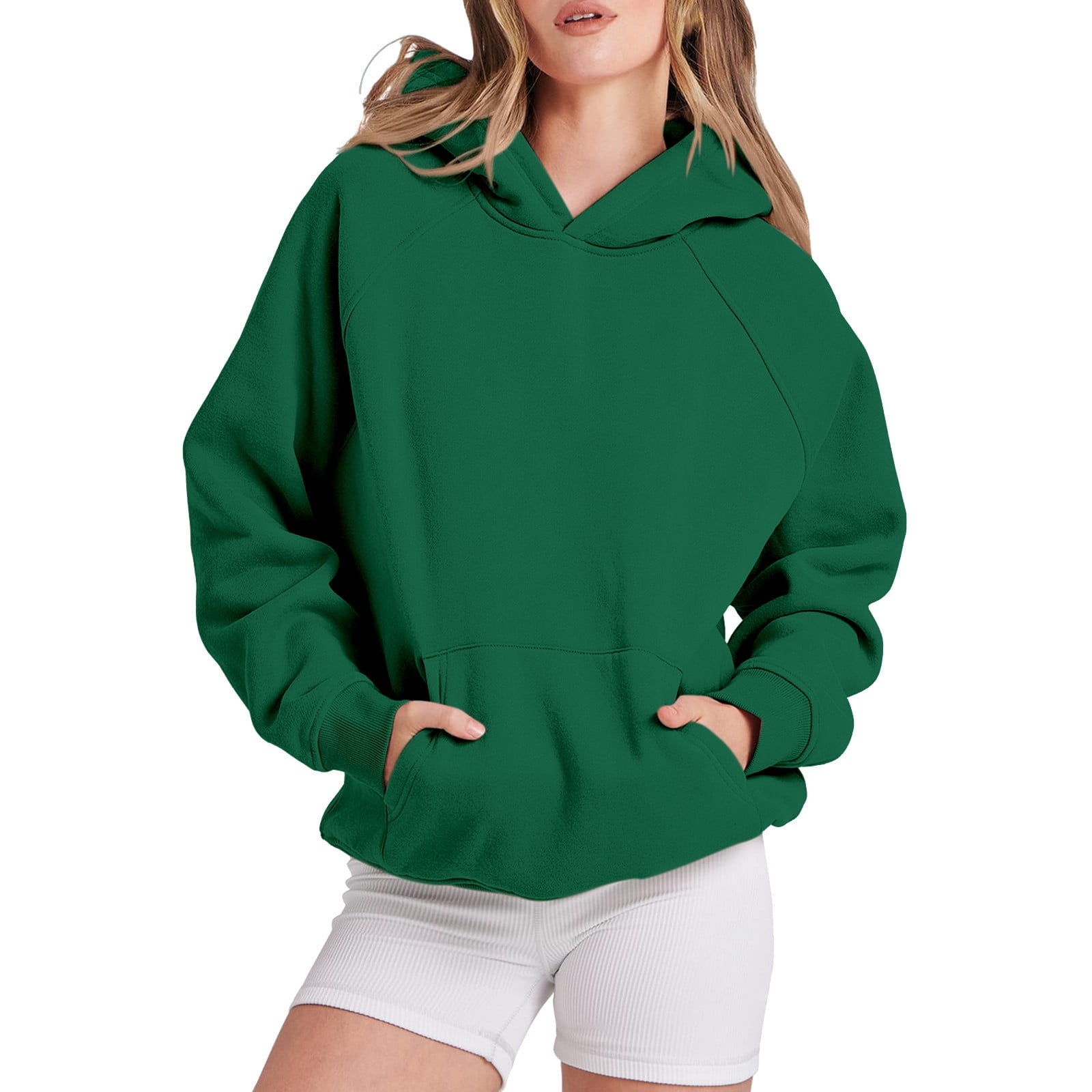
You’ve probably got three of them sitting in your closet right now. Maybe one is a raggedy grey thing you only wear to paint the spare bedroom, and another is a sleek, black technical fleece you bought for hiking but mostly wear to the grocery store. We’re talking about zip sweatshirts for women, a garment so ubiquitous it’s almost invisible. But here’s the thing: most people treat them as an afterthought. They buy the cheapest one on the rack and then wonder why they look like they’re wearing a sack three months later.
It's weird.
We obsess over the perfect denim or the "it" bag of the season, yet the item we actually live in—the zip-up—gets zero respect. Honestly, finding a good one is harder than it looks. You want something that doesn't pill after two washes, doesn't have a zipper that waves like a snake after you dry it, and actually fits a human woman’s body instead of a box.
The Great Fabric Lie: Why Your Sweatshirt Feels Like Plastic
Let's get real about materials. Most big-box retailers sell "fleece" that is basically just spun oil. It’s polyester. While polyester has its place in performance gear, wearing a 100% synthetic zip sweatshirt is a recipe for sweatiness and, eventually, that weird smell that never quite washes out.
If you want something that lasts, you have to look at the GSM (grams per square meter). This is a nerd metric, but it matters. A high-quality zip sweatshirt for women usually sits between 300 and 400 GSM. Anything lower feels flimsy; anything higher starts to feel like you’re wearing a weighted blanket.
French Terry vs. Brushed Fleece
People use these terms interchangeably. They shouldn't. French Terry has those little loops on the inside—it’s breathable and great for layering. Brushed fleece is what happens when those loops are shredded to create that fuzzy, soft feeling.
- French Terry: Better for spring/summer or "active" days. It doesn't trap as much heat.
- Brushed Fleece: The holy grail for winter, but be warned: cheap brushed fleece sheds like a golden retriever on your white t-shirts.
Cotton is king here, but a little bit of polyester (maybe 10-20%) actually helps with "recovery." That’s a fancy way of saying your elbows won't look like saggy elephant skin after two hours of sitting at a desk. Brands like American Giant became famous specifically because they obsessed over this "dry" heavy cotton feel that feels like armor. Conversely, brands like Lululemon use Scuba fabrics—a blend of cotton, polyester, and elastane—to get that structured, almost architectural look that stays crisp.
The Zipper Problem Nobody Mentions
Have you ever noticed how some zip sweatshirts get that "bacon" look? You know, when the fabric around the zipper ripples and waves? That’s not a design choice. It’s a manufacturing failure. Usually, it happens because the zipper tape (the fabric part the metal teeth are attached to) shrinks at a different rate than the cotton body of the sweatshirt.
When you’re shopping, look for YKK zippers. It sounds like a small detail, but YKK is the industry gold standard for a reason. If a brand is using a generic, nameless plastic zipper, they probably cut corners on the stitching and the fabric weight, too.
Also, consider the "two-way" zip. This is a game changer for women’s proportions. If you’re sitting down, you can unzip the bottom an inch or two so the fabric doesn't bunch up around your hips and make you look like a marshmallow. It’s a small functional tweak that separates the "cheap hoodies" from the "wardrobe staples."
Styling: Moving Beyond the "I Give Up" Aesthetic
For a long time, the zip-up was the uniform of the "I’m just running to the mailbox" vibe. That’s dead. In 2026, the zip sweatshirt for women has been reclaimed by the "quiet luxury" and "elevated basics" movement.
The silhouette has shifted. We’re seeing a massive move toward the "cropped but oversized" look. It’s about balance. If you’re wearing baggy trousers or wide-leg jeans, a massive, hip-length zip-up makes you look like a square. A cropped version—hitting right at the waistband—defines your shape without losing the comfort.
The High-Low Mix
One of the coolest ways to wear a zip-up right now is under a structured wool overcoat. It’s that "Model Off Duty" look that actually works for real people. You put on your nice trousers, a crisp white tee, a neutral-toned zip sweatshirt, and then throw a long coat over the top. It’s practical because you can shed layers as you move from the cold street to a heated office or cafe.
Color Theory and Longevity
Stop buying neon. Seriously. Unless you’re a professional runner, neon zip-ups are hard to style and they date instantly. If you want the most mileage out of your money, stick to the "Core Four":
- Heather Grey: The original. It hides lint and looks better as it ages.
- Navy: More professional than black but just as slimming.
- Oatmeal/Cream: Looks incredibly expensive if paired with matching joggers.
- Forest Green: A "neutral" that isn't boring.
Why "Oversized" Doesn't Mean "Huge"
There is a massive difference between a sweatshirt that is designed to be oversized and a sweatshirt that is just two sizes too big for you.
When a designer makes an oversized zip-up, they usually drop the shoulder seams but keep the sleeve length manageable. They might taper the waist slightly so it doesn't flare out like a bell. If you just buy a 2XL when you're a Medium, the proportions will be all wrong. The neck will be too wide, the sleeves will hang past your fingertips, and the bulk will sit in the wrong places.
Look for "boyfriend fit" or "relaxed" labels, but stick close to your actual size. The magic is in the drape of the fabric, not just the sheer volume of material.
The Longevity Myth: How to Not Ruin It
You buy a $100 zip sweatshirt for women and then you toss it in the dryer on "High Heat."
Stop.
Heat is the enemy of elasticity. It fries the tiny fibers that give your sweatshirt its shape. If you want your zip-up to stay soft and keep its structure, wash it on cold and hang it to dry. If you absolutely must use the dryer, use the "Air Fluff" or "Low" setting. And for the love of everything, zip it up before you put it in the wash. Those metal teeth act like a saw against your other clothes during the spin cycle.
Real Talk on Pricing
Is a $150 sweatshirt better than a $30 one? Honestly, usually yes, but only up to a point.
At the $30 mark, you’re getting high polyester counts and "fast fashion" construction—expect it to last one season. At the $80-$120 range, you’re paying for better cotton, ethical labor (usually), and zippers that won't break. Once you get above $250, you’re mostly paying for a brand name or specialized materials like cashmere-infused cotton.
For most women, the "sweet spot" is right around $90. That’s where you find the best durability-to-style ratio. Brands like Carhartt WIP (the fashion-forward arm of the workwear brand) or Everlane hit this mark consistently. They understand that a zip-up needs to be a workhorse, not just a fashion statement.
Actionable Steps for Your Next Purchase
Don't just click "buy" on the first thing you see. If you're looking for a new staple, follow this checklist to ensure you aren't wasting your money.
- Check the Tag: Aim for at least 80% cotton. If it's 100% polyester and isn't for the gym, put it back.
- The Weight Test: Hold the sweatshirt by the shoulders. Does it have "heft"? If it feels light like a t-shirt, it won't hold its shape after three washes.
- Zipper Check: Look at the base of the zipper. Is it reinforced with extra stitching? Does it glide smoothly without catching on the fabric?
- Inside Out: Turn it inside out. Look at the seams. If there are loose threads everywhere, the quality control is low, and the seams will likely puckering or unraveling soon.
- Proportion Play: Decide if this is for layering under things or over things. If it's for layering under, look for a "slim" or "standard" fit. If it's your outer layer, go for the "relaxed" or "heavyweight" options.
A great zip sweatshirt isn't just "loungewear." It's a tool. It's the thing you grab when the office AC is too high, the thing you wear to the airport, and the thing you throw on for a sunset walk. When you find the right one—the right weight, the right zipper, the right fit—you'll wonder why you ever settled for those cheap, pill-prone versions in the first place. Quality matters, even in the "basic" stuff. Especially in the basic stuff.