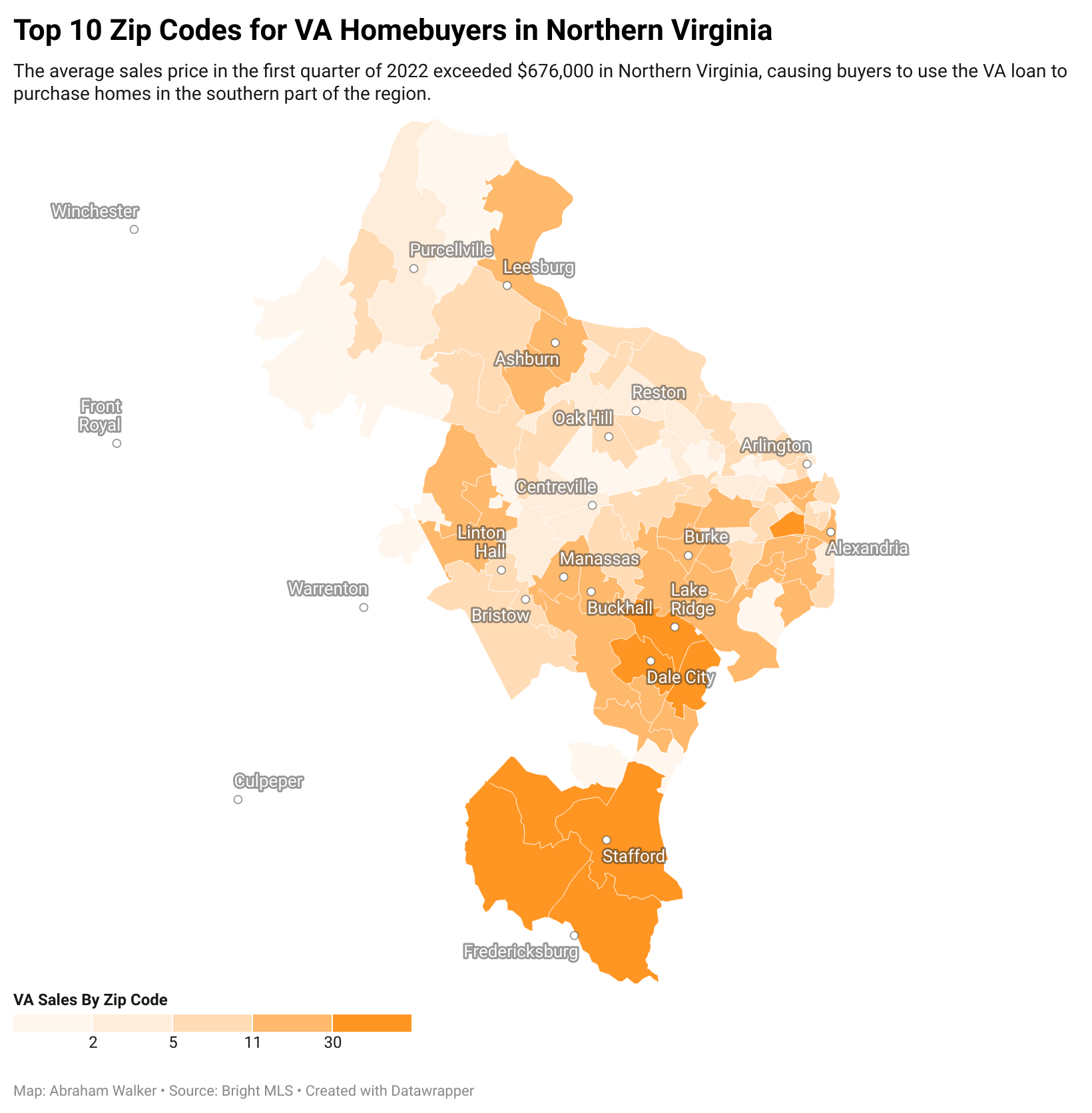
You've probably looked at a map of Northern Virginia and felt a little overwhelmed. It's a mess of highways, suburbs, and "edge cities" that seem to blend into one another. But if you're trying to move here, start a business, or just understand why your car insurance is so expensive, you have to look at zip codes northern va. They aren't just for sorting mail. In this part of the country, five digits can tell you exactly how much you'll pay for a square foot of grass or how long you’ll be sitting in traffic on I-66.
Northern Virginia, or NoVa if you're a local, is basically the economic engine of the state. It’s dense. It’s fast. Honestly, it’s a bit chaotic. When people talk about zip codes here, they’re usually talking about status, school districts, and proximity to the "Orange Line" or the "Silver Line" metro tracks.
Why 22101 and 22102 Are Always in the News
If you’ve ever heard of McLean, you’ve heard of 22101. It’s consistently ranked as one of the wealthiest zip codes in the entire United States, not just Virginia. This is where the old money lives, nestled right up against the Potomac River. You’ll find sprawling estates, high-ranking government officials, and diplomats.
Then there’s 22102. That’s Tysons. It’s a bit different. While 22101 feels like a quiet, leafy forest for millionaires, 22102 is all glass towers, luxury condos, and the massive Tysons Corner Center mall. It’s the business heart of the region. If you work in tech or consulting, there's a good chance your office is in this zip code. The interesting thing about these two is that they share a name—McLean—but they feel like completely different worlds. One is for privacy; the other is for being seen.
The Arlington Shuffle: 22201 vs. 22207
Arlington is small in terms of land area, but it's packed. If you're looking at zip codes northern va for a younger, more urban vibe, you’re looking at the 222 corridor.
Take 22201. That’s Clarendon and Courthouse. It’s where everyone goes after college. It’s walkable, loud, and expensive. You’ve got bars, gyms, and tiny apartments that cost more than a mortgage in most other states. Compare that to 22207 in North Arlington. It’s just a few miles away, but the vibe shifts instantly. Suddenly, you’re looking at Tudor-style homes, quiet streets, and parents pushing high-end strollers. 22207 is where the 22201 crowd moves once they decide they need a yard and a "top-rated" elementary school like Discovery or Nottingham.
It’s a natural lifecycle. You start in the high-rises of Rosslyn (22209) or Ballston (22203), then you migrate toward the quiet hills of 22207 or 22213 once the nightlife loses its charm.
What People Get Wrong About Alexandria Zip Codes
Alexandria is confusing. Seriously.
The most famous zip is 22314. That’s Old Town. Cobblestone streets, 18th-century architecture, and the waterfront. It’s beautiful, and the real estate prices reflect that. But people often assume "Alexandria" always means "Old Town." It doesn't.
Large chunks of Fairfax County actually use Alexandria mailing addresses. This includes zip codes like 22306, 22309, and 22315. If you see a house for sale in 22309, don't expect to walk to the King Street boutiques. You’re actually down near Mount Vernon. It’s much more suburban, a bit more affordable (relatively speaking), and far from the historic district.
- 22314: The "Real" Alexandria. Historic, expensive, touristy.
- 22304: West End. Lots of condos, a bit more diverse, great access to 395.
- 22308: Riverside Park. Very quiet, lots of trees, near the George Washington Memorial Parkway.
The Loudoun Explosion: 20147 and 20148
Thirty years ago, Ashburn was mostly farmland. Now? It’s the data center capital of the world. If you’re reading this, your data is probably passing through a building in 20147 or 20148 right now.
20147 is North Ashburn. It’s established. You have neighborhoods like Ashburn Village and Ashburn Farm. 20148 is South Ashburn and includes the massive Brambleton community. These zip codes are the epitome of "planned communities." Everything is manicured. The schools are brand new. The grocery stores are massive.
The growth here is staggering. According to the U.S. Census Bureau, Loudoun County has been one of the fastest-growing counties in the country for a decade. People move to these zip codes for one main reason: space. You can get a five-bedroom house with a two-car garage here for the same price as a two-bedroom condo in Arlington. The trade-off is the commute. Even with the Silver Line extension, getting from Ashburn to D.C. is a trek.
Fair Oaks, Fairfax, and the 22030 Myth
Fairfax is another place where the name covers a lot of ground. You have Fairfax City (which is its own thing) and Fairfax County.
The 22030 zip code covers a lot of the city area. It’s home to George Mason University. Because of the university, there’s a specific energy here—lots of rentals, cheap eats, and traffic. Lots of traffic.
Then you have 22033. This is the Fair Oaks area. It’s a massive retail hub. If you need a specific store, it’s probably in 22033. It’s a very practical place to live. You aren't paying the "prestige" tax of McLean, but you aren't as far out as Loudoun. It’s the middle ground of zip codes northern va.
Prince William County: The 20111 and 22192 Border
As you move further south, you hit Prince William County. This is where you find Manassas (20111/20110) and Woodbridge (22191/22192).
For a long time, these areas were seen as the "affordable" alternatives. They still are, but the gap is closing. 22192 covers Lake Ridge, which is a hilly, wooded community that people love because it doesn't feel like a cookie-cutter suburb. Meanwhile, 20112 is one of the "stealth wealthy" areas. It’s technically Manassas, but it’s full of custom homes on multi-acre lots. It’s where you go when you want to be in Northern Virginia but don't want to see your neighbor's house from your kitchen window.
The Real Impact of the "Data Center Alley"
You can't talk about zip codes northern va without mentioning the physical infrastructure. In zips like 20151 (Chantilly) and 20166 (Sterling), the landscape is changing. Huge, windowless gray buildings are popping up everywhere. These are data centers.
They are great for the tax base. Loudoun and Fairfax counties get a huge amount of revenue from these buildings, which helps keep residential property taxes lower than they might otherwise be. But for residents, it's a point of contention. Living next to a data center isn't exactly the suburban dream. If you're looking at property in these zip codes, check the zoning maps. A forest today could be a server farm tomorrow.
Reston (20190, 20191, 20194): A Different Kind of Suburb
Reston is famous in urban planning circles. It was one of the first "planned" communities in the U.S. designed to mix residential and commercial life.
- 20190: This is the Town Center area. High-rises, restaurants, and people walking to work.
- 20191: South Reston. More "woodsy," lots of walking paths, and older (but cool) contemporary homes.
- 20194: North Reston. Newer single-family homes and proximity to Lake Newport.
Reston has a soul that some other Northern Virginia suburbs lack. There’s an emphasis on nature and public art. If you live in 20191, you’re likely within a five-minute walk of a trail that leads to a lake.
How to Choose the Right Zip Code
So, how do you actually pick? It comes down to what you value most. Northern Virginia is a game of trade-offs.
If you want walkability and a "city" feel, look at 22201 (Arlington), 22314 (Old Town), or 20190 (Reston Town Center). You’ll pay more for less space, but you might be able to ditch the car.
If you want prestige and schools, 22101 (McLean), 22066 (Great Falls), and 22182 (Vienna) are the heavy hitters. These areas have some of the highest-rated high schools in the nation, like Langley and Oakton.
If you want value and space, you have to look further out. Zip codes like 20112 (Manassas), 22193 (Woodbridge), or even 20105 (Aldie) give you more house for your dollar. But beware: your "commute" might become your second full-time job.
Understanding the "Inside vs. Outside" the Beltway Divide
The Capital Beltway (I-495) is a physical and psychological barrier. Zip codes northern va are often categorized as "Inside the Beltway" (ITB) or "Outside the Beltway" (OTB).
Inside the Beltway (like 22204 or 22042) means you're closer to D.C. Houses are older, lots are smaller, and prices are higher. Outside the Beltway (like 22031 or 20151) is where you find the bigger yards and the newer construction. In the last few years, the "line" has blurred as the Metro expanded, but the price jump when you cross under 495 is still very real.
Actionable Steps for Navigating NoVa Zip Codes
- Check the School Boundaries: Don't just trust the zip code. A single zip code can be split between three different high schools. Use the official Fairfax or Loudoun County "boundary locators" to see exactly where a specific address sends its kids.
- Test the Commute at 8:00 AM: If you’re eyeing a house in 20148 but work in 22201, drive it on a Tuesday morning. Don't rely on Google Maps estimates from Sunday afternoon. The "Spaghetti Loudoun" traffic is no joke.
- Look at the Comprehensive Plan: Northern Virginia is always building. Go to the county’s planning website and look at what is slated for a specific zip code. That empty field in 20152 might be a massive shopping center in two years.
- Understand Tax Differences: Fairfax City (22030) has different tax rates than Fairfax County. Similarly, the City of Alexandria (22314) has its own tax structure. These small differences can add up to thousands of dollars a year.
- Focus on the Metro: If you're looking for long-term appreciation, look at zip codes that gained Silver Line access recently, like 20170 (Herndon) or 20147 (Ashburn). Proximity to a station is one of the most reliable predictors of property value stability in this region.