You see them every time you buy something online or mail a birthday card. Five little numbers. They seem random, maybe even boring. But honestly, a ZIP code is probably the most powerful piece of metadata attached to your identity. It’s not just about mail. It’s about money, health, and how the world treats you.
Most people think "ZIP" is just a word. It's actually an acronym. Zone Improvement Plan. The U.S. Postal Service (USPS) rolled it out back in 1963 because the old system was literally breaking under the weight of too much mail. They needed a way to use early computers to sort letters faster. If you didn't use the code, your letter might sit in a bin for days while a human tried to figure out where "Springfield" was. There are dozens of Springfields.
The Secret Anatomy of the Numbers
ZIP codes aren't just assigned in a big pile. They have a very specific geography. The first digit represents a broad group of U.S. states. It starts with 0 in the northeast—think Maine, Vermont, Massachusetts—and climbs as you move west. By the time you hit the Pacific Coast, you're looking at 9s in California and Washington.
The next two digits represent a sectional center facility (SCF). This is the big "hub" where mail is sorted for a specific region. Then you get the final two digits. These represent the specific post office or delivery area.
Wait, it gets weirder. Some ZIP codes aren't even places.
Take 12345. It sounds fake, like something a kid would make up. But it’s real. It belongs to General Electric in Schenectady, New York. They get so much mail they need their own code. There are "unique" ZIP codes for certain buildings, government agencies, and even the "Santa Claus" ZIP code in Indiana (47579).
Why the +4 Matters
In 1983, the USPS added four more digits. Most of us ignore them. But if you’re a business, they are gold. Those extra four digits can narrow a location down to a specific side of a street or even a specific floor in a high-rise building.
It’s about efficiency. When a sorting machine sees those nine digits, it can organize the mail in the exact order the mail carrier walks their route. It saves millions of dollars in labor.
The ZIP Code Social Divide
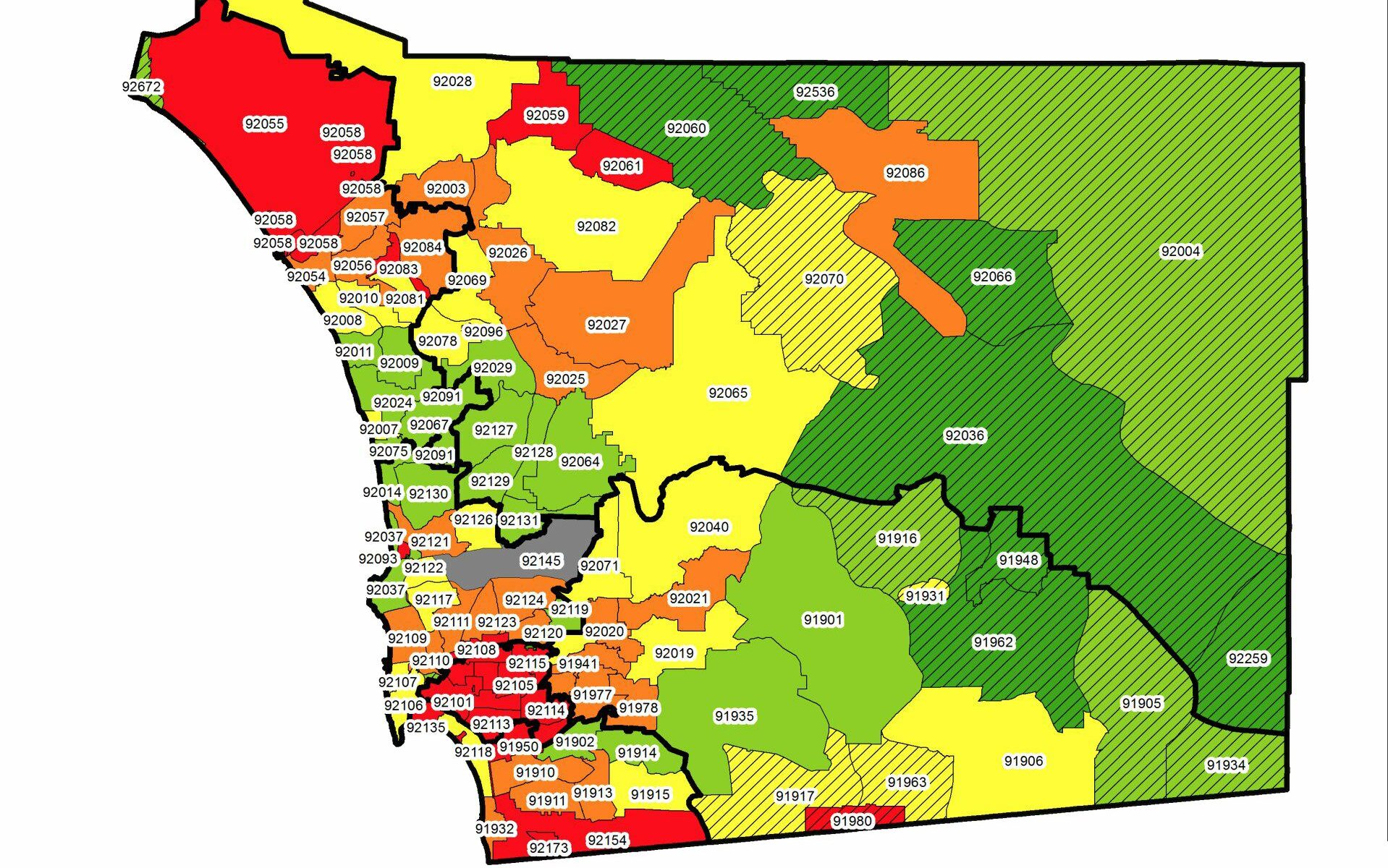
Here is where things get heavy. In the modern world, your ZIP code is often a better predictor of your health than your genetic code. Researchers like Dr. Anthony Iton have spent years documenting this.
In some cities, moving just a few miles into a different ZIP code can change your life expectancy by 20 years.
Why? Because ZIP codes determine funding for schools. They determine whether you have a grocery store with fresh produce or just a liquor store on the corner. They determine "environmental load"—meaning how much pollution you breathe.
When a bank looks at your ZIP code, they aren't just looking at a map. They are looking at a risk profile. This is where "redlining" used to happen officially, and where "algorithmic bias" happens today. If you live in 90210, you get one set of offers. If you live in a struggling rural code or a neglected urban one, your car insurance premiums might be higher even if you're a perfect driver.
It’s a Marketing Goldmine
Marketers love these numbers. They use something called "Prizm" clusters. It’s a system that categorizes every ZIP code into "types."
- "Upper Crust" (Wealthy empty nesters)
- "Shotguns & Pickups" (Rural blue-collar families)
- "Bohemian Mix" (Young, urban, ethnically diverse)
When you give a cashier your ZIP code at checkout, they aren't just checking if you live nearby. They are appending your purchase history to a demographic profile. They know what people in your neighborhood buy, how much they earn, and what kind of ads will make them click "buy."
Common Myths That Just Won't Die
You’ve probably heard that ZIP codes represent city boundaries.
They don't.
A ZIP code can cross city lines, county lines, and even state lines in rare cases. The USPS creates them for delivery efficiency, not political geography. This causes massive headaches during elections or when calculating sales tax.
Another myth? That there’s a "highest" and "lowest" ZIP code. While 00501 (Holtsville, NY) is technically the lowest numerical code and 99950 (Ketchikan, AK) is the highest, they don't represent the "start" and "end" of America. They are just markers in a logistics database.
How to Use This Knowledge
Knowing what a ZIP code means gives you a weird kind of superpower in the digital age. It helps you understand how you're being profiled.
If you are moving, don't just look at the house. Look at the ZIP code data. Use tools like the U.S. Census Bureau’s "QuickFacts" to see the median income and education levels of the code. This will tell you more about the long-term value of your property than a fresh coat of paint will.
Check your "ZIP+4" if you want your mail to arrive faster. It actually works.
Be careful about giving your ZIP code to retailers. If they have your name from a credit card and your ZIP code, they can often buy your full home address from data brokers. It’s a privacy loophole that most people ignore.
If you’re a small business owner, stop guessing where to advertise. Look at the ZIP code maps provided by the USPS (the EDDM—Every Door Direct Mail tool). You can see exactly how many households are in a route and what the average household size is.
The five digits on your mail are a language. Once you learn to read it, the map of the country starts to look very different. It’s not just a grid; it’s a living, breathing database of who we are and where we’re going.