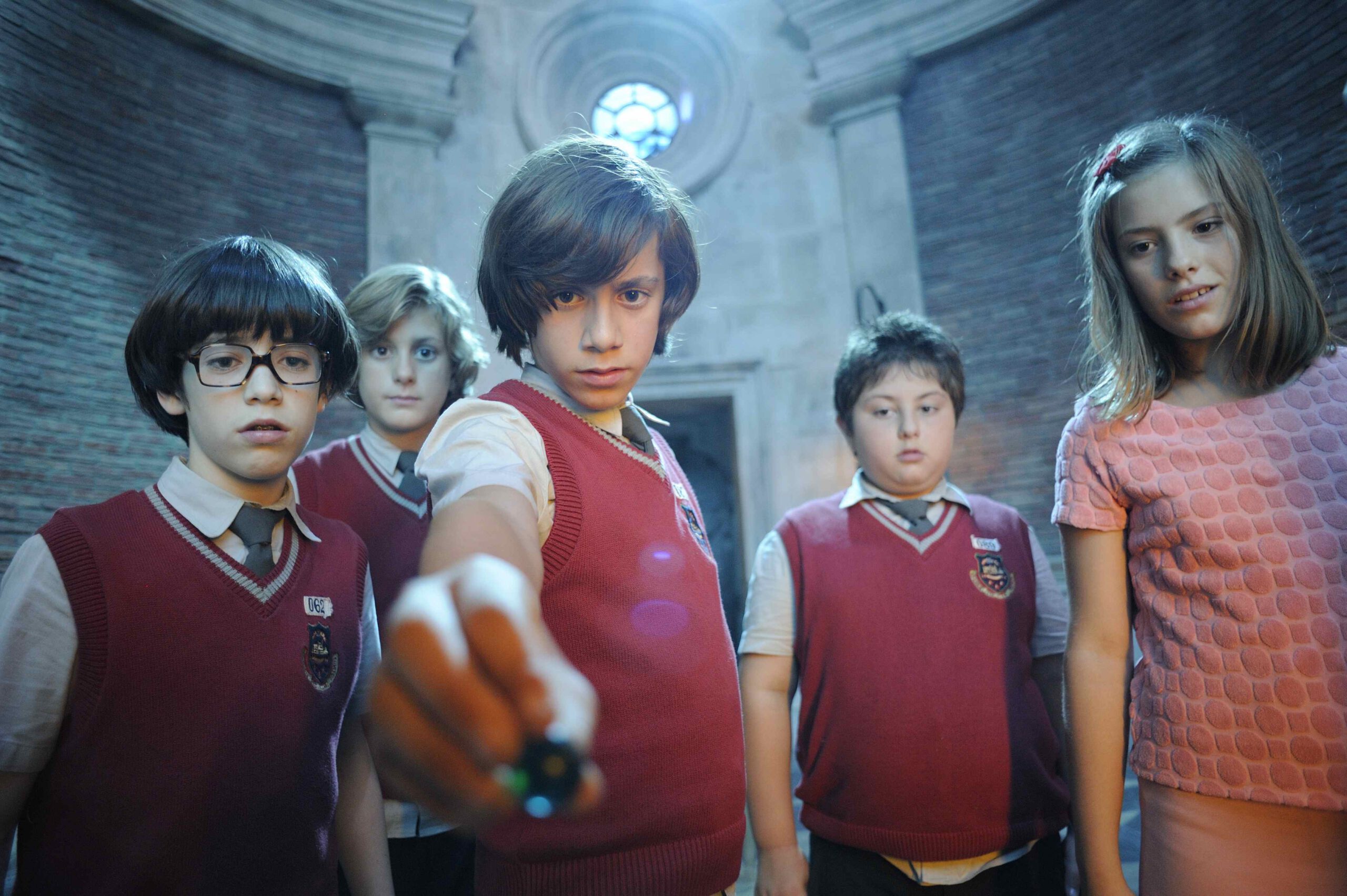
Escobar's twins are a menace. If you grew up in Spain or anywhere with a decent collection of translated historietas, you know exactly who I’m talking about. Zip and Zap and the Marble Gang (or Zipi y Zape y el Club de la Canica in the original Spanish) isn't just a movie or a comic strip. It’s a cultural touchstone that manages to capture that specific, frantic energy of being a kid who just cannot—no matter how hard they try—stay out of trouble.
Josep Escobar Saliente created these two in 1948. That’s a long time ago. Yet, the 2013 live-action adaptation directed by Oskar Santos breathed a weirdly modern, Goonies-esque life into the franchise that introduced a whole new generation to the "Marble Gang."
The Reality of Zipi and Zape
People often compare them to the Thompson and Thompson twins from Tintin because of the visual symmetry, but that’s a surface-level take. Zipi is the blonde one. Zape is the brunette. They are basically mirror images of mischief. In the original comics, their life was a repetitive cycle of failing school, getting into trouble with their father (Don Pantuflo), and ending up in "the cooling room" or some other ridiculous punishment. It was a product of its time—post-war Spain—where discipline was the name of the game.
But then the 2013 film changed the vibe. It moved away from the short-form slapstick of the Bruguera comic books and leaned into a full-blown adventure mystery. This is where the Marble Gang comes in. In the movie, the brothers are sent to Esperanza, a summer school that is basically a prison for fun. No toys. No books. No laughing. The headmaster, Falconetti, is a classic villain with an eyepatch. It’s trope-heavy, sure, but it works because the stakes feel real to a ten-year-old.
The Marble Gang wasn't just a random name. It was an act of defiance. By forming this secret society, the kids were reclaiming their childhood in an environment designed to crush it. They used marbles as their calling card. Simple. Effective. Kind of cool in a retro way.
Why the Marble Gang Matters for Modern Viewers
Honestly, the film works because it doesn't try to be too high-tech. In an era where every kids' movie is about iPads or multiverse glitches, Zip and Zap and the Marble Gang feels grounded. It’s about flashlights, secret tunnels, and hidden treasures. It’s about the fact that adults can be incredibly boring and sometimes you have to break the rules to find the truth.
The plot kicks off when the brothers realize the school is hiding something. They team up with Filo, Micro, and Matilde. These aren't superheroes. They’re just kids. Matilde is the niece of the headmaster, which adds that necessary "inside man" tension to the group dynamic.
A Departure from the Source Material
If you’re a purist who grew up reading the Escobar comics in the 70s or 80s, the movie might feel a bit... off. The comics were very domestic. Most stories happened at home or in the neighborhood. They were about the struggle to get a bicycle or the disaster of a family dinner.
The movie, however, pivots to a "Hogwarts but make it Spanish and gritty" aesthetic. It’s a bold move. It works because it respects the spirit of the twins—their resilience and their bond—even if it swaps the living room for a labyrinthine castle. The 2013 film was a massive hit in Spain, proving that these characters have legs way beyond the printed page.
The Mystery of the Diamond and the Hidden Map
The core of the "Marble Gang" story involves a hidden treasure left behind by the school's founder. It’s a classic puzzle-solving narrative. You’ve got the typical elements:
- Encrypted messages.
- Hidden passages behind bookshelves.
- A villain who is always one step behind (until he isn’t).
The stakes aren't just about finding gold. For the Marble Gang, finding the treasure is the only way to prove that Falconetti’s rigid, joyless system is a failure. It’s a battle of ideologies. On one side, you have the "Marble" philosophy—play, curiosity, and teamwork. On the other, you have the "Esperanza" philosophy—silence, obedience, and labor.
The Legacy of Zip and Zap
Spanish cinema has a weirdly great track record with these kinds of adaptations. Look at Mortadelo y Filemón. But Zip and Zap feels more accessible to an international audience. It’s got that universal "us against the world" feeling.
There was a sequel in 2016, Zip & Zap and the Captain's Island, which went even further into the fantasy/adventure genre. It traded the school for a mysterious island where parents disappear. It’s arguably more ambitious, but it lacks the tight, rebellious camaraderie of the first Marble Gang outing.
The twins themselves are a study in contrasts that aren't really contrasts. They are two halves of the same brain. They don't argue with each other; they argue with the world. That’s a rare dynamic in kids' media today, where "sibling rivalry" is usually the go-to trope for conflict. Here, the conflict is always external.
Where to Find Them Now
Finding the original Escobar comics can be a bit of a hunt if you aren't in Spain, though many have been digitized or reprinted in "Magnum" editions. The movies are generally available on major streaming platforms like Netflix or Amazon Prime, depending on your region.
If you’re watching the movie for the first time, keep an eye out for the references to the comics. The names of the parents, the specific way the twins talk, and the ending—it’s all a love letter to the Bruguera era of Spanish pop culture.
Actionable Steps for Fans and Collectors
If you're looking to dive deeper into the world of Zip and Zap and the Marble Gang, don't just stop at the movie.
- Track down the "Colección Olé" books. These are the classic thin paperbacks. Even if you don't speak Spanish, the visual storytelling by Escobar is world-class. You can often find these on eBay or Spanish sites like Todocoleccion.
- Watch the 2013 film with subtitles, not dubs. The original Spanish performances—especially the kids—carry a specific grit and humor that sometimes gets lost in translation.
- Compare the eras. If you can find the 2003 animated series, watch an episode. Then watch the 2013 film. It’s a fascinating look at how a single IP can be stretched from slapstick comedy to a serious adventure-drama.
- Visit the Bruguera archives. If you’re ever in Barcelona, look into the history of Editorial Bruguera. It’s the Marvel of Spain, and Zipi and Zape were their Spider-Man.
The Marble Gang represents something we all lose as we get older: the belief that a small group of friends and a pocketful of marbles can actually change the world. It’s nostalgic, sure. But it’s also just a really good story about not letting the "Falconettis" of the world win.