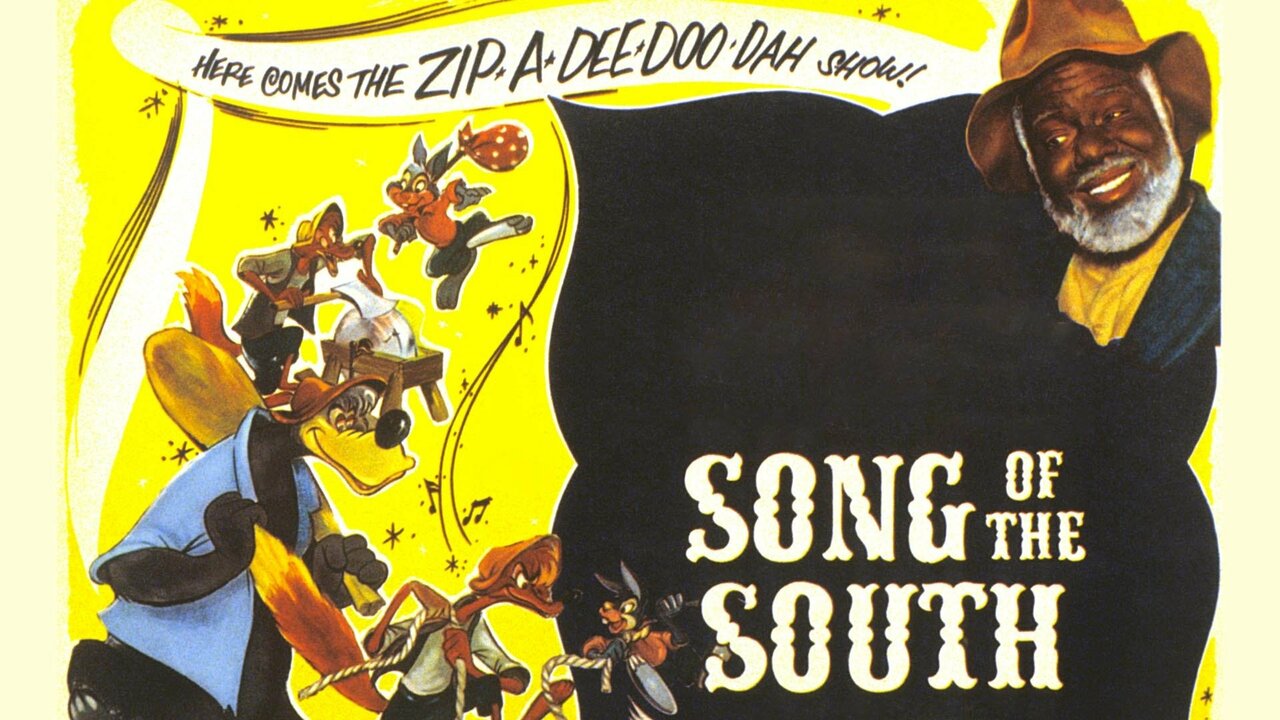
You probably know the melody before you even hear the first syllable. It’s that jaunty, bouncy tune that defined a generation of Disney theme park memories. But finding the actual words to Song of the South nowadays? That’s becoming a bit of a digital scavenger hunt. Disney has essentially locked the 1946 film in a "vault" that doesn't have a key, mostly because the cultural context of the movie is, to put it lightly, a total minefield.
Honestly, it’s a strange situation. You have one of the most famous songs in cinematic history—"Zip-A-Dee-Doo-Dah"—written by Allie Wrubel and Ray Gilbert, yet the movie it belongs to is officially "unavailable." If you grew up in the 80s or 90s, the lyrics were everywhere. They were on sing-along VHS tapes. They played on a loop at Splash Mountain. But the full lyrical landscape of the film goes way beyond just Mr. Bluebird on a shoulder. It’s a mix of traditional African American folklore, filtered through a mid-century Hollywood lens, and the result is a lyrical history that is as catchy as it is controversial. Recently making headlines in related news: The Billie Eilish Vegan Backlash Proves the Death of Political Substance.
The Lyrics We All Know: Zip-A-Dee-Doo-Dah
The centerpiece of the film is undeniably "Zip-A-Dee-Doo-Dah." It’s the song James Baskett, playing Uncle Remus, performs as he strolls through a world where animation and live-action first started to blur together effectively.
The words are deceptively simple. "Zip-a-dee-doo-dah, zip-a-dee-ay / My, oh, my, what a wonderful day." It’s pure sunshine. It's the kind of song that gets stuck in your head for three days straight. The lyrics lean heavily on onomatopoeia and a sense of pastoral bliss. When Baskett sings about "Plenty of sunshine headin' my way," he’s delivering a masterclass in vocal charisma. It’s no wonder the song won the Academy Award for Best Original Song. More insights on this are explored by Vanity Fair.
But here is where it gets tricky. While the words themselves are about sunshine and bluebirds, the context of who is singing them and where they are being sung is why the movie is so hard to find today. Uncle Remus is a controversial figure. Critics, including those from the NAACP back in the 1940s, pointed out that the lyrics and the character’s demeanor suggested a "dangerously glorified" version of the post-Civil War South. The words feel happy, but for many, the happiness feels forced or historically revisionist.
Uncle Remus and the Oral Tradition
To really understand the words to Song of the South, you have to look at Joel Chandler Harris. He was the journalist who compiled the Br'er Rabbit stories. He claimed he was just recording the dialect and the stories he heard from enslaved people on the Turnwold Plantation.
The lyrics in songs like "Uncle Remus Said" try to capture that specific "plantation dialect." It’s a linguistic style that’s been debated for decades. Is it an authentic preservation of Gullah or other African American vernaculars? Or is it a white author’s caricature? When you read the lyrics to "Uncle Remus Said," you see words like "ev'rything" or "li'l." This phonetic spelling was a huge trend in 19th-century literature, but today, it feels uncomfortable to many readers. It’s a linguistic snapshot of a time when the "words" were meant to sound "authentic" to a white audience, often at the expense of the dignity of the people they were mimicking.
The Other Songs You Forgot
Everyone remembers the bluebird. Almost nobody remembers "Sooner or Later."
This song is performed by Hattie McDaniel. Yes, that Hattie McDaniel—the first African American to win an Oscar for Gone with the Wind. In Song of the South, she plays Aunt Tempy. Her song is a bit more soulful, a bit more grounded. The lyrics go: "Sooner or later, you're gonna be comin' along / Sooner or later, you're gonna be singin' my song." It lacks the frantic energy of the animated sequences, but it showcases the incredible talent Disney had on set—talent that was often constrained by the scripts of the era.
Then there’s "How Do You Do?" This is the one that played in the first half of the Splash Mountain ride for years. It’s a call-and-response style song. "How do you do? Pretty good, sure as you're born." It’s meant to evoke a sense of community and folk-traditionalism. It’s catchy. It’s rhythmic. It’s also deeply rooted in the "Br'er Rabbit" trickster tropes where everyone is being polite on the surface while trying to outsmart each other underneath.
Why the Lyrics are Disappearing
You won’t find these songs on Disney+ today.
Bob Iger has been pretty firm about this. The company decided that the film’s depiction of the Reconstruction-era South is "not appropriate in today's world." Even Splash Mountain, the ride that kept the words to Song of the South alive for millions of tourists, has been re-themed to The Princess and the Frog. Tiana has replaced Br'er Fox.
But the words haven’t totally vanished. They exist in the public consciousness and on old vinyl records. Collectors still hunt for the original 78rpm sets. The irony is that by making the film unavailable, the lyrics have taken on a sort of legendary status. People search for them because they want to know what the "taboo" is all about. Is it a racist manifesto? No, it’s a collection of folk-inspired tunes. But are the lyrics colored by the prejudices of 1946? Absolutely.
A Nuanced Look at the "Dialect"
We have to talk about the linguistic controversy. The lyrics in the movie use a lot of "eye dialect." This is when a writer spells words incorrectly to show a person is uneducated or speaks with a specific accent, even if the pronunciation wouldn't actually change.
Think about the word "was." If you spell it "wuz," it sounds the same, but it looks different on the page. It makes the character look "othered." Song of the South is full of this. When you look at the printed lyrics from the 1940s sheet music, the "words" are intentionally mangled to fit a specific stereotype of Southern Black speech. This is a huge part of why the movie hasn't aged well. It wasn't just about the stories; it was about the way the language was framed as a novelty rather than a legitimate culture.
The Cultural Impact of "Let the Rain Pour Down"
There’s a darker, more somber tone in "Let the Rain Pour Down." This song is often overlooked because it doesn't have the "Disney Magic" sparkle. It’s a work song.
The lyrics are repetitive: "Let the rain pour down / Let the roar of the thunder roll." It’s a heavy, rhythmic piece that mirrors the labor of the people on the plantation. It’s one of the few moments in the film where the music feels like it’s acknowledging the hardship of the setting, even if it’s still wrapped in a Hollywood gloss. It’s a far cry from "Zip-A-Dee-Doo-Dah," and it provides a necessary, albeit brief, counterpoint to the relentless optimism of the animated segments.
How to Find the Words Today
If you’re looking for the full lyrics, your best bet isn’t a Disney-sanctioned site. You’ll have to look at:
- Archival Sheet Music: Sites like the Library of Congress or specialty vintage music collectors often have the original scores.
- Fan Archives: There are several "Save Song of the South" fan sites that have meticulously transcribed every line of dialogue and song.
- International Releases: The movie was released on home video in the UK and Japan much later than in the US. The "words" are often found in the inserts of those PAL or NTSC laserdiscs.
It’s a bit of a detective project.
The Reality of the "Words"
At the end of the day, the words to Song of the South represent a collision of two worlds. On one side, you have genuine African American folklore—the stories of the trickster rabbit who uses his wits to survive. On the other side, you have a 1940s corporate giant trying to turn those stories into a "wholesome" family musical.
The result is a lyrical history that is messy. It’s beautiful, it’s catchy, and it’s deeply flawed. You can appreciate the vocal talent of James Baskett—who received an honorary Oscar for his role—while also acknowledging that the lyrics he was given were written by people who didn't fully understand the weight of the history they were playing with.
Moving Forward with the Music
So, what do we do with these words now?
Most musicologists suggest we treat them as a historical artifact. You can't just erase "Zip-A-Dee-Doo-Dah" from history; it’s too ingrained in the culture. But you can look at the lyrics with a critical eye. When you hear the words today, you aren't just hearing a song about a bluebird. You're hearing the echoes of 1946 racial politics, the transition of oral folklore into commercial media, and the complicated legacy of Walt Disney himself.
If you want to explore the lyrics, do it with the full context in mind. Look into the work of Joel Chandler Harris. Read the critiques by the NAACP from the year the movie was released. Listen to the songs not just as catchy tunes, but as pieces of a larger, much more complicated puzzle of American history.
Actionable Insights for the Curious:
- Compare the versions: Look up the original Joel Chandler Harris "Uncle Remus" text and compare it to the Disney lyrics. You'll see where the "Disney-fication" smoothed over the rougher edges of the original folklore.
- Research James Baskett: His performance is the heart of the movie. Understanding his struggle to even attend the film's premiere in a segregated Atlanta gives the "happy" words of his songs a whole new layer of meaning.
- Check Archive.org: Because the film is out of print, many historical societies have uploaded clips and transcripts for educational purposes.
- Listen to the covers: Many jazz artists covered these songs in the 50s and 60s. Hearing "Zip-A-Dee-Doo-Dah" without the animated imagery can help you focus on the musical construction of the song itself.