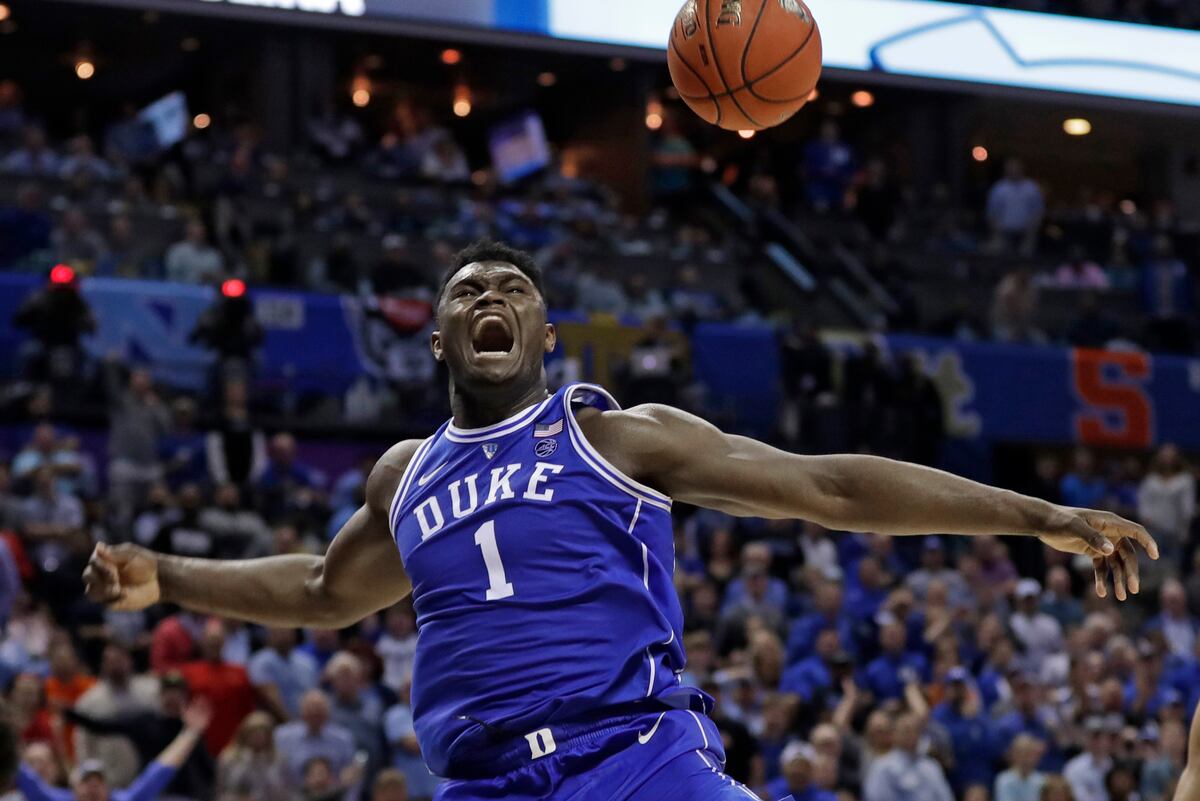
Honestly, it’s been a few years since the "Zion Cam" was a permanent fixture on the ESPN ticker, but looking back at the raw Zion Williamson Duke stats, the numbers still feel like they were pulled straight from a video game.
He didn't just play college basketball. He broke it.
Most people remember the highlights—the time he literally exploded through his Nike sneaker against North Carolina or those terrifying transition dunks where he looked like a freight train with a 40-inch vertical. But if you strip away the dunks and the viral clips, the statistical profile he left behind at Durham is arguably the most efficient season in the history of the sport. We aren't just talking about "good for a freshman." We’re talking about a statistical anomaly that hasn't been replicated since.
The Raw Production: A Box Score Nightmare
During his lone 2018-19 season with the Blue Devils, Zion put up a line that doesn't even make sense for a guy who was technically still a teenager. He averaged 22.6 points, 8.9 rebounds, 2.1 steals, and 1.8 blocks per game.
Think about that.
Usually, you get a guy who is a glass-eater, or you get a wing who can score, or a rim protector. Zion was all three simultaneously. He and RJ Barrett actually became the first freshman teammates in NCAA history to both average over 20 points per game. While RJ was the high-volume shot-taker, Zion was the high-efficiency wrecking ball.
The most jarring part? He did this in only 30 minutes a game. Coach K didn't even have to run him into the ground because Duke was often blowing teams out by halftime. If you scale his production to a 40-minute game, he was essentially averaging 30 points and 12 boards.
Efficiency That Defies Physics
The stat that usually makes scouts' eyes pop isn't the scoring average—it’s the shooting percentage.
Zion shot 68% from the field.
For context, most "efficient" guards are happy to hit 45%. Most dominant big men aim for 60%. Zion was a 6'7" forward taking plenty of contested shots and still finishing nearly 70% of everything he threw toward the rim. His Player Efficiency Rating (PER) of 40.8 was the highest recorded since the stat started being tracked for college players.
Basically, every time Zion touched the ball, something good happened for Duke.
- Field Goal Percentage: .680 (2nd in the NCAA that year)
- Effective Field Goal %: .708
- True Shooting %: 71.1%
- Double-Doubles: 14 in 33 games
He wasn't just a dunker, either. People forget he actually shot 33.8% from three. He wasn't Steph Curry, sure, but you couldn't just sag off him and dare him to shoot. If you did, he’d occasionally knock one down, but more likely, he’d use that space to build up a head of steam and go through your chest.
The Defensive Impact Nobody Talks About
The offense gets the headlines, but the Zion Williamson Duke stats on the defensive end were arguably more terrifying for opponents. He was one of only two players in the country that year to record at least 50 blocks and 50 steals.
He had this uncanny ability to "teleport." One second he’s hedging a screen at the top of the key, and the next, he’s pinning a layup against the glass on the opposite side of the rim. His 2.1 steals per game weren't just from playing passing lanes; they were often "snatch-and-run" plays where he’d simply take the ball away from a ball-handler and start a one-man fast break.
His defensive box plus-minus was a staggering 7.5. For the non-stat nerds, that basically means Duke’s defense was elite purely because he was allowed to roam like a free safety.
The Awards Sweep
It’s no surprise he swept everything. He became just the third freshman ever to win the John R. Wooden Award, joining the ranks of Kevin Durant and Anthony Davis.
He took home:
- Naismith College Player of the Year
- AP Player of the Year
- ACC Player of the Year
- ACC Tournament MVP (after a legendary 13-of-13 shooting performance against Syracuse)
What’s wild is that even with these stats, Duke didn't make the Final Four. They fell one point short against Michigan State in the Elite Eight. Zion had 24 points and 14 rebounds in that final game. He did his part.
What This Means for Evaluators Today
When we look at modern prospects like Cooper Flagg or whoever the next "generational" talent is, the Zion Williamson Duke stats serve as the ultimate ceiling. To match Zion, you don't just need to be talented; you have to be historically efficient.
If you are looking to understand why Zion remains a "what-if" in terms of health in the NBA, you have to look at these college numbers. The NBA version of Zion has actually maintained this efficiency, often hovering around 60% shooting. The blueprint was created in Durham.
Actionable Takeaway: How to Use These Stats
If you’re a basketball analyst or just a fan debating Zion’s legacy, don't just look at the 22.6 PPG. Focus on the points per possession. Zion’s 1.71 points per shot attempt at Duke is a gold standard. When scouting new college players, look for the "Zion Threshold":
- Can they shoot over 60%?
- Do they have a defensive "stocks" (steals + blocks) average over 3.5?
If the answer is no, they aren't the next Zion. There might not ever be another one.
To really appreciate the scale of what happened in 2019, go back and watch the full game tape of Duke vs. Kentucky—his debut. He put up 28 points in 23 minutes on 11-of-13 shooting. It was the most dominant introduction to college basketball we’ve ever seen, and the stats backed up the hype every single night after.