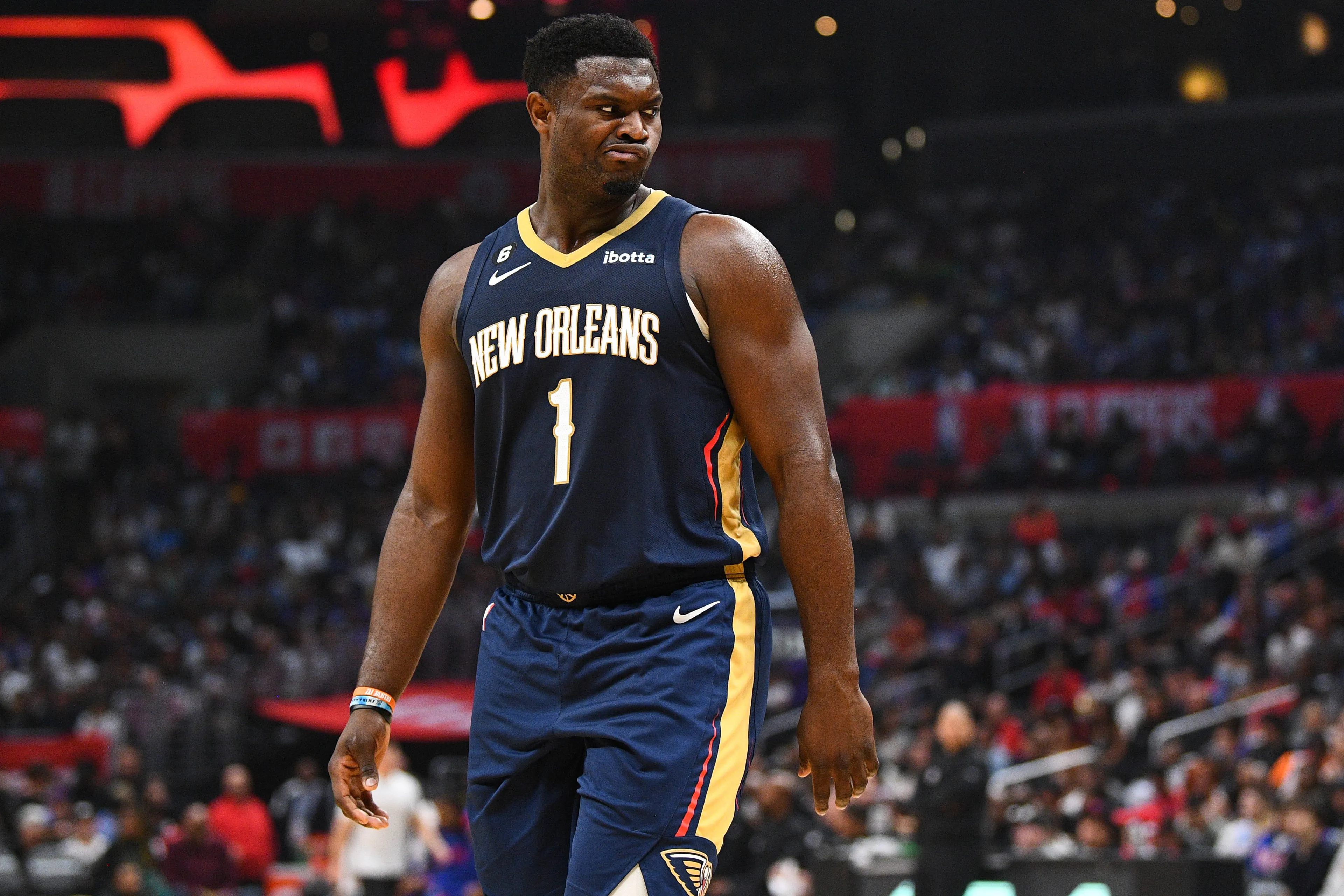
If you spend even five minutes looking at the Zion Williamson Basketball Reference page, you'll see a career that looks like a glitch in the Matrix.
He is 25 now. Honestly, it feels like he should be thirty, given how long we’ve been talking about his hamstrings, his weight, and that explosive first step that looks like it belongs in a comic book. But when you actually scroll down to those per-game averages, the numbers are kind of terrifying. He’s a career 24-point-per-game scorer who hits nearly 60% of his shots. That basically doesn't happen for guys who aren't seven feet tall and living exclusively at the rim.
Zion is a paradox. He’s a "Point Forward" who rarely shoots threes but somehow maintains a True Shooting percentage that would make Steve Nash blush.
The Statistical Peak We Might Have Missed
Most people point to the 2020-21 season as the gold standard for Zion. And they’re right. Look at the Zion Williamson Basketball Reference log for that year. He played 61 games—which, for him, is a massive workload—and averaged 27.0 points on 61.1% shooting.
Think about that for a second.
He was the first player in NBA history to average over 27 points while shooting 60% or better for a full season. He wasn't just dunking, either. He was handling the rock, initiating the break, and using that "Point Zion" gravity to create 3.7 assists per night.
Then, the foot injury happened. The Jones fracture. The "Did Not Play" row in 2021-22 is a giant hole in his resume.
Fast forward to the current 2025-26 season. As of mid-January 2026, he’s back on the floor, currently averaging 22.4 points and 5.7 rebounds across 27 games. It’s a different Zion. He’s a bit more methodical, maybe a bit more selective. The field goal percentage is still high at 57.9%, but the rebounding numbers have dipped compared to his Duke days where he was snagging nearly 9 a game.
Analyzing the Advanced Zion Williamson Basketball Reference Metrics
If you want to understand why coaches are still scared of him despite the missed time, you have to look at the advanced stats. Specifically, the Per 100 Possessions and Usage Percentage.
- Usage Rate: Zion consistently hovers around the 29-30% mark. This means when he's on the floor, the Pelicans' offense is funneling through him.
- Offensive Rating: In his best stretches, his individual Offensive Rating has cleared 120. That is elite territory.
- The "Stock" Factor: While his defensive reputation is... let's call it "mixed," his steal and block rates are actually decent for his position. He's averaging 1.2 steals and 0.6 blocks this season, proving that when he's engaged, his athleticism translates to the defensive end.
The 2023-24 season was actually his most durable. He played 70 games. That was the "narrative-buster" year. It showed that with the right conditioning and a bit of luck, he could be a nightly fixture. But then 2024-25 happened, and he was limited to just 30 games due to recurring hamstring issues. It’s been a rollercoaster.
The Problem With the "Injury Prone" Label
Is it fair? Probably. But it's also complicated.
When you look at his weight—listed at 284 lbs—and his verticality, the physics are brutal. His game relies on sudden, violent changes of direction. That puts an incredible amount of torque on his lower body. Basketball Reference shows he's missed roughly 45% of all possible career games since being drafted first overall in 2019.
Yet, when he's healthy, he's a Top-15 player. Maybe Top-10.
In January 2026, he had a stretch where he scored 30+ in three straight games for the first time in years. He dropped 31 on Washington and 25 on the Nets. The efficiency was classic Zion: 12-of-14 from the field in one, 11-of-14 in another. He's not beating you with finesse; he's beating you with a 280-pound frame that moves like a gazelle.
How to Use Basketball Reference for Player Props and Analysis
If you're tracking him for fantasy or just trying to win an argument at the bar, pay attention to the "Splits" section on his page.
- Back-to-Backs: Check if his PPG drops on the second night of a back-to-back. Historically, the Pelicans have been cautious, often resting him or limiting his minutes. This season, he's been allowed to play more of them, which is a huge sign of progress.
- Shooting Distance: Zion takes nearly 75% of his shots within three feet of the basket. If you see that number dipping, it usually means he's settling or his legs aren't quite under him.
- Free Throw Rate: He’s a career 69% shooter from the line. Not great, but he gets there a lot. When he’s aggressive, he’s taking 7 or 8 free throws a game. That’s where his "safe floor" comes from.
Actionable Insights for the 2026 Season
If you are following Zion's trajectory this year, watch the Games Played column more than the Points Per Game column.
The Pelicans are currently struggling near the bottom of the standings (roughly 9-33 according to recent logs), which means the trade rumors are going to heat up. However, the stats show he is still the most efficient interior scorer in the league not named Giannis or Jokic.
To get the most out of your analysis:
- Monitor the "Minutes Played" trend. If he's consistently over 30 minutes, the team trusts his body.
- Look at the Assist% vs. Turnover%. He’s averaging 3.4 assists to 2.4 turnovers this year. If that gap narrows, he's being too loose with the ball.
- Compare his Home vs. Away splits. Zion historically plays with more "pop" at the Smoothie King Center in New Orleans.
The data is all there. Zion Williamson is a statistical anomaly whose career is a race against his own anatomy. Whether he becomes a Hall of Famer or a "What If" depends entirely on whether those Basketball Reference rows continue to fill up or remain blank.