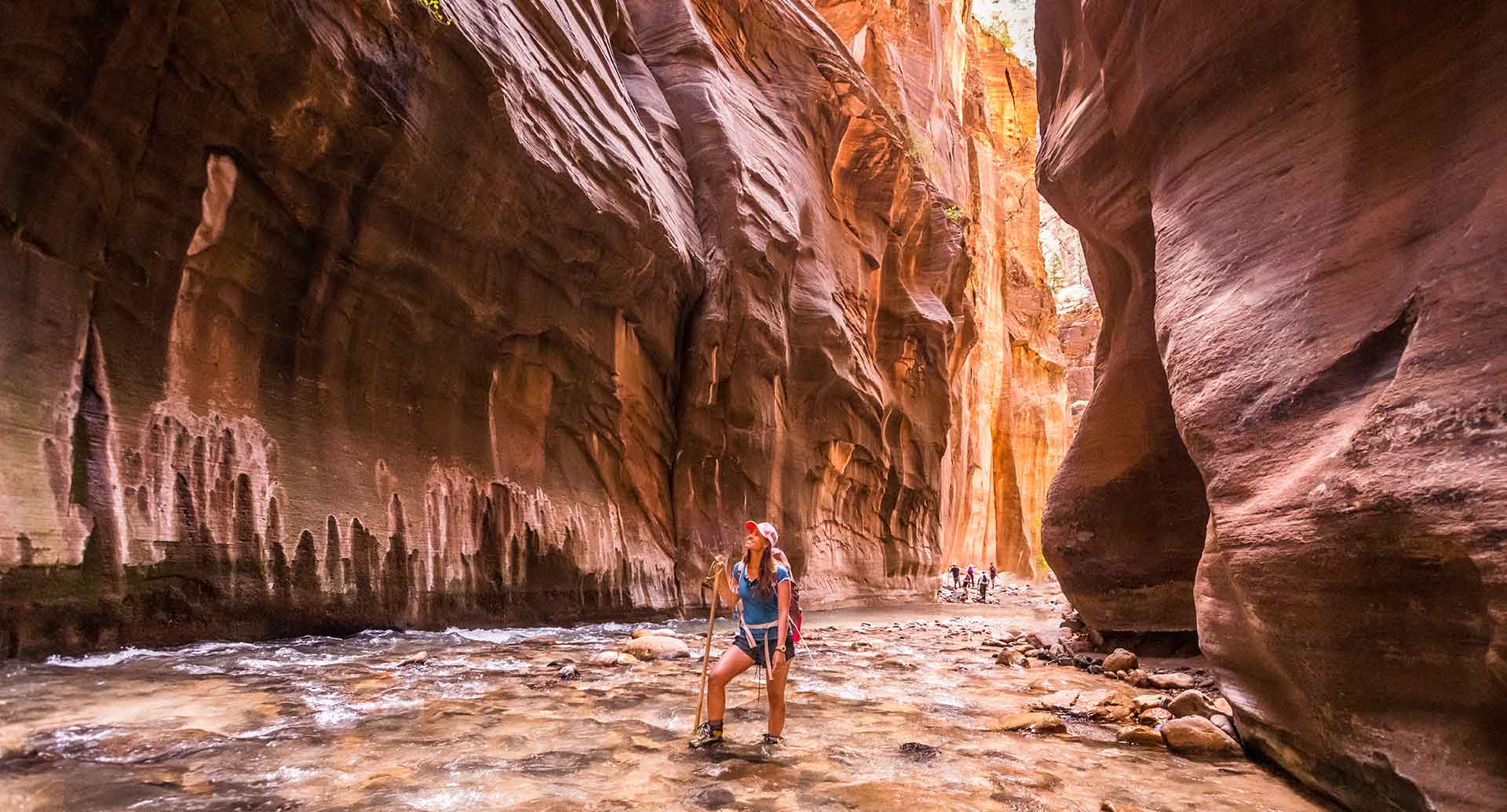
You’ve seen the photos of The Narrows. You know, the ones where the water is a glowing turquoise and the walls look like they’re closing in on a hiker who is somehow perfectly dry and alone.
It’s a lie. Well, mostly. If you enjoyed this piece, you might want to look at: this related article.
If you show up at Zion National Park expecting a solitary spiritual awakening, the shuttle bus line at 7:00 AM will be a very rude awakening instead. Zion is tiny. It’s a narrow canyon, a geological crack in the earth that everyone wants to squeeze into at the same time. But honestly? It is still the most visceral, heart-pounding landscape in the American Southwest if you know how to play the game.
The park isn't just a collection of rocks. It’s a vertical world. Most people spend their entire trip looking up from the canyon floor, which is beautiful, sure, but you’re missing the point of the Navajo Sandstone. You need to get high. Or get wet. For another angle on this story, refer to the recent coverage from National Geographic Travel.
The Angels Landing Drama and the Permit Reality
Everyone wants to talk about Angels Landing. It’s the hike that makes people sweat just looking at the YouTube videos. It’s narrow. There are chains. There are thousand-foot drops on both sides.
Since 2022, the National Park Service (NPS) has used a permit system here because, frankly, the trail was becoming a dangerous mosh pit. If you don't have a permit, don't even bother hiking past Scout Lookout. The rangers check. And they should. Crowding on a spine of rock with 1,500-foot drops is a recipe for disaster.
Is it worth the hype? Yes. The view from the top looks directly down the throat of the canyon. You can see the Virgin River snaking along the bottom, looking like a tiny silver thread. But here’s the thing: Scout Lookout gives you 90% of the view with 0% of the "I might actually die today" vibes. If you lose the permit lottery, don't let it ruin your day.
West Rim Trail, which continues past the Angels Landing turnoff, is where the real magic happens anyway. Most tourists stop at the chains. If you keep going up toward the plateau, the crowds vanish. You get these massive, sweeping white cliffs that look like frozen waves. It’s silent. It’s eerie. It feels like Zion used to feel thirty years ago.
Getting Your Feet Wet in The Narrows
Then there’s The Narrows. This is the Virgin River. You are the hiker. You will be walking in water. Sometimes it’s ankle-deep; sometimes you’re chest-high in a cold pool wondering why you didn't rent the drysuit.
People underestimate the river. They show up in flip-flops. Don't do that. The rocks at the bottom are nicknamed "greased bowling balls" for a reason. You will fall. You will get wet. Rent the boots and the wooden pole from one of the gear shops in Springdale like Zion Guru or Zion Adventure Company. That stick is your third leg.
The biggest danger here isn't a twisted ankle, though. It's flash floods.
Rain ten miles away can send a wall of water, mud, and literal trees screaming down that canyon in minutes. There is no high ground in the tightest sections. Check the flash flood rating at the visitor center. If it’s "Expected" or even "Probable," just go get a burger in town instead. It’s not worth it.
The Kolob Canyons: Zion’s Secret Backdoor
If the main canyon feels like a theme park, Kolob Canyons is the antidote. It’s about 40 miles north of the main South Entrance, tucked off I-15.
Hardly anyone goes there.
The peaks here aren't the creamy white of the main canyon; they are a deep, bruised crimson. The Finger Canyons of the Kolob are massive, sheer walls that look like they were sliced by a giant knife. If you want to hike the Taylor Creek Trail to the Double Arch Alcove, you’ll likely see more lizards than humans. It’s a different vibe entirely. It’s raw.
The Logistics of Not Hating Your Vacation
You cannot drive your car into the main Zion Canyon for most of the year. Get used to the shuttle. It’s actually a decent system, but the line at the Visitor Center can be an hour long by mid-morning.
Stay in Springdale if you can afford it. It’s the town right at the mouth of the park. You can take a city shuttle to the park entrance, walk across the bridge, and hop on the park shuttle. It saves you the nightmare of finding a parking spot in the park, which usually fills up by 8:00 AM.
Parking is the biggest stressor in Zion National Park. Seriously. If you aren't an early bird, you're going to spend two hours of your life circling a gravel lot.
When to Actually Go
Summer is brutal. It’s 100 degrees. The rocks radiate heat. You’ll be miserable.
Fall is the sweet spot. Late October brings out the cottonwoods. The leaves turn a brilliant gold against the red walls. The air is crisp. The water in the Narrows is cold, but manageable with the right gear.
Winter is for the brave. A light dusting of snow on the red rock is one of the most beautiful sights in the American West. Most trails stay open, though you’ll need traction devices for your boots if things get icy on the shaded switchbacks of Walter’s Wiggles.
What Most People Miss
Stop looking at the big cliffs for a second and look at the "weeping" walls. Because the sandstone is porous, rainwater seeps through the rock until it hits a layer of shale it can't penetrate. It then squirts out the side of the cliff.
Places like Weeping Rock or the Hanging Gardens are tiny biological miracles. You have ferns and wildflowers growing out of vertical rock faces in the middle of a desert. It shouldn't work, but it does.
Also, watch for the California Condors. These birds are massive. They have a nine-foot wingspan and look like small airplanes. They were nearly extinct, but Zion is one of the few places they are thriving again. They like to hang out on the high cliffs near Angels Landing. If you see a bird that looks too big to be real, it’s probably a condor.
Practical Steps for Your Zion Trip
To make this trip actually work without losing your mind, follow this specific sequence.
- Enter the Permit Lotteries Early: If you want to hike Angels Landing or the Subway (a technical canyoneering route), you have to plan months in advance. Check the NPS website for the seasonal lottery dates. If you miss the big one, try the "Day-before" lottery, but have a backup plan.
- Rent Gear the Night Before: If you’re doing The Narrows, pick up your boots, neoprene socks, and pole the evening before your hike. If you wait until the morning the shop opens, you’ll miss the first three shuttles.
- The 6:00 AM Rule: If you aren't at the park gate or the shuttle stop before the sun is fully up, you are behind. This is the reality of modern national parks.
- Hydrate More Than You Think: The desert air is incredibly dry. You’ll lose water through your breath and skin without even realizing you're sweating. Carry a bladder, not just a small plastic bottle.
- Check the Flow Rate: Before heading to the Narrows, check the Virgin River's flow at the visitor center. If it's above 150 cubic feet per second (cfs), the park closes the river to hikers. If it's over 120 cfs, walking is going to be a massive struggle.
- Download Offline Maps: Cell service in the canyon is non-existent. Use AllTrails or Gaia GPS and download the maps for the park before you leave Springdale.
Zion isn't a place you just "visit." It’s a place you navigate. It requires a bit of strategy to find the quiet corners, but once you’re standing on the Canyon Overlook trail at sunrise, watching the light hit the Great White Throne, the logistical headaches tend to disappear.