Buying a mattress is usually a nightmare. You walk into a showroom, a guy in a polo shirt tries to upsell you on a $4,000 adjustable base, and you leave feeling like you just bought a used car. Then there’s the internet. If you've spent more than five minutes scrolling through Amazon or Walmart for a bed, you’ve seen it. The Zinus memory foam green tea mattress. It’s everywhere. It’s got hundreds of thousands of reviews. It’s cheap—sometimes shockingly so.
But here is the thing.
Price isn't everything when you’re literally trusting a piece of foam with your spinal health for eight hours a night. People buy this mattress because it’s accessible, sure, but the "green tea" part often leaves folks scratching their heads. Does it smell like a Starbucks? Is it actually better for your skin? Honestly, most of the hype comes down to how Zinus managed to solve the "stinky foam" problem that plagued early bed-in-a-box brands.
What is the Zinus Memory Foam Green Tea Mattress, Actually?
Most people think memory foam is just memory foam. It isn't. At its core, the Zinus memory foam green tea mattress is a multi-layered polyurethane foam bed that arrives compressed in a box. The "Green Tea" isn't just a marketing gimmick to make you feel like you're at a spa, though it certainly helps the branding. Zinus actually infuses the foam with green tea extract and ActivCharcoal.
Why? Because memory foam is notorious for "off-gassing." That's that chemical, New Car Smell™ but worse, which happens when Volatile Organic Compounds (VOCs) escape the foam after it's unsealed. The green tea and charcoal are meant to act as natural odor absorbers. It works, mostly. You'll still get a bit of a scent when you first crack the plastic, but it’s less "industrial factory" and more "vaguely herbal."
The construction usually follows a specific sandwich style. You have the top layer of memory foam, which gives you that classic "sink-in" feeling. Underneath that, you usually find a "comfort foam" layer with pressure-relieving qualities. Then, the bulk of the mattress is a high-density base support foam. If you buy the 12-inch version, that base layer is thicker. If you go for the 6-inch (which, honestly, is only good for kids or guest rooms), it’s pretty thin.
The Fiberglass Elephant in the Room
We have to talk about the cover. If you go digging through Reddit or consumer forums, you will see people talking about "glass shards." This is a real thing, but it’s often misunderstood. Like many budget mattress manufacturers, Zinus has used glass fiber (fiberglass) in the inner protective layer of the mattress as a fire retardant.
It’s a cheap way to meet federal flammability standards without using expensive chemicals.
As long as you never remove the mattress cover, you are fine. The problem happens when people see a zipper, think "Oh, I'll just wash this," and unzip it. That releases the tiny glass fibers into the air and onto your floor. It’s a mess. A total nightmare to clean. Zinus has faced lawsuits over this, and while they’ve improved their labeling, the rule remains: do not open the mattress. Ever. If you want to keep it clean, buy a separate waterproof mattress protector. It’s a $20 investment that saves you a $2,000 professional cleaning bill.
Who Is This Bed Really For?
Let's be real. If you are a 250-pound side sleeper with chronic lower back pain, a 10-inch Zinus might not be your forever home. Memory foam is reactive to heat and weight.
- Side Sleepers: You need the 12-inch model. Your shoulders and hips need to sink in deep enough so your spine stays straight. Anything thinner and you'll hit the "bottom" (that hard base foam) and wake up with a numb arm.
- Back Sleepers: The 10-inch is the sweet spot. It’s firm enough to keep your butt from sagging but soft enough to contour to the small of your back.
- Stomach Sleepers: Tread carefully. Memory foam is generally bad for stomach sleepers because your hips sink, arching your back like a banana. If you must, get the 8-inch version—it's firmer because there's less "squish" on top.
I’ve seen people put these in Airbnbs constantly. It makes sense. It's a crowd-pleaser. It feels "premium" for the first twenty minutes you lie on it, which is all most guests care about. But for daily use, you have to manage your expectations. This is a 5-to-7-year mattress, not a 15-year heirloom.
The Heat Problem
Memory foam is a heat trap. It’s a physical property of the material. It absorbs your body heat to soften up, which is how it contours to your shape. The Zinus memory foam green tea mattress doesn't have the advanced "phase change material" or cooling gels that $3,000 Tempur-Pedics have.
If you sleep hot, you're going to feel it.
Some people say the green tea infusion helps with "breathability," but that’s mostly fluff. If you are a human furnace, you might want to look at their "7-Zone" or "Cooling" variants, or better yet, a hybrid model that has springs. Springs allow for airflow. Solid foam is basically a giant sponge that holds onto your 98.6-degree core temp all night long.
Unboxing and the "72-Hour Rule"
When the box arrives, it’s heavy. Don't try to be a hero; get someone to help you carry it. Once you cut the plastic, the Zinus memory foam green tea mattress will start to grow. It’s kind of cool to watch, actually.
The instructions say to wait 48 to 72 hours for it to fully expand. Follow this. If you sleep on it too early, you can actually stunt the foam's expansion, especially at the corners. Also, if your room is cold, the foam will stay hard as a rock and won't expand well. Turn up the heat for a day. It helps the cells open up.
There's also the "sagging" concern. Budget foam can develop "dips" over time if it’s on a bad foundation. Do not put this on an old-school box spring with wide-spaced slats. You need a solid platform or slats that are no more than 3 inches apart. If the foam can squeeze through the gaps, it will, and you’ll wake up feeling like you're sleeping in a taco.
CertiPUR-US and Safety
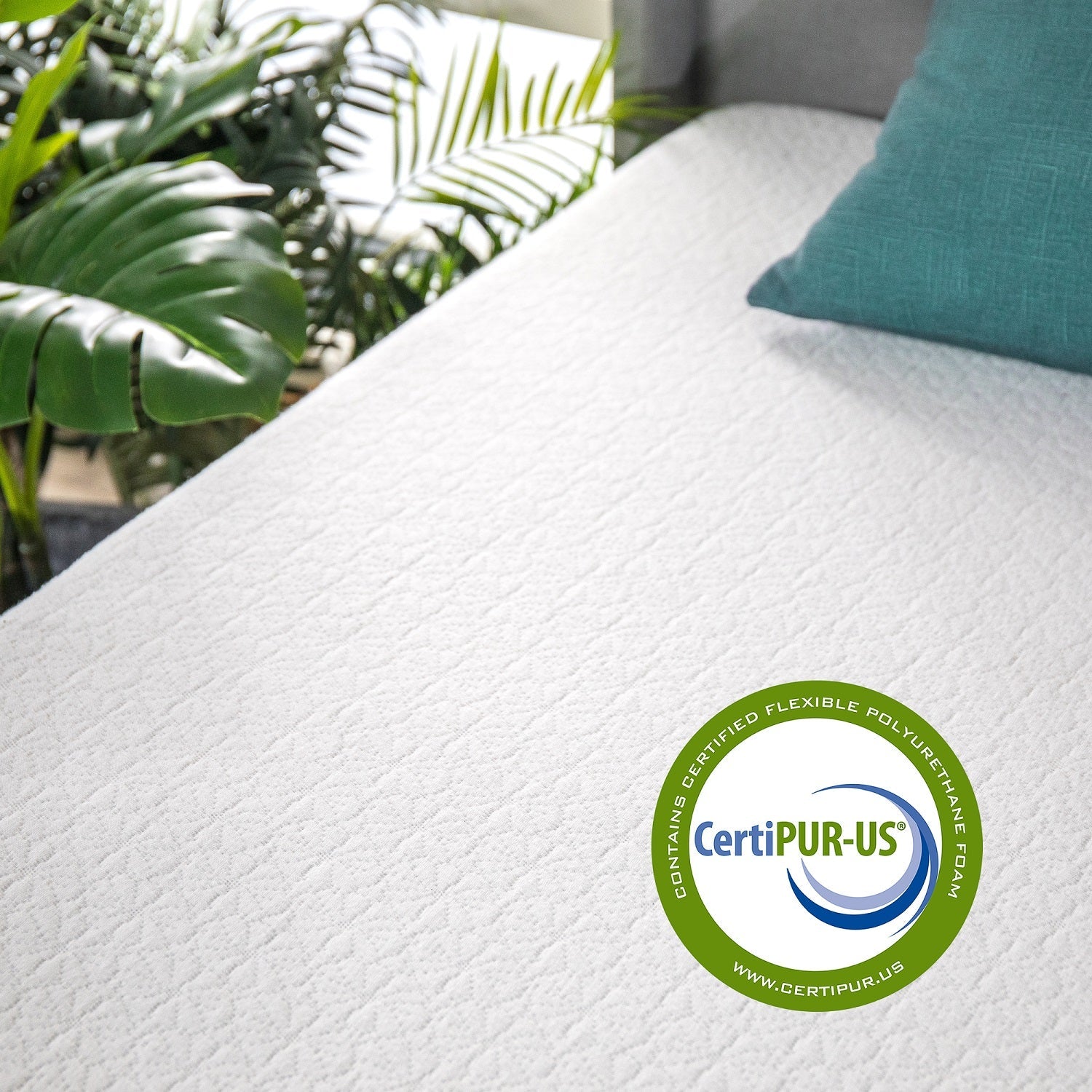
One thing Zinus gets right is their certification. The foam is CertiPUR-US certified. This isn't just a fancy sticker. It means the foam is made without ozone depleters, PBDEs, TDCPP, or TCEP flame retardants. It also means low VOC emissions. In an era where we're finding microplastics and weird chemicals in everything, having a third-party certification for the thing you breathe on for a third of your life is actually pretty important.
It’s not "organic." It’s still a petroleum-based product. But it’s the "cleanest" version of a budget foam mattress you’re likely to find at this price point.
Comparing the Depths
Zinus offers this bed in 6, 8, 10, and 12-inch profiles. It’s not just about height; the "feel" changes drastically.
- The 6-inch: It’s firm. Very firm. It’s basically a topper on top of a brick. Great for trundle beds or kids who weigh 60 pounds.
- The 8-inch: A bit more "give," but still on the firm side.
- The 10-inch: This is the "Universal Standard." It’s a true medium-firm.
- The 12-inch: This is the "Plush" experience. If you like that feeling of being hugged by a cloud (and potentially struggling to roll out of bed in the morning), this is yours.
Real World Longevity
I've talked to people who have had their Zinus for five years. The common consensus? It holds up surprisingly well for the first three years. Around year four, you might notice that the spot where you sleep doesn't "snap back" quite as fast. This is "indentation load deflection" loss. It’s normal for cheap foam.
You can extend the life by rotating the bed (not flipping, just rotating 180 degrees) every six months. Since you can’t flip it—because the bottom is hard support foam—rotating is your only move.
Better Sleep on a Budget
If you’re looking for a mattress that will be passed down to your grandchildren, keep looking. But if you’re a college student, someone moving into their first apartment, or a parent trying to furnish a guest room without breaking the bank, the Zinus memory foam green tea mattress is a legitimate contender. It’s comfortable, it’s cheap, and it’s predictable.
Just keep the cover on. Seriously.
To get the most out of it, pair it with a solid foundation. Make sure the room is ventilated during the first 24 hours of unboxing to let the herbal scent dissipate. If you find it’s too hot, add a bamboo or cotton mattress protector to create a bit of a buffer between your body and the foam. It’s about managing the materials.
Actionable Steps for New Owners
- Check the slats: Before the box arrives, measure the gaps on your bed frame. If they are wider than 3 inches, go to a hardware store and get a piece of "bunkie board" or plywood to create a flat surface.
- The Sniff Test: Unbox the mattress in a room with a window. Crack the window and run a fan for 24 hours. This speeds up the off-gassing process significantly.
- Expansion Hack: If the corners aren't popping up after 24 hours, gently "massage" the foam. Sometimes the fabric cover is just snagged on the foam and needs a little nudge to let the air in.
- Protection is Key: Buy a high-quality, breathable mattress protector immediately. It protects against spills, but more importantly, it ensures you never have a reason to unzip that dangerous outer cover.
- Temperature Control: If you’re a hot sleeper, keep your room about two degrees cooler than usual. Memory foam retains heat, so a cooler ambient temperature helps balance the "cooker" effect of the bed.