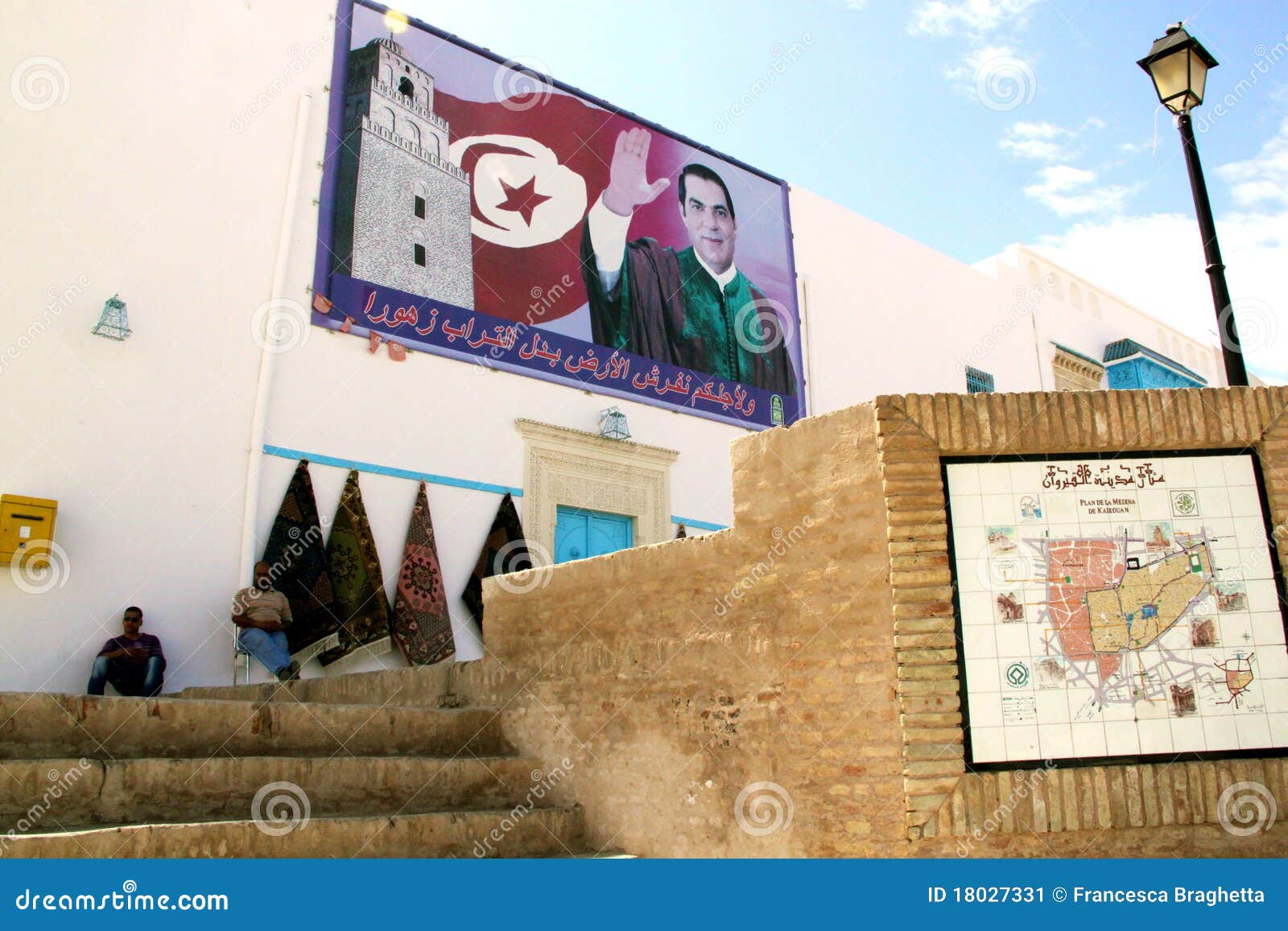
History has a funny way of flattening people into two-dimensional characters. If you mention Zine El Abidine Ben Ali today, most people immediately think of the Arab Spring. They see the grainy footage of 2011, the crowds in Tunis screaming "Leave!", and a private jet vanishing into the Saudi Arabian night. It's the classic "dictator's fall" narrative.
But honestly? The story is way more complicated than just a guy who stayed too long.
To understand why Tunisia exploded the way it did, you've got to look at the twenty-three years before that plane took off. Ben Ali wasn't just a caricature of a strongman. He was a master of a very specific, very "scientific" kind of control. For a long time, the West actually loved him. He was their "bulwark" against extremism, a secular modernizer who made sure the trains ran on time and the beaches stayed safe for European tourists.
He was the guy who could talk about women's rights in the morning and have his secret police, the Direction de la Sécurité Militaire, break a dissident's door down by midnight.
The "Medical Coup" that Started it All
Ben Ali didn't march into the palace with tanks. It was much quieter. 1987. Tunisia's first president, Habib Bourguiba, was getting old. Really old. Like, "ordering ministers to plant trees and then forgetting he did it" old.
Ben Ali was the Prime Minister at the time. He got seven doctors to sign a certificate saying the "Great Combatant" was senile and medically unfit to lead. Boom. Bloodless coup. He promised a "New Era" of democracy and pluralism. He actually scrapped the "President for Life" title that Bourguiba had given himself. People were relieved! They thought they were getting a reformer.
They weren't.
What they got was a career military intelligence officer who knew exactly where the levers of power were hidden. He didn't just rule; he managed. He turned the ruling party, the Democratic Constitutional Rally (RCD), into a machine that touched every single neighborhood in the country. You wanted a job? You joined the RCD. You wanted a permit for your shop? You better have a purple flag in the window.
The "Economic Miracle" with a Dark Secret
If you looked at the spreadsheets in the early 2000s, Tunisia looked great.
- GDP was growing at 4% or 5% annually.
- The poverty rate was officially dropping.
- Tourism was booming in places like Hammamet and Djerba.
But if you lived there? You saw the Trabelsi family. This is where the story gets really messy. Ben Ali’s second wife, Leïla Trabelsi, and her clan basically treated the Tunisian economy like their personal vending machine.
They didn't just take a piece of the pie; they took the bakery.
Telecoms, car dealerships, airlines, radio stations—if it made money, a Trabelsi probably owned a stake in it. A 2014 World Bank report eventually estimated that by the time Ben Ali fled, firms connected to his family accounted for 21% of all net private sector profits in Tunisia. Think about that. One family. A fifth of the country's wealth.
The Spark at Sidi Bouzid
Everything changed on December 17, 2010. You probably know the name: Mohamed Bouazizi. He was a 26-year-old street vendor in a dusty, forgotten town called Sidi Bouzid. A policewoman confiscated his fruit cart because he didn't have a permit. She allegedly slapped him.
He went to the provincial headquarters to complain. They ignored him.
So he doused himself in gasoline and lit a match.
He didn't do it to start a revolution. He did it because he was tired of being humiliated. But that act of desperation touched a nerve that had been raw for two decades. The "Ben Ali system" had plenty of money for the elites in the coastal cities, but it had nothing but police batons for the kids in the interior who had university degrees and no future.
Why the Military Didn't Save Him
This is a detail people often miss. In Egypt or Libya, the military was the backbone of the regime. In Tunisia, Ben Ali—a former General—actually kept the army small and marginalized. He didn't trust them. He put all his resources into the Ministry of the Interior.
He had 100,000 police officers and a massive network of informants.
When the protests reached a fever pitch in January 2011, Ben Ali supposedly ordered the Chief of Staff of the Army, General Rachid Ammar, to fire on the crowds. Ammar said no. That was the end. Without the army to back him up, the "scientific" dictatorship was just a house of cards.
On January 14, 2011, Ben Ali gave one last speech. He looked rattled. He promised "total freedom" for the press. He said he understood the people. It was too late. Within hours, he was on a flight to Jeddah.
The Quiet End in Saudi Arabia
Ben Ali spent the last nine years of his life in a sort of golden cage in Saudi Arabia. He never gave interviews. He never wrote a memoir. He just... faded. Back in Tunis, courts were busy sentencing him to life in prison (and then some) in absentia for everything from corruption to murder.
They found millions in cash and jewels hidden behind secret panels in his palace.
He died in 2019 at the age of 83. He's buried in Medina, far from the country he ruled for nearly a quarter-century.
What can we actually learn from this?
Looking back at the Ben Ali era in 2026, the lessons are pretty stark. Stability isn't the same thing as peace. You can have high GDP growth and "security," but if it's built on a foundation of humiliation and nepotism, it’s going to collapse.
It’s also a reminder that the "experts" are often wrong. Up until the week he fled, many Western diplomats were still calling Tunisia the most stable country in North Africa.
If you're looking to understand the modern Middle East, don't just look at the wars. Look at the "Ben Ali model" of the 90s. It’s the blueprint for how a lot of modern "soft" autocracies still try to function today.
Key takeaways for understanding the era:
- Don't trust the surface: High economic growth can hide massive structural inequality if you don't look at who owns the assets.
- Institutional loyalty matters: Ben Ali’s decision to favor the police over the military directly led to his inability to stop the 2011 uprising.
- The "Bread and Circuses" limit: Providing basic services isn't enough if the population feels a total lack of dignity (karama).
If you want to dig deeper into how the "Trabelsi Clan" operated, look for the World Bank's "All in the Family" report from 2014. It’s a dry read, but it’s basically a crime thriller in spreadsheet form. You can also track the current political situation in Tunisia under Kais Saied to see how many of the old RCD-style tactics are making a comeback. History doesn't always repeat, but in Tunisia, it's definitely rhyming lately.