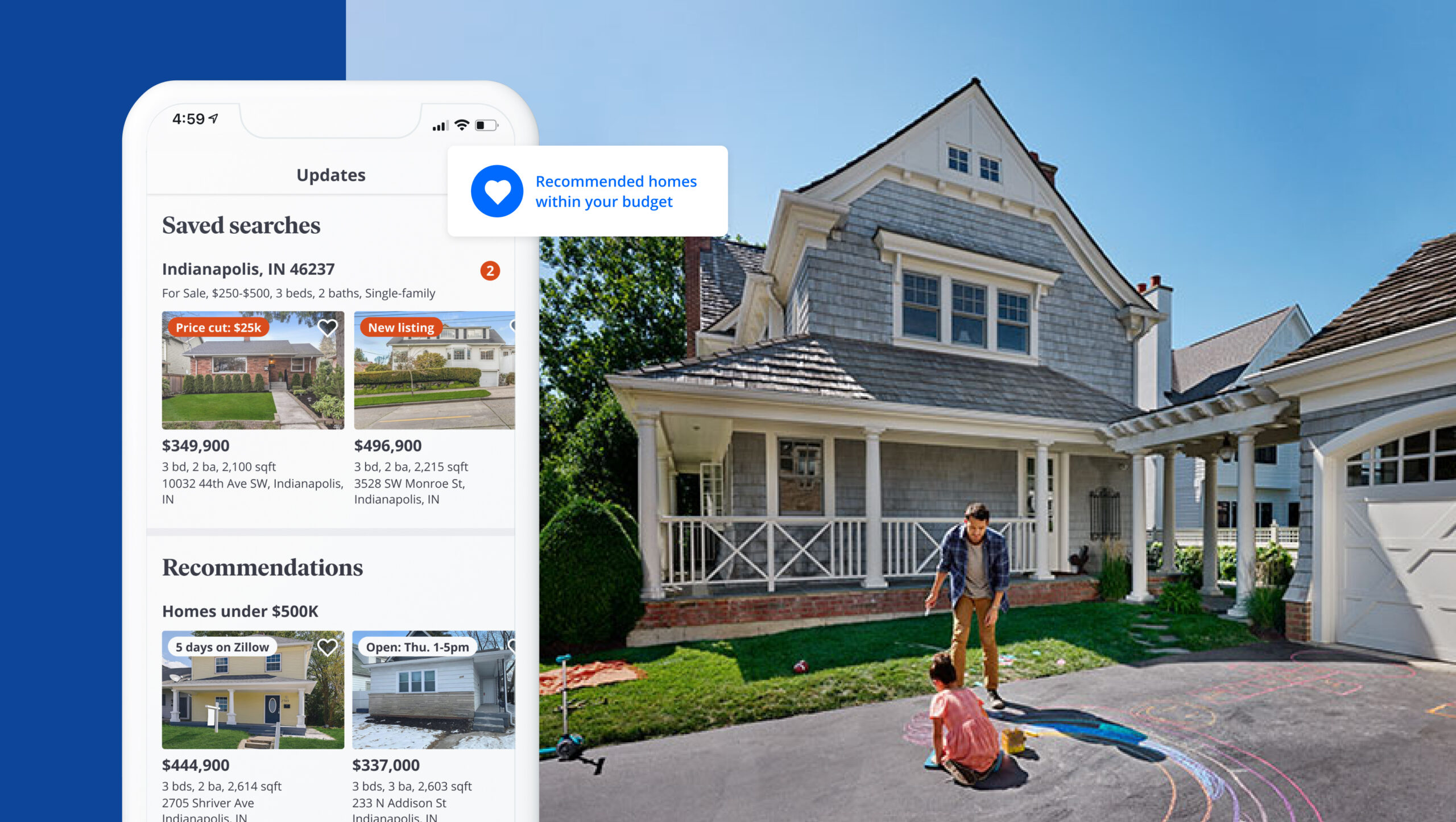
You’ve seen it. Everyone has. You’re sitting on your couch, scrolling through Zillow at 11 PM, and there it is: your Zillow Zestimate home value. It looks official. It’s got that specific dollar amount—not $450,000, but maybe $451,202. That precision feels like science. You start doing the "house math," calculating how much equity you have and whether you could finally afford that beach house in Florida or maybe just a nicer kitchen.
But here’s the reality: that number isn’t a check. Honestly, it’s more like a weather forecast for next Tuesday. It might be sunny, or you might end up soaking wet because the "algorithm" didn't see the storm clouds.
What is a Zestimate, anyway?
Basically, a Zestimate is Zillow’s best guess at what a house is worth. They use a massive "black box" of data—everything from tax records to recent sales in your ZIP code. In 2026, they’re even using neural networks to try and "think" like a human appraiser. They crunch hundreds of data points. Square footage? Check. Number of bathrooms? Check. That weird shed in the backyard? Maybe.
The tech is impressive, but it’s still just a computer program. It hasn't walked through your front door. It doesn't know you spent $40,000 on quartz countertops last summer. It also doesn't know your neighbor’s "comparable" house smells like a pack of cigarettes and hasn't been painted since 1994.
The Accuracy Gap: On-Market vs. Off-Market
If your house is currently for sale, the Zestimate is usually pretty scary-accurate. Why? Because Zillow can see your listing price. It’s sort of like a student peaking at the answer key during a test.
According to Zillow’s own data for 2026:
- On-Market Homes: The median error rate is roughly 1.9%.
- Off-Market Homes: The error rate jumps to about 7.0%.
That 7% doesn’t sound like much until you do the math on a $500,000 house. That’s a $35,000 swing! Imagine thinking you have enough for a down payment on a new place, only to find out the computer was "kinda" wrong by the price of a mid-sized SUV.
Why the Zillow Zestimate home value changes so much
It’s frustrating. You check your value on Monday, and by Friday, it’s dropped $5,000. Did your roof cave in? No.
Usually, this happens because of "comps." If a house three doors down sells for a low price because it was a "fixer-upper" sold to a developer, the algorithm might think your pristine, renovated home is also worth less. It sees the address and the sale price, but it misses the context.
Factors that trigger a shift:
- Public Record Updates: When the county updates your tax assessment.
- New Sales: A neighbor sells, and the "neighborhood average" moves.
- Algorithm Tweaks: Zillow constantly updates their math to be "better," which can cause your value to jump or dive overnight.
- Market Momentum: If interest rates (currently hovering above 6% in early 2026) cause a local slowdown, the Zestimate will eventually catch that chill.
The "iBuying" lesson we shouldn't forget
Remember when Zillow tried to buy houses themselves? It was called Zillow Offers. They relied so heavily on their own Zillow Zestimate home value that they ended up losing hundreds of millions of dollars. They overpaid for houses because the algorithm couldn't spot the difference between a "gem" and a "money pit."
They shut the whole thing down in 2021/2022, which is the ultimate proof that even the people who built the tool know it has limits.
How to actually influence your Zestimate
You aren't totally powerless here. If you think your value is way off, you can "claim" your home on the site. You can update the facts. Maybe the tax records still say you have three bedrooms, but you finished the basement and added a fourth.
Steps to fix a wonky Zestimate:
- Log in and claim your home.
- Update the "Home Facts." Be honest.
- Add photos of recent renovations.
- Check for errors in the square footage or lot size.
It won't change the number instantly, but over a few weeks, the algorithm will digest that new data.
Appraisals vs. Zestimates: The real heavyweights
If you’re actually selling or refinancing, your bank won't look at Zillow. They’ll hire a licensed appraiser.
A human appraiser does things a computer can't. They smell the air. They check the quality of the foundation. They look at the "flow" of the house. Most importantly, they select "comparables" with a critical eye, throwing out the sales that don't make sense (like a sale between family members or a foreclosure).
| Feature | Zillow Zestimate | Professional Appraisal |
|---|---|---|
| Cost | Free | $400 - $800+ |
| Method | Algorithm / Big Data | In-person inspection |
| Speed | Instant | 1-2 weeks |
| Purpose | Casual research | Loans, Divorce, Estates |
| Accuracy | Ballpark | Highly accurate / Legal |
What most people get wrong about "The Number"
The biggest mistake is thinking the Zestimate is a "price." It’s not. It’s a "valuation."
A house is only worth what a specific buyer is willing to pay on a specific Tuesday. If a buyer falls in love with your custom wood-fired pizza oven, they might pay $20,000 over the Zestimate. If the school district lines just changed or a new highway is being built nearby, the Zestimate might be the last thing to know.
Actionable Next Steps for Homeowners
Don't let a digital number dictate your financial stress. Use the Zestimate as a starting point, but do your own homework.
1. Look at "Sold" listings, not "Active"
Anyone can ask for $1 million for a shack. What matters is what people actually paid. Filter Zillow to show only "Sold" homes in the last 6 months within a half-mile radius.
2. Request a CMA from a Realtor
Most agents will give you a Comparative Market Analysis (CMA) for free. They want your business, sure, but they also have access to the MLS data that is much fresher than what trickles down to public sites.
3. Track the "Zillow Forecast"
Zillow has a tool that predicts where your home value will be in 12 months. In 2026, they're forecasting a modest 1.2% growth nationally. If your local forecast is negative, it might be time to think about your timeline.
4. Fix the data
Claim your home today. If your "Zestimate" is low because it thinks you don't have air conditioning, fix it. It takes five minutes and can actually help your "curb appeal" for people browsing online.
At the end of the day, your home is where you live. It’s an asset, yeah, but it’s also a roof. The Zillow Zestimate home value is a great tool for "window shopping" your own life, but when it’s time to move, trust a human eye over a silicon one.