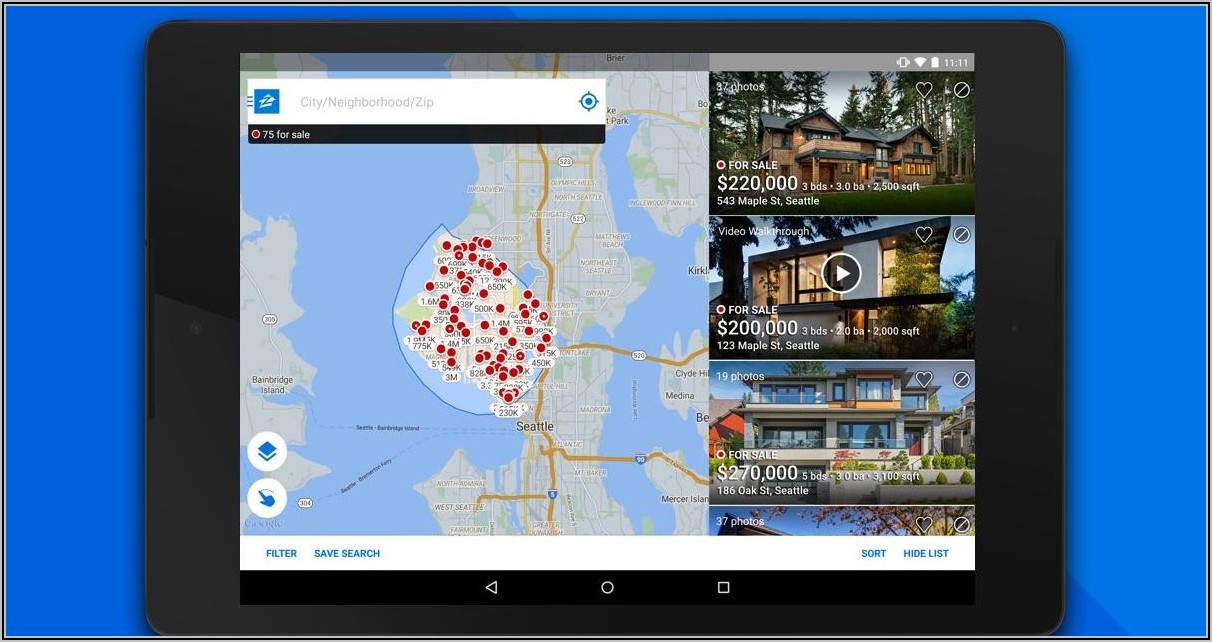
You’re scrolling through Zillow at 11 PM. Maybe you’re bored, or maybe you’re actually thinking about selling that bungalow with the drafty windows. You see it. The big, bold number next to the word Zestimate. It says your house is worth $542,000. Last month it was $530,000. You feel richer. But then you look at your neighbor’s place—the one with the collapsing porch—and Zillow says it’s worth $550,000.
Wait. What?
Understanding the Zillow estimate property value is a bit like checking the weather on an app; it gives you a general idea if you need a coat, but it won’t tell you if a localized micro-burst is about to take out your fence. It’s an algorithm. It's math. And math, honestly, doesn't know that you just spent twenty grand on Italian marble countertops that the neighbors definitely don't have.
The Ghost in the Machine: How the Zestimate Actually Works
Zillow isn't sending a guy in a polo shirt to peek through your windows. They’re using a proprietary neural network.
Basically, the system scours millions of data points. We're talking public records, tax assessments, and user-submitted data. It looks at "comps"—comparable sales in your area—and tries to spot patterns. If three houses on your street sold for $500k, the algorithm assumes yours is in that ballpark too.
But here’s the kicker: the Zillow estimate property value is only as good as the data it swallows. In areas where houses are "cookie-cutter" (think suburban developments where every third house is the same floor plan), Zillow is incredibly accurate. In fact, for homes on the market, Zillow claims a median error rate of about 2.4%. For homes not on the market? That error rate jumps significantly, often hovering around 7.4% or higher depending on the county.
Seven percent sounds small. Until you realize on a $500,000 home, that’s a $35,000 discrepancy. That’s a brand-new car or a year of college tuition just... vanishing into the ether of a bad calculation.
Why the Algorithm Trips Up
The computer can't see "vibe."
It knows your house has three bedrooms and two baths. It doesn’t know that the third bedroom smells faintly of damp basement or that your backyard has a stunning view of a local landfill. Conversely, it doesn't know you have original 1920s crown molding that a specific subset of buyers would sell their soul for.
- Public Record Lag: Your local county office is likely slower than a snail on vacation. If a sale happened yesterday, Zillow might not "see" it for weeks or even months.
- The "Renovation Gap": Did you finish the basement without a permit? Zillow has no clue. Did you do it with a permit? Zillow might still take six months to update.
- Geographic Illiteracy: Algorithms sometimes struggle with "neighborhood boundaries." It might compare your quiet cul-de-sac home to a house three blocks away that sits right next to a noisy freight train track. To a computer, 500 feet is 500 feet. To a sleeper, it’s the difference between peace and a 4 AM wake-up call.
The 2021 iBuying Disaster: A Lesson in Trusting the Numbers
Remember when Zillow tried to buy houses?
It was called Zillow Offers. They used their own Zillow estimate property value tech to flip homes at scale. They thought the algorithm was foolproof. They were wrong. The company ended up losing hundreds of millions of dollars because the "Zestimate" overpaid for thousands of properties that they couldn't sell for a profit.
They literally shut down the entire division and laid off a quarter of their staff. If the people who built the algorithm couldn't trust it to trade real estate profitably, you probably shouldn't use it as the gospel truth for your retirement planning.
How to Make the Zestimate Work for You
You can actually "train" the algorithm. It’s not a static number.
If you’ve ever looked at your home's page and seen incorrect info—like it says you have 1.5 baths when you clearly have 2—you’re losing money on paper. You can claim your home on Zillow. Once you've verified ownership, you can manually update the facts.
Add the deck. Mention the new HVAC. Correct the square footage.
When you update these features, the Zillow estimate property value often adjusts within 48 to 72 hours. It’s the fastest way to "increase" your home's digital value, even if the physical house hasn't changed a bit.
The "Comps" Reality Check
Don't just look at your own number. Look at the "Recently Sold" filter in your specific ZIP code.
Look for houses that match your square footage within a 10% margin. Are they actually selling for what Zillow says? If Zillow says your house is worth $600k, but the last three similar houses sold for $550k, your Zestimate is lying to you. It's likely clinging to a market peak from six months ago that has already cooled off.
Better Alternatives to Zillow Estimates
Zillow is the big dog, but it’s not the only one. Redfin has its own estimate. Realtor.com has one. Chase Bank even has one for homeowners.
- Redfin Estimate: Often considered slightly more accurate because Redfin is a brokerage and has more direct access to Multiple Listing Service (MLS) data in real-time.
- The CMA (Comparative Market Analysis): This is what a real estate agent does. They come to your house, smell the air, look at the cracks in the foundation, and compare it to what’s actually moving in the local market. It’s free, usually, because they want your listing.
- Professional Appraisal: This is the only number the bank cares about. If you’re refinancing or selling, a licensed appraiser is the final boss. They cost $400-$700, but their word is law in the world of lending.
Is the Zestimate Useful at All?
Yes. It’s a thermometer.
If you want to know if the market in your city is trending up or down, the Zillow estimate property value is a great macro tool. It’s fantastic for seeing the trajectory of your net worth over five years. It’s just terrible at telling you exactly how much cash will hit your bank account on closing day.
Market sentiment matters too. If buyers in your area believe Zillow is accurate, they might offer based on that number. In a weird way, the Zestimate can become a self-fulfilling prophecy. If everyone thinks a house is worth $500k because a website said so, that’s what the offers will look like.
Tactical Steps for Homeowners
Don't panic if your Zestimate drops. Markets breathe. They inhale and exhale.
If you're planning to sell in the next six months, stop looking at Zillow and start looking at "Days on Market" for homes in your neighborhood. If houses are sitting for 60 days, the Zillow estimate property value is probably inflated. If they’re selling in 4 days with multiple offers, the Zestimate is likely trailing behind the actual heat of the market.
- Claim your home: Log in and verify the facts. This is the simplest SEO for your house.
- Audit the "Comps": Check if Zillow is comparing your renovated gem to a "fixer-upper" down the street.
- Check the tax records: Sometimes Zillow pulls from outdated tax assessments. If your taxes were recently reassessed lower, it might be dragging your Zestimate down.
- Interview an agent: Get a human opinion. Ask them specifically why their number differs from Zillow. A good agent will point to specific "micro-market" factors the algorithm missed.
The Zestimate is a conversation starter, not a closing statement. Use it to get a ballpark, then do the legwork to find the real home plate. Your equity is too important to leave entirely to a server farm in Seattle.
Actionable Next Steps
- Audit Your Data: Log into Zillow today, "Claim Your Home," and ensure the bedroom/bathroom count and square footage match your most recent appraisal or tax record.
- Compare Platforms: Check your home's value on Redfin and Realtor.com. If there is a spread of more than 5%, investigate which platform is using outdated "sold" data.
- Track the Delta: Instead of focusing on the dollar amount, track the percentage change over six months to understand the momentum of your specific neighborhood.