You're sitting on your couch, scrolling through your phone, and you suddenly wonder what your house is worth. Maybe you're thinking of selling. Maybe you just want to brag to your brother-in-law at the next BBQ. So, you pull up that familiar blue app. You see a number. It looks official. But honestly, how does Zillow calculate home values, and can you actually take that number to the bank?
The Zestimate is a massive piece of tech. It's basically a living, breathing algorithm that never sleeps. It processes data from millions of homes across the country, trying to pin down a price tag for every single one of them. It's impressive, sure. But it’s also just a guess. A very educated, data-driven guess, but a guess nonetheless. If you've ever looked at your neighbor’s "identical" house and wondered why their Zestimate is $40k higher than yours, you’ve stumbled into the messy reality of real estate data.
How the Algorithm Actually Works
Zillow doesn't have a secret army of appraisers driving past your house every Tuesday. Instead, they use a proprietary formula. They call it a "neural network-based model." Sounds fancy. Basically, it’s a computer program that looks at public records, tax assessments, and user-submitted data. It tries to find patterns. If three houses on your street sold for $500,000 recently, and yours is about the same size, the math suggests yours is also worth around $500,000.
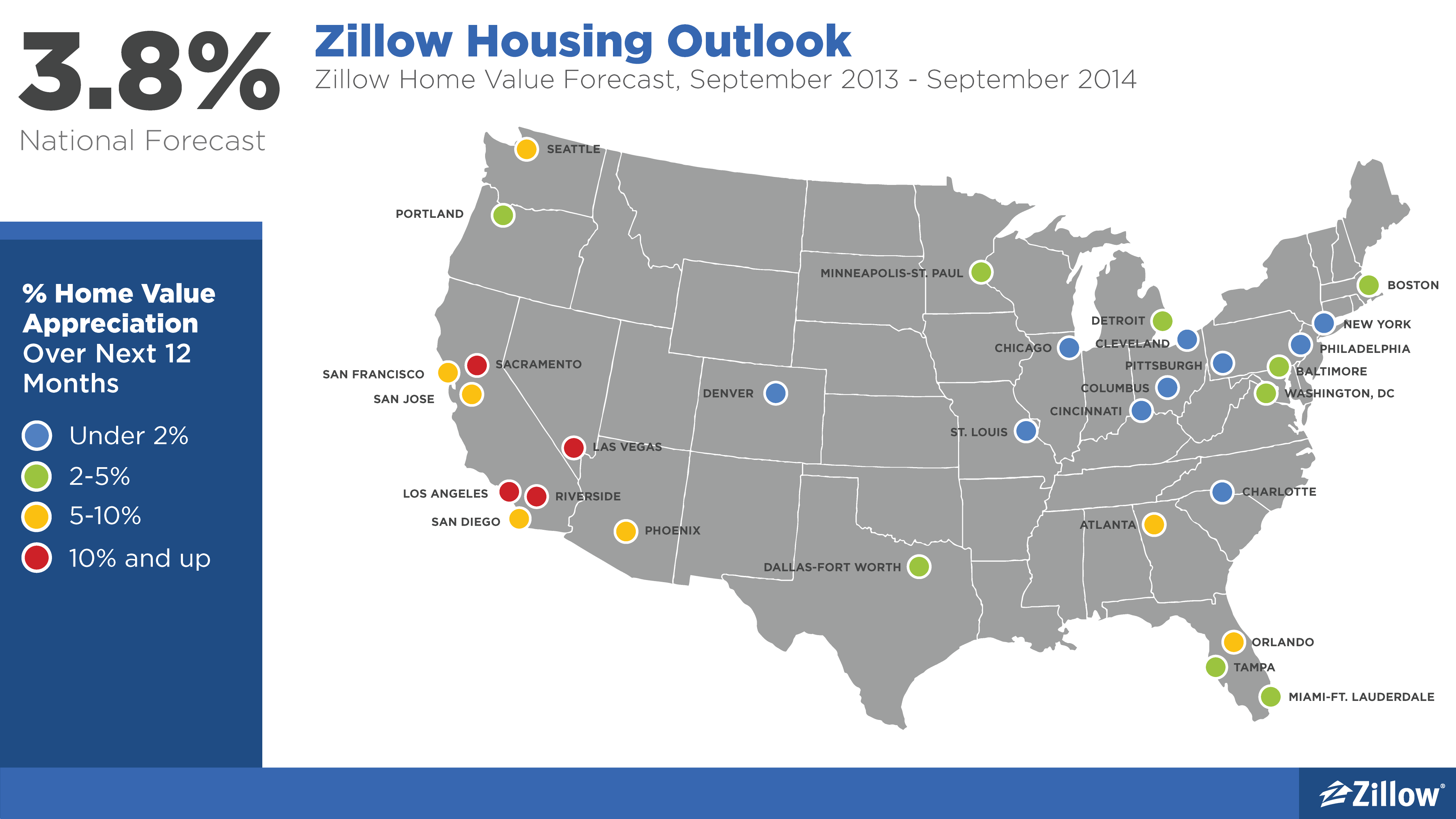
But it gets deeper. The system looks at "comps" or comparable sales. It factors in the number of bedrooms, the square footage, and even the "lot size." It also checks out historical price trends in your specific zip code. If the market in Austin is cooling but Miami is on fire, the algorithm adjusts. It’s looking at hundreds of data points for every single home.
The Data Gap
The biggest hurdle? The data isn't always perfect. Zillow relies heavily on public records. In some counties, those records are updated every week. In others? It might take months. If your local tax office is slow, your Zestimate will be lagging. Also, think about what a computer can't see. It doesn't know you spent $50,000 on a custom chef's kitchen last summer. It doesn't know your neighbor’s backyard is actually a swamp.
Public data is the skeleton, but the "soul" of the house is often missing.
Zillow tries to fix this by letting homeowners "claim" their homes. You can go in and update the facts. Tell the app you added a half-bath or finished the basement. When you do this, the algorithm re-calculates. It’s probably the easiest way to influence the number you see on the screen.
The Accuracy Problem (and the "On-Market" Trick)
If you want to understand how Zillow calculate home values accurately, you have to look at their own transparency reports. They aren't hiding the fact that they aren't 100% right. In fact, they publish their "median error rate" for major cities.
For homes that are currently for sale, the Zestimate is surprisingly accurate. Why? Because the listing price is already out there. The algorithm sees what the human real estate agent thinks the house is worth and says, "Yeah, that sounds about right." According to Zillow's own data from late 2023, the median error rate for homes on the market was only around 2.4%. That’s pretty tight.
But wait.
For homes that are off-market, the error rate jumps. It can go up to 7% or higher depending on the region. On a $500,000 home, a 7% error is $35,000. That’s not pocket change. That’s the price of a new SUV or a massive renovation.
Why Location Changes Everything
In a "cookie-cutter" subdivision where every house was built in 1998 by the same developer, Zillow is a king. The data is consistent. But in an old neighborhood in Boston or San Francisco? Every house is a snowflake. One might have original crown molding and updated plumbing, while the one next door is literally falling apart. The algorithm struggles here. It sees two 1,500-square-foot boxes and treats them similarly.
- High-turnover areas: More data means better accuracy.
- Rural areas: Fewer sales mean the algorithm has to "reach" further for data, leading to wilder guesses.
- Non-disclosure states: In states like Texas or Utah, sale prices aren't public record. Zillow has to work a lot harder—and guess a lot more—in these places.
The Human Element Zillow Misses
Real estate is emotional. Computers aren't. A Zestimate cannot tell you if a house "feels" cramped. It doesn't know if the street is noisy because of a new bus route. It doesn't know that the local school district just lost its accreditation, which might send property values cratering overnight.
I once talked to a listing agent in Chicago who had a client obsessed with their Zestimate. The app said the house was worth $620,000. The agent knew the market was shifting and recommended listing at $585,000 to spark a bidding war. The client refused. The house sat on the market for 90 days. Eventually, they sold it for $560,000. The Zestimate had "anchored" the seller to a price that didn't exist in reality. It’s a dangerous trap.
Can You Trust the "Zillow Calculate Home Values" Tool for a Loan?
Nope. Absolutely not. If you go to a bank for a mortgage or a home equity line of credit (HELOC), they won't even look at Zillow. They’re going to hire a licensed appraiser.
An appraiser is a human being who walks through your house with a clipboard. They look for cracks in the foundation. They smell the "pet odors." They see the view of the power lines. This human-led "Comparative Market Analysis" (CMA) is the gold standard. Zillow is a starting point, a conversation starter. It is not a financial document.
The Role of "Neural Networks"
Recently, Zillow shifted to using more advanced AI. Instead of just looking at the "stats" of a house, the AI can now "look" at photos. It analyzes the pixels in the listing photos to see if a kitchen has granite countertops or old laminate. This has helped close the gap in accuracy, but it’s still limited by the quality of the photos provided. If your photos are dark and blurry, the AI might assume your house is a dungeon.
Actionable Steps to Get Your Best Value
If you’re looking at the Zestimate and feeling disappointed, or if you think it's too high and you're worried about reality hitting you later, here is what you should actually do.
- Claim your home on Zillow. It sounds simple because it is. Correct the number of bedrooms. If they think you have a gravel driveway but it's actually paved with pavers, fix it. This is the only way to feed the beast better data.
- Look at "Solds," not "Actives." People can ask whatever they want for a house. That doesn't mean they'll get it. Filter your search on Zillow to only show homes that have sold in the last 6 months within a half-mile radius. This gives you a much truer picture of what buyers are actually paying.
- Check the "Price History" tab. If a house has been listed and delisted three times in two years, something is wrong. The Zestimate might not fully "punish" a house for being a lemon, but a human buyer will.
- Ignore the "Zestimate Forecast." Zillow often predicts if your home value will go up or down over the next year. Treat this like a weather report from a month ago. It’s based on macro-economic trends that can change the second the Fed moves interest rates.
- Get a CMA from a local pro. Most real estate agents will give you a Comparative Market Analysis for free. They want your business, sure, but they also have access to the MLS (Multiple Listing Service), which has much more granular data than what Zillow scrapes.
Real estate value is ultimately determined by what one person is willing to pay and what another is willing to accept. Zillow is just a spectator in that transaction. Use the tool to get a ballpark figure, but don't let a computer screen dictate your financial future. The real value is found in the local dirt, the local schools, and the current mood of the buyers in your specific neighborhood.
Check your Zestimate, laugh at it if it's wrong, and then go talk to a human who actually knows your street. That’s the only way to be sure.