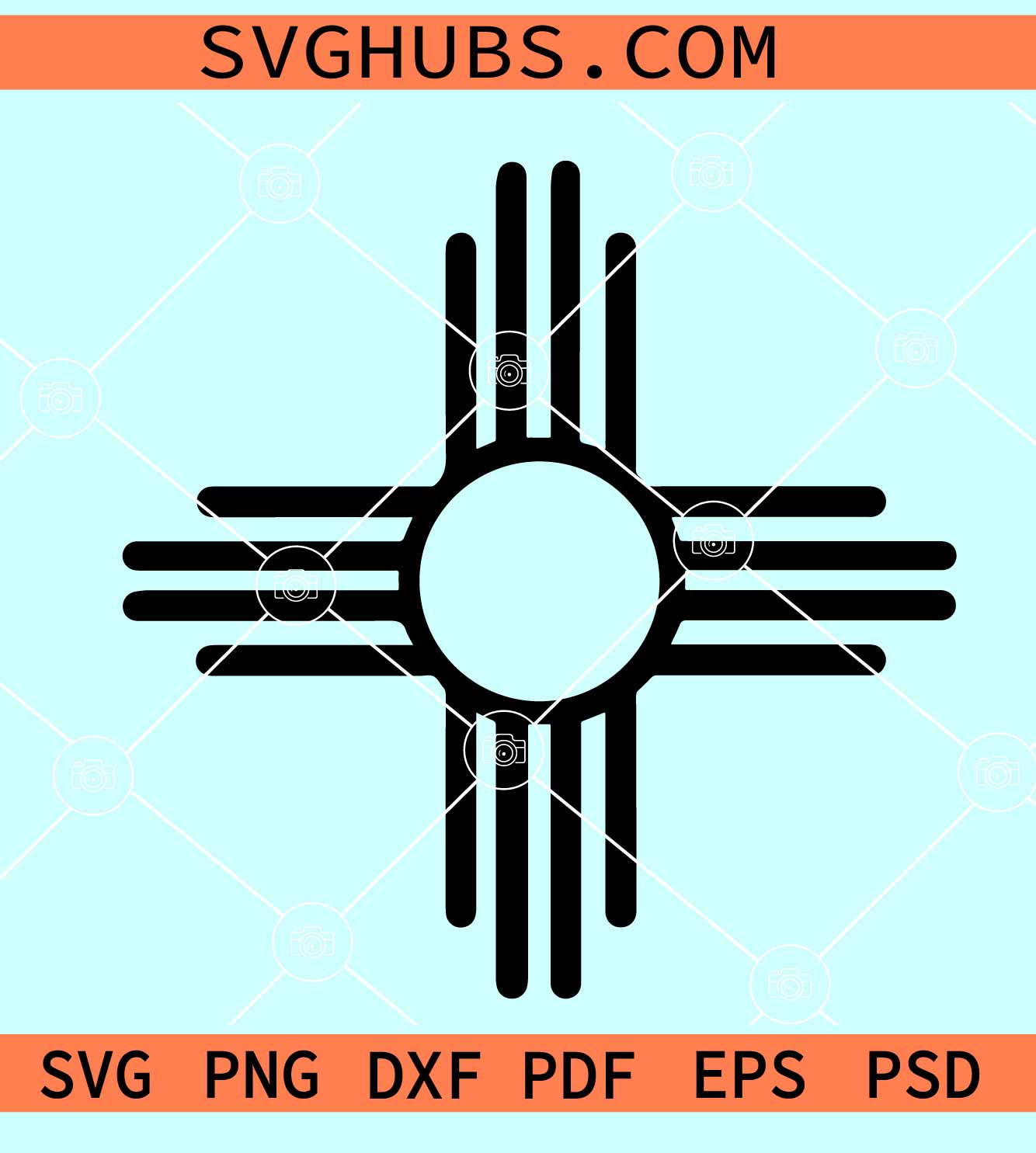
You see it everywhere. It's on the craft beer cans in Albuquerque, tattooed on ankles in Santa Fe, and plastered across the back of dusty Subarus from Gallup to Tucumcari. The zia new mexico symbol is basically the heartbeat of the state's visual identity. It’s simple, it’s symmetrical, and honestly, it’s one of the best-looking icons in the world.
But there is a massive gap between liking a cool design and understanding what it actually is. Most people think of it as a "state brand." The reality is much heavier. It’s a stolen religious icon that belongs to a specific group of people who never actually said, "Yeah, go ahead and put this on your bumper sticker." Don't miss our previous article on this related article.
The Day the Symbol Was Taken
New Mexico became a state in 1912, but for years, it didn't have a real flag. It had some unofficial blue banner that everyone kind of hated. So, in 1923, the Daughters of the American Revolution held a contest to find a better look.
An anthropologist and physician named Harry Mera ended up winning. He had seen a specific sun design on a 19th-century water jar—a sacred piece of pottery—that had been "removed" from the Zia Pueblo. Some accounts say it was stolen; others say it was "found" by collectors. Either way, it wasn't where it was supposed to be. Mera liked the look, his wife Reba sewed the first version, and by 1925, it was the official state flag. If you want more about the history here, ELLE provides an in-depth breakdown.
Here’s the kicker: nobody asked the people of the Zia Pueblo. At the time, Native Americans weren't even considered U.S. citizens. They couldn't vote. They certainly weren't in a position to hire a lawyer to sue the state for copyright infringement. They just had to watch as their most sacred spiritual image was turned into a public domain logo.
What the Symbol Actually Means (It’s Not Just a Sun)
To the people of the Zia Pueblo, who live about 35 miles northwest of Albuquerque, this isn't just a "sunny" logo. It’s a roadmap for how to live. The number four is the entire foundation of their philosophy.
The circle in the center represents the sun, but it also represents the "Circle of Life" that binds everything together. Then you have the four groups of rays. Each group has a specific meaning that most tourists never bother to learn:
- The Four Directions: North, South, East, West.
- The Four Seasons: Spring, Summer, Autumn, Winter.
- The Four Times of Day: Sunrise, Noon, Evening, Night.
- The Four Stages of Life: Childhood, Youth, Middle Age, Old Age.
There is even a deeper layer. The rays represent the four sacred obligations one must develop: a strong body, a clear mind, a pure spirit, and a devotion to the welfare of others. When you see it on a commercial for a discount tire shop, you can see why the Zia people might feel like the meaning is getting a bit diluted.
The Fight for Control
For decades, the Zia Pueblo has been trying to get some measure of control back. In the 1990s, they even asked the state for $74 million—essentially a dollar for every time the symbol had been "misused" over the years. They didn't get the money, but they did start a massive conversation about cultural intellectual property.
You can't really trademark the zia new mexico symbol in the traditional sense because it's already on a state flag. Under U.S. law, you can't trademark government flags. It’s a legal Catch-22. The state "took" it, which put it in the public domain, which makes it nearly impossible for the rightful owners to protect it legally.
However, things are changing. In 2000, Southwest Airlines did something radical: they actually asked for permission. They wanted to paint the symbol on one of their planes (the "New Mexico One"). The Pueblo said yes, but they asked the airline to donate to a scholarship fund for Zia children. Since then, dozens of companies have followed suit.
Is It Okay to Wear or Use It?
This is where it gets tricky for the average person. If you’re a New Mexican, you probably feel a deep, genuine pride when you see that red sun on a yellow field. It feels like "home."
The Zia Pueblo isn't necessarily trying to ban the symbol. They know the genie is out of the bottle. What they’ve requested is respectful use.
What does "respectful" look like? Well, for starters, don't put it on things that are inherently "dirty" or disrespectful. The tribe has specifically called out things like portable toilets, floor mats (where people step on the symbol), and alcohol packaging as being offensive. In their culture, the sun is a father figure. You wouldn't want people wiping their feet on your dad's face, right?
If you're a business owner wanting to use the zia new mexico symbol for your brand, the best move is to contact the Pueblo of Zia directly. They actually have a formal process now. They’ll likely ask you to make a contribution to their youth scholarship fund. It’s a way of acknowledging that you’re using something that doesn’t belong to you.
Actionable Steps for Using the Symbol
If you want to honor the Zia culture rather than just "consuming" it, here is what you can actually do:
- Check the Source: If you’re buying merchandise (shirts, jewelry, art) featuring the symbol, try to buy from Native artists or companies that have a formal agreement with the Zia Pueblo.
- Ask Permission: If you are starting a business or a major project, reach out to the Zia Pueblo Governor’s office. Even if they can't legally "stop" you, getting their blessing matters.
- Donate to the Scholarship Fund: If you’ve already used the symbol and feel a bit guilty, you can always make a voluntary donation to the Zia Pueblo’s education initiatives. It’s a "better late than never" approach to reparations.
- Educate Others: When someone comments on your cool Zia tattoo or sticker, tell them the "four groups of four" story. Shifting the narrative from "cool design" to "sacred philosophy" helps preserve the symbol's dignity.
New Mexico is a place of deep, overlapping histories. The flag is a beautiful collision of Spanish colors and Indigenous wisdom, but we can't forget that one side of that collision didn't get a vote. Using the symbol with a bit of humility goes a long way.
Next Steps: To properly honor the origins of the zia new mexico symbol, you should visit the Indian Pueblo Cultural Center in Albuquerque. They have extensive exhibits on the history of the 19 Pueblos and provide the most accurate context for how these symbols are viewed today by the people who created them. If you are a business owner, your next move is to draft a letter to the Zia Pueblo Tribal Administrator to discuss your intended use and how you can support their community in exchange.