If you’re landing in Dhaka today, your ticket probably says DAC. Your boarding pass almost certainly says Hazrat Shahjalal International Airport. But if you hop into a yellow cab or a CNG autorickshaw and ask for "Shahjalal," you might get a blank stare for a second before the driver grins and says, "Oh, Zia Airport!"
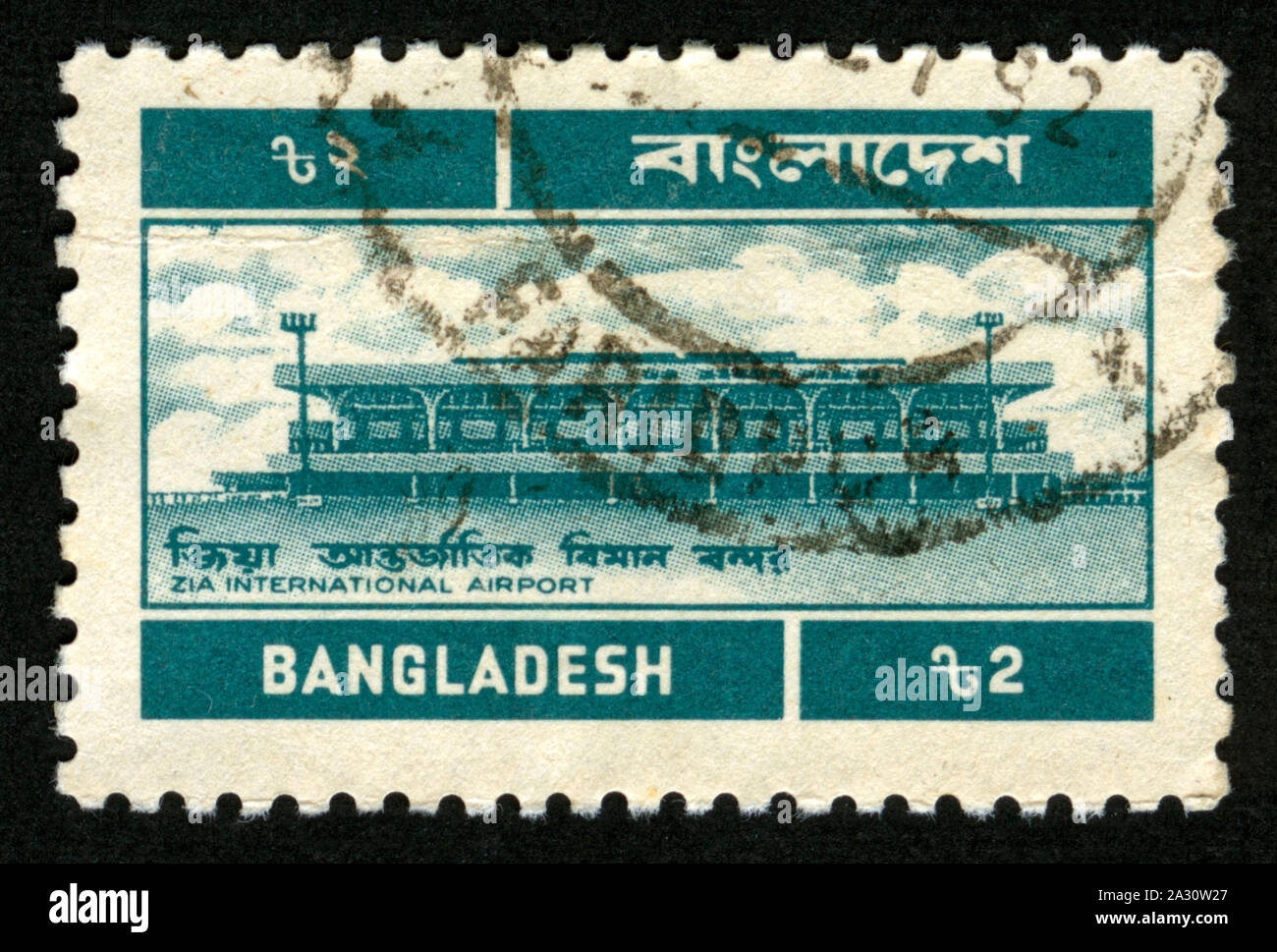
It’s been over 15 years since the official name change in 2010. Still, for many locals and frequent flyers, the ghost of Zia International Airport remains. It’s more than just nostalgia; it’s a linguistic habit that refuses to die, much like calling Mumbai "Bombay" or Yangon "Rangoon."
The Identity Crisis of Bangladesh’s Main Gateway
The airport wasn't always this massive sprawl in Kurmitola. Back in the day, the "real" airport was in Tejgaon, built by the British during World War II. When the jet age hit, Tejgaon just couldn't handle the big birds like the Boeing 707. So, the government moved things north.
The Kurmitola site officially opened in 1980. At first, it was just "Dacca International Airport." Then, in 1983, it was renamed after the late President Ziaur Rahman. For nearly three decades, Zia International Airport was the name printed on every postcard, every visa stamp, and every map of Bangladesh.
Then came 2010. The government decided to honor the 14th-century Sufi saint, Hazrat Shahjalal. Politics usually plays a role in these things, honestly. But for the traveler, it created a bit of a dual identity. You’ve got the official "HSIA" (Hazrat Shahjalal International Airport) on the signs and the colloquial "Zia" in the streets.
What You’ll Actually Find at DAC Today
Let's be real: for a long time, the experience at this airport was... challenging. Skytrax has given it a 2-star rating for a reason. You’ve probably heard the horror stories. Long lines at immigration, luggage that takes an hour to hit the belt, and that distinct "Dhaka humidity" hitting you the moment you step off the plane.
But things are changing fast. Right now, in early 2026, the airport is mid-metamorphosis.
The biggest deal is Terminal 3.
This thing is massive. We’re talking 230,000 square meters of glass, steel, and actually-functioning air conditioning. It’s designed by Rohani Baharin of CPG Consultants—the same folks who worked on Singapore’s Changi. It doesn't feel like the old Zia Airport anymore. It feels like a world-class hub.
The Third Terminal: A Game Changer
If you haven't seen it yet, the design of Terminal 3 is stunning. It’s got these high ceilings with a "wave" pattern that mimics the rivers of Bangladesh.
- Capacity: It’s built to handle 12 million more passengers annually. That doubles the airport’s total capacity.
- Automation: They finally brought in "e-gates" for immigration. You don't have to wait for a guy to manually flip through every page of your passport if you have a biometric one.
- The Food Situation: Gone are the days of just a sad samosa and tea. There are actual international chains and decent lounges now.
The project cost about 21,300 crore BDT (roughly $2.3 billion). Most of that was funded by the Japan International Cooperation Agency (JICA). Because of that Japanese involvement, the efficiency is noticeably better. They’ve even brought in Japanese firms to help with the ground handling, which—let’s be honest—was the biggest bottleneck for years.
Navigation Hacks for Travelers
If you’re heading to the airport, don't just "show up." Dhaka traffic is a beast that eats schedules for breakfast.
The airport is about 17km from the city center (Gulistan/Motijheel), but that 17km can take two hours. Seriously. If you're coming from Banani or Gulshan, you’re closer, but the construction for the Elevated Expressway can still mess you up.
Pro Tip: Use the train. There’s an airport railway station right across the street. If you're traveling light, you can skip the traffic entirely by taking a local train from Kamalapur. Just be ready to dodge some crowds.
The Biman Experience vs. Foreign Carriers
Most people flying into the old Zia International Airport name (HSIA today) are either on Biman Bangladesh Airlines or one of the big Middle Eastern carriers like Emirates or Qatar Airways.
Biman gets a lot of flak, but they’ve upgraded their fleet significantly. They’re flying Dreamliners (787-8 and 787-9) now. The legroom is actually better than some European carriers. However, the service is still "hit or miss."
If you want the smoothest experience, the Middle Eastern "Big Three" are your best bet. They usually have the best slots and the shortest transit times. But with Terminal 3 now fully operational in 2026, even the budget carriers like Air Arabia and FlyDubai are feeling much more "premium" because the ground facilities have caught up.
Is the "Zia" Name Still Relevant?
You might wonder if you should bother calling it Zia. Honestly, if you’re talking to a government official or a young Gen Z traveler, stick to "Shahjalal." If you’re talking to a veteran taxi driver who’s been driving since the 80s, "Zia Airport" is your magic password.
It’s a bit like the currency. People still occasionally talk about "lakhs" and "crores" in ways that confuse outsiders, but it’s just part of the local rhythm.
Actionable Tips for Your Next Visit
- Check Your Terminal: Don't just tell the driver "Airport." With Terminal 3 open, different airlines are split. If you end up at Terminal 1 when you should be at Terminal 3, you've got a stressful 15-minute walk or a messy drive ahead of you.
- Download Pathao or Uber: Don't haggle with the airport taxi mafia. The prices they quote are insane. Use a ride-sharing app. There’s a designated pickup point now, though it can be a bit chaotic to find.
- Currency Exchange: The rates inside the arrivals hall are okay, but there are dozens of booths. Walk past the first three; the ones further down sometimes have slightly better margins.
- SIM Cards: Get your Grameenphone or Robi SIM card before you leave the airport. There are kiosks right next to the luggage belts. You’ll need a copy of your passport and a photo. It takes 10 minutes and saves you a massive headache later.
The transition from the old Zia International Airport to the modern Hazrat Shahjalal International is almost complete. The physical transformation is done; the cultural one is still catching up. Whether you call it Zia, Shahjalal, or just "DAC," it remains the frantic, loud, and increasingly modern heartbeat of Bangladesh.
Pack your patience, but expect a much better welcome than you would have received five years ago.