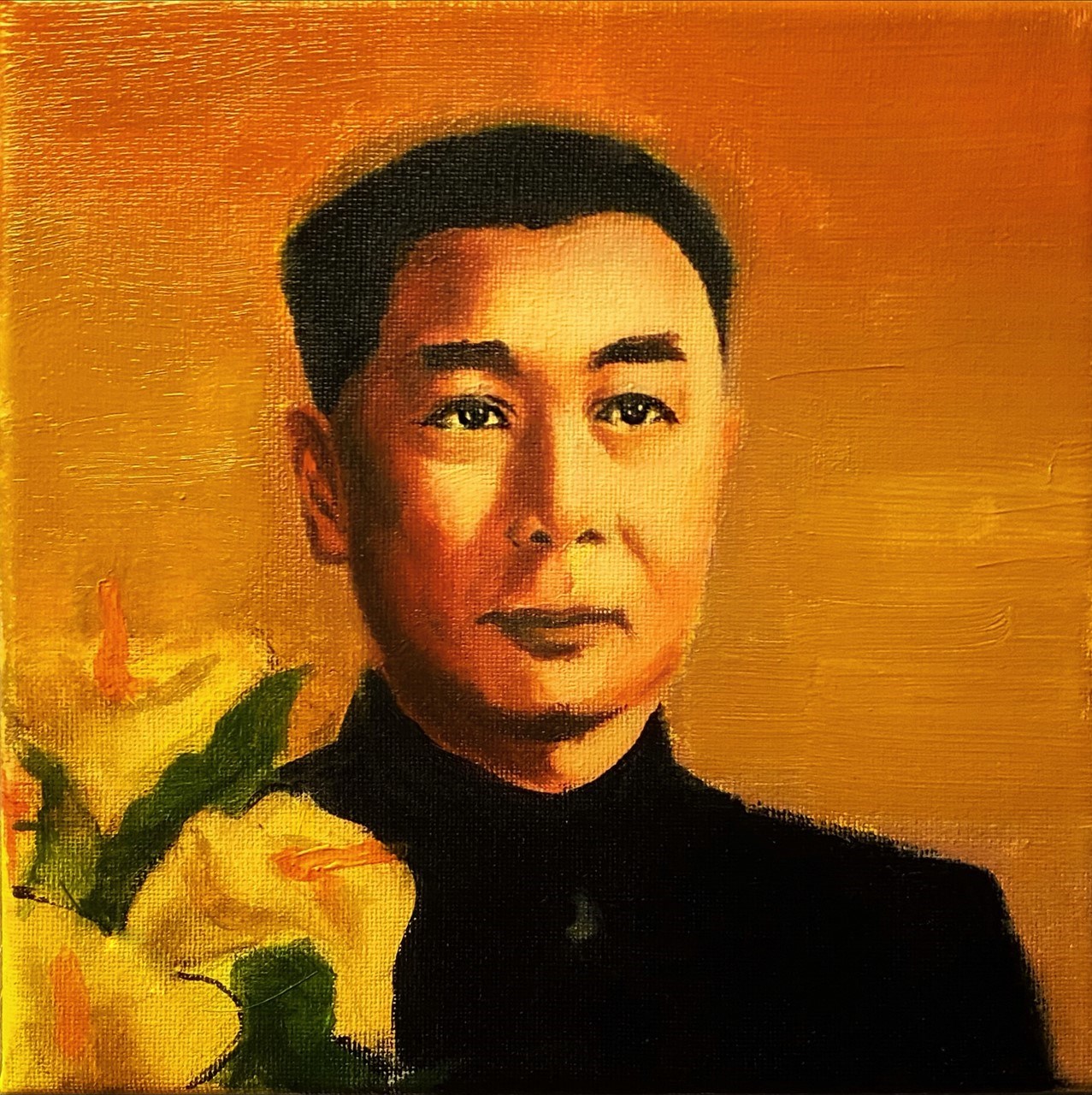
It is arguably the most famous historical "mic drop" in the history of modern diplomacy. You’ve probably heard it before. In 1972, during Richard Nixon’s groundbreaking visit to China, Henry Kissinger reportedly asked the Chinese Premier about his thoughts on the 1789 French Revolution. Zhou Enlai, ever the stoic intellectual, supposedly replied: "It is too early to say." People love this story. It paints the Chinese leadership as thinkers who operate on a timeline of centuries rather than fiscal quarters. It suggests a level of profound, ancient patience that makes Western politics look like a frantic game of musical chairs.
But there is a massive problem with this legendary exchange. It basically didn't happen—at least, not the way you think it did.
The Great 1972 Misunderstanding
The truth is way more mundane. It’s also a perfect lesson in how historical myths get cemented into "fact" through bad translation and a lack of context. When Zhou Enlai was talking about the French Revolution, he wasn't thinking about Marie Antoinette or the storming of the Bastille in 1789.
He was thinking about 1968.
During the 1972 meetings, the air was thick with talk of radicalism. France had just been rocked by massive student protests and general strikes in May 1968, events that nearly toppled the French government and deeply interested the Chinese Communist Party. When Kissinger brought up "the revolution in France," Zhou was thinking about the riots that had happened only four years prior.
Charles Freeman, the American diplomat who acted as Nixon's interpreter during the trip, has spent years trying to set the record straight. He confirms that the context of the conversation was clearly about contemporary French politics. Kissinger didn't correct him. The myth was born.
It's kind of funny, honestly. We’ve spent decades attributing this deep, mystical foresight to Zhou when, in reality, he was just giving a standard, cautious political assessment of a recent event. He wasn't looking back two hundred years; he was looking back at the previous Tuesday.
Why the Myth of Zhou Enlai and the French Revolution Persists
Why do we want to believe the fake version so badly? Because it fits a narrative. We like the idea of an inscrutable East. We want to believe that while Americans are worried about the next election cycle, Chinese leaders are weighing the long-term consequences of the Enlightenment.
There's also the personality of Zhou Enlai himself. He was the "bridge" between the radicalism of Mao Zedong and the pragmatism that eventually led to China’s opening. He was sophisticated. He spoke French. He had lived in Paris in the 1920s as a young student. If anyone was going to drop a philosophical bomb about the 18th century, it was him.
But if you look at Zhou’s actual history in France, you see a man who was far more concerned with practical organizing than abstract historical theory. When he lived in the 13th arrondissement of Paris, he was busy working in a Renault factory and a coal mine, trying to recruit other Chinese students to the communist cause. He lived in a tiny room, eating basically nothing but baguettes and drinking water, according to biographies like Zhou Enlai: A Life by Chen Jian.
The Paris Years
In the early 1920s, Paris was a hotbed for revolution. You had Ho Chi Minh there. You had Deng Xiaoping. They weren't just sitting in cafes talking about Robespierre; they were learning how to run a political party.
Zhou’s connection to the French Revolution was ideological, but it was filtered through the lens of Marxism. To the Chinese revolutionaries of that era, the 1789 revolution was a "bourgeois revolution." It was a necessary step in the ladder of history, but it wasn't the final destination.
- He helped form the CCP’s European branch.
- He learned the mechanics of propaganda.
- He observed the failures of Western parliamentary democracy firsthand.
This experience shaped his world view. When he spoke about revolution, he spoke as a practitioner. This makes the "too early to say" quote even more ironic. Zhou was a man who understood the nitty-gritty of power. He wasn't a fortune cookie.
Did the 1789 Revolution Actually Influence Chinese Communism?
You can’t just dismiss the link entirely. While the 1972 quote was a mistake, the 1789 French Revolution did leave a footprint on the Chinese psyche.
The radicalism of the Jacobins—the "Reign of Terror"—was something that Mao Zedong studied. Mao famously said that a revolution is not a dinner party. He embraced the idea that total social upheaval was necessary to cleanse the old system. This echoes the French revolutionary idea of "Year One," the notion that you can completely reset a culture and start time over.
But Zhou was the stabilizer. He was the one who had to clean up the messes left by radicalism. Whether it was the Great Leap Forward or the Cultural Revolution, Zhou was the man behind the scenes keeping the lights on.
His real-life perspective on historical change was likely much more nuanced than the quote suggests. He knew that social changes take generations to stick. He also knew that if you push too hard, the whole thing collapses.
The Semantic Trap of "Revolution"
Part of the confusion stems from the word itself. In Chinese, gémìng (革命) literally means "to change the mandate." It’s a heavy word.
When a Westerner says "The French Revolution," they are almost always referring to 1789. When a Chinese leader in the 1970s heard "The French Revolution," they might think of:
- The Paris Commune of 1871 (a huge deal in Marxist theory).
- The 1968 student uprisings.
- The 1789 events.
Kissinger, ever the academic, assumed they were on the same page. Zhou, ever the politician, answered the question he thought he was being asked.
What We Get Wrong About Historical "Wisdom"
We have a habit of romanticizing the past. We take a misunderstood quote and turn it into a management lesson. You can find "It is too early to say" in dozens of business books about long-term strategy.
It’s a bit of a letdown to realize it was just a glitch in communication.
But the reality is actually more interesting. It shows that even at the highest levels of global power, with the best translators in the world, people still talk past each other. It shows that our perception of history is often shaped by what we want to hear rather than what was actually said.
Actionable Insights from the Zhou Enlai Myth
So, what do we do with this? We can’t change the fact that the quote is everywhere. But we can change how we process historical information.
Check the context, not just the quote. Always ask who the audience was. In 1972, the Chinese were trying to figure out if France was still a stable power they could trade with. That context dictates the answer. If you're using a quote to justify a business strategy, make sure the quote isn't a ghost.
Watch for cultural projections. When we attribute "ancient wisdom" to modern political figures, we're usually just projecting our own desires for stability or depth onto them. Zhou Enlai was a brilliant, complex, and often ruthless politician. He wasn't a monk. Treat historical figures as the three-dimensional people they were.
Understand the Marxist timeline. If you want to understand Chinese foreign policy, you have to realize they view history in stages. Even if the quote was a mistake, the sentiment that "history is long" is still prevalent in Beijing. However, that doesn't mean they aren't also reacting to short-term pressures like everyone else.
The power of the "corrected" narrative. The next time someone drops the "too early to say" line at a dinner party, you can be the one to explain the 1968 connection. It’s a great way to show that you understand the nuances of the Cold War and the complexities of diplomatic translation.
History is messy. It's full of mistranslations, tired diplomats, and people assuming they know what the other guy is talking about. Zhou Enlai's non-comment on the French Revolution is perhaps the best example of that messiness. It’s not a sign of eternal wisdom, but a sign of human error. And in a way, that’s much more relatable.