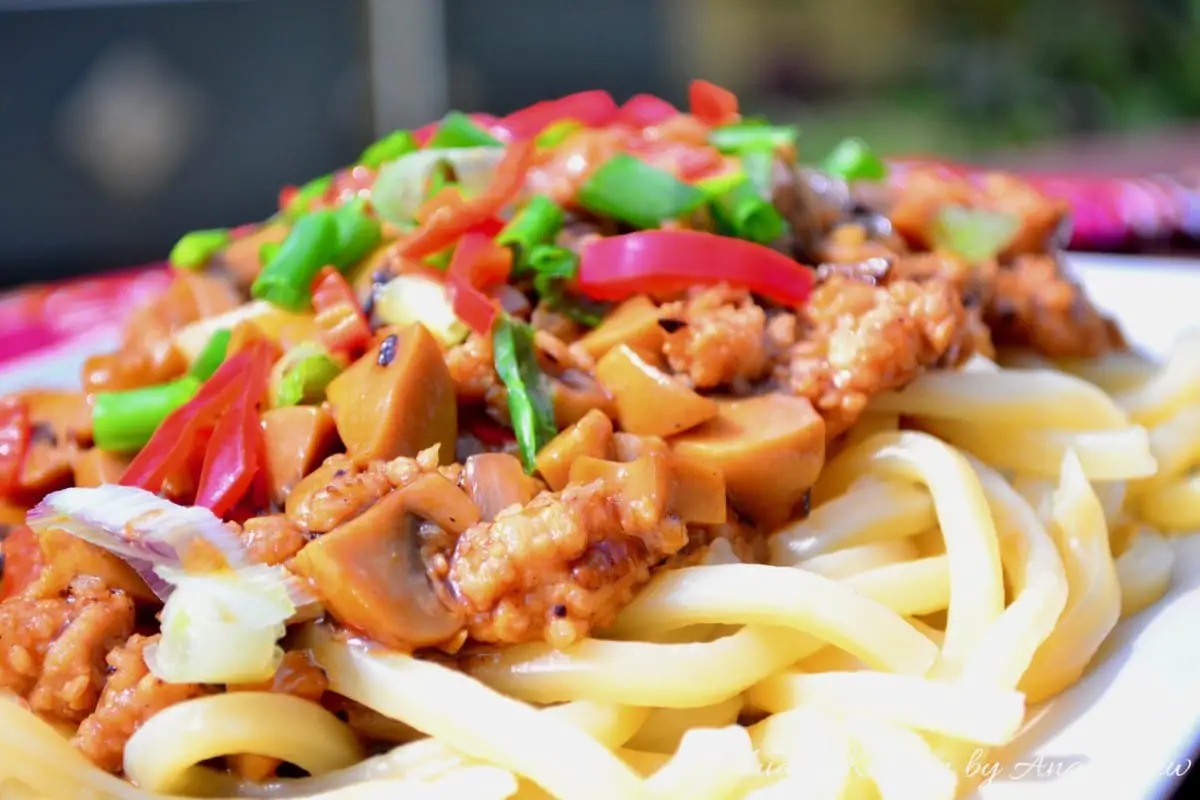
You've probably seen it on a dozen menus—maybe as Jajangmyeon in a Korean spot or Zha Jiang Mian in a traditional Beijing eatery. It's the "fried sauce" noodle. It's salty, earthy, and looks like a bowl of dark mahogany silk. But honestly, most home versions are just... sad. They’re either too sweet, too watery, or they taste like a salt lick.
Getting a zha jiang noodles recipe right isn't about following a rigid set of measurements. It’s about understanding the "fry." The "Zha" in the name literally means to fry the sauce in oil until the water evaporates and the fermented beans transform into something complex and savory. If you aren't seeing oil separate from the bean paste at the end, you haven't made Zha Jiang Mian. You've made a stew.
The Soul of the Sauce: Fermented Bean Pastes
Most recipes tell you to just grab a jar of "bean sauce" and call it a day. That’s a mistake. Beijing-style Zha Jiang Mian relies on a specific duo: Gan Huang Jiang (dry yellow soybean paste) and Tian Mian Jiang (sweet bean sauce).
The dry yellow paste provides the funk and the salt. The sweet bean sauce brings the sugar and the shine. If you're using the Korean version (Chunjang), you're making a different dish entirely—still delicious, but sweeter and smoother. For the authentic Northern Chinese punch, you need that gritty, fermented soybean base.
You should look for brands like Liubiju, which has been around since the Ming Dynasty. They know their beans. When you mix these pastes, you usually want a ratio of about 2:1 or 3:1 (Yellow to Sweet). If you find the yellow paste too salty, splash in some Shaoxing wine or water to loosen it up before it hits the pan.
The Pork Factor: Forget the Lean Stuff
Don't even think about using 95% lean ground turkey. Just don't.
Traditionalists use pork belly. You want to hand-dice it into tiny cubes, maybe half a centimeter wide. Why? Texture. Ground meat turns into a homogenous mush. Small cubes of pork belly give you these little "surprises" of rendered fat and chewy meat that hold onto the sauce.
If you're feeling lazy, use a fatty ground pork (at least 20% fat). When that fat renders out into the pan, that's what you’re going to fry your bean paste in. It’s a literal confit of fermented beans. It’s heavy. It’s rich. It’s exactly what it’s supposed to be.
The Cooking Process: Patience Over Heat
Start by rendering the pork. Use a wok or a heavy-bottomed skillet. You want the pork to get slightly crispy and release all its oil. This is where most people rush. Wait for the oil to turn clear.
Now, add your aromatics. Ginger is non-negotiable. Green onions? Use the whites now, save the greens for later. Some people like a star anise thrown in there for a subtle, medicinal high note.
Once the aromatics are fragrant, pour in your paste mixture.
This is the "Zha" part. Lower the heat. You need to stir this constantly for 10 to 15 minutes. The sauce will darken. It will go from a medium brown to a deep, casi-black espresso color. You’ll know it’s done when the oil begins to separate from the paste and bubbles on the surface. That’s the signal that the raw, harsh taste of the fermented beans has been "cooked out" and replaced by a mellow, umami-rich depth.
The Noodles: Chewy or Bust
The sauce is the star, but the noodles are the stage. You need wheat noodles with some serious "Q" (that’s the bouncy, al dente texture prized in Chinese cuisine).
If you can find fresh "handmade" style noodles at an Asian grocer, get those. If not, a thick dried wheat noodle works. Avoid rice noodles. They can’t handle the weight of the sauce.
A pro tip from Beijing locals: don't overcook them. Rinse them in cold water immediately after boiling to stop the cooking and remove excess starch. This keeps them from turning into a gummy block while you’re trying to mix in that thick sauce.
The "Codes" (Cai Ma)
In Beijing, the toppings are called Cai Ma (vegetable codes). This isn't just a garnish. It’s essential balance. The sauce is incredibly salty and fatty; you need the crunch and water content of raw vegetables to cut through it.
Classic toppings include:
- Cucumber: Julienned thin.
- Radish: Daikon or the crunchy green skin variety.
- Bean Sprouts: Briefly blanched.
- Fresh Garlic: This is for the brave. Serious eaters take a bite of a raw garlic clove between mouthfuls of noodles. It’s an aggressive, spicy hit that wakes up the palate.
- Edamame or Soybeans: For a bit of extra pop.
Common Mistakes and Misconceptions
People often ask: "Can I make this vegetarian?"
Yeah, you can. Substitute the pork with firm tofu cubes or diced shiitake mushrooms. Shiitakes actually work brilliantly because they have that natural glutamate "meatiness." But you'll need to add a bit more oil (maybe peanut or toasted sesame) since you aren't rendering fat from the meat.
Another big mistake is adding too much water. You might be tempted to thin the sauce out so it’s easier to stir. Resist. The sauce should be thick enough to coat a spoon and stay there. If it's runny, it’ll just pool at the bottom of the bowl and leave your noodles bland.
Regional Variations: A Quick Detour
While we’re focusing on the Northern style, it's worth noting how this dish traveled.
- Korean Jajangmyeon: Uses Chunjang (a black bean paste containing caramel). It’s much sweeter and usually includes onions and potatoes. It’s more of a comfort-food gravy.
- Sichuan Zha Jiang Mian: This version often appears in Dan Dan noodles. It’s spicier, uses Doubanjiang (chili bean paste), and is usually served in a smaller portion with a splash of chili oil and Sichuan peppercorns.
- Cantonese Style: Sometimes uses a bit of hoisin or tomato paste for a completely different flavor profile.
The zha jiang noodles recipe we’re talking about is the OG—the salty, savory grandfather of them all.
Putting it Together: The Assemble
When you’re ready to eat, don't just dump the sauce on top and call it a day.
Put your noodles in a deep bowl. Arrange your vegetables in neat piles around the perimeter. Ladle a generous spoonful of the hot sauce right in the center.
Then, mix. Mix like your life depends on it. Every strand of noodle should be stained brown. If you see a white noodle, you haven't mixed enough.
Actionable Next Steps for the Perfect Bowl
If you want to master this, start with these three moves:
- Hunt for the right paste: Go to a local Asian market and specifically look for "Dry Yellow Soybean Paste" (Gan Huang Jiang). If you can't find it, a standard Miso is NOT a substitute—it’s too mild. Look for "Sojo Bean Paste" or "Fermented Soybean Paste" in the Chinese aisle.
- Ditch the knife, use a cleaver: If you’re dicing pork belly, freeze it for 20 minutes first. It makes getting those tiny, perfect cubes a thousand times easier.
- Control the salt: Because bean pastes vary wildly in salinity, don't add extra salt or soy sauce until the very end. Taste the sauce after it has simmered for 10 minutes. If it’s too salty, add a pinch of sugar or more sweet bean paste. If it’s too thick, add a tablespoon of the noodle cooking water.
Making this dish is a ritual. It’s not a 15-minute weeknight meal. It’s a slow-burn Sunday lunch that makes your kitchen smell like a fermented, savory dream. Once you get that oil separation and that deep, dark color, you'll never go back to the watered-down versions again.