You’re staring at a grid. It’s a Tuesday morning, or maybe a particularly brutal Saturday, and the clue just says "Sky Father" or "Top God." You start counting the squares. Four letters? Probably Zeus. Five? Might be Odin. Five again but feels... different? Now you’re sweating because the Zeus Odin or The Dagda NYT crossword rabbit hole is deep, and honestly, it’s one of the most common stumbling blocks for casual solvers and pros alike.
Crosswords love a good archetype. They especially love the "Great Bearded Dude in the Sky" trope because these names are vowel-heavy and fit into tight corners of a puzzle like a dream. But if you’ve been hitting the New York Times games lately, you’ve noticed they aren’t just sticking to the Greek classics anymore. They’re getting weird with it. They’re bringing in the Irish heavy hitters.
Why does this keep happening? It's not just a coincidence. Constructionists—the people who actually build these puzzles—use these figures as "glue." When you have a "Z" or a "G" that you can't get rid of, you call in the gods.
The Greek Speedster: Why Zeus Rules the Grid
Zeus is the king of the four-letter word. Seriously. If you see a four-letter clue about lightning or Mount Olympus, don't even think; just pencil it in. He’s the ultimate crossword filler. That "Z" is a goldmine for constructors because it lets them build flashy words around him, like "ZEST" or "AZURE."
But there’s a nuance here that people miss. Sometimes the NYT gets cheeky. They won't ask for "Greek God." They’ll ask for "Leda’s Seducer" or "Father of Ares." If you aren't brushed up on your mythology, you’re going to be staring at those four blank boxes for a long time. Zeus is the bread and butter of the Zeus Odin or The Dagda NYT trio because he’s so short. He’s efficient. He gets in, does the job, and lets you finish the Northwest corner before your coffee gets cold.
He’s been appearing in the Times crossword for decades. According to databases like XWord Info, Zeus has popped up hundreds of times. He’s predictable. Boring? Maybe. But reliable.
The Norse One-Eyed King
Then you’ve got Odin. Five letters.
Odin is a bit more sophisticated. He’s the "Woden" of Wednesday. When the clue mentions "Hugin and Munin" (his ravens) or "Sleipnir" (his eight-legged horse), you know you're dealing with the Norse patriarch. Odin is a favorite because he has two vowels that are incredibly useful: O and I.
Actually, the NYT often uses Odin to bridge gaps between difficult consonant-heavy words. If you have "Thor’s Dad" as a clue, it’s an easy win. But lately, the editors have been pushing for more "secondary" traits. They might clue him as "Poetry God" or "The One-Eyed." It’s these specific descriptors that separate the Monday solvers from the weekend warriors.
Enter The Dagda: The Irish Curveball
Now, let’s talk about the one that actually ruins people’s streaks: The Dagda.
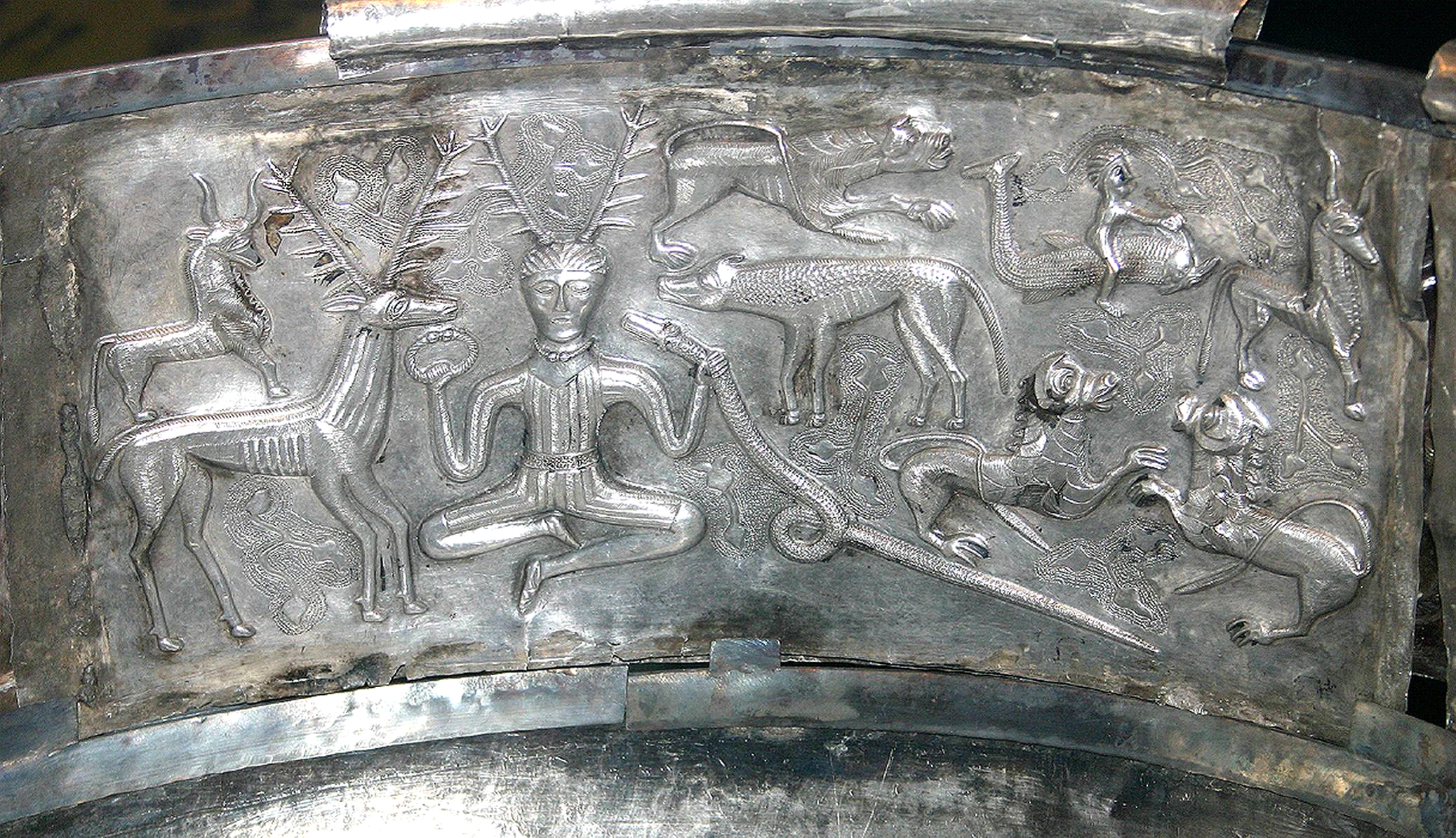
If you’re looking at Zeus Odin or The Dagda NYT clues and you see something about a "Good God" or a "Cauldron," you’re in Celtic territory. The Dagda is the "Good God" of the Tuatha Dé Danann. He’s not "good" in a moral sense necessarily, but "good at everything." He’s a polymath.
He’s got a club that can kill nine men with one end and bring them back to life with the other. He has a cauldron that never runs dry. He’s a big, earthy, powerful figure that is significantly harder to fit into a puzzle than Zeus. Why? Because "DAGDA" is a weird word. That double "D" with a "G" in the middle? That’s a nightmare for a constructor unless they have a very specific layout.
When The Dagda shows up, it’s usually a sign that you’re dealing with a mid-to-late week puzzle. It’s a "knowledge check." The NYT isn’t just testing your ability to find patterns; they’re testing your cultural literacy. If you know the Dagda, you likely know your Irish mythology, and that puts you in an elite tier of solvers.
Why We Get These Three Mixed Up
Honestly, it’s because they all occupy the same "space" in our brains. They are the bearded patriarchs. They all have magical weapons. They all have complicated family trees that would make a soap opera writer blush.
- Zeus: Lightning, ego, Mount Olympus, 4 letters.
- Odin: Wisdom, ravens, Valhalla, 5 letters.
- The Dagda: Cauldron, harp, Ireland, 5 letters (usually "DAGDA").
The confusion usually happens when the clue is vague. "Mythological leader." That could be any of them. You have to look at the crossing words. If the second letter is an 'E', it's Zeus. If the first letter is an 'O', it's Odin. If you see a 'G' in the middle? You’re dealing with the Irishman.
The Strategy for Beating the NYT Grid
Don't just guess. That’s how you lose your streak.
Look for the "tell." NYT clues always have a tell. If the clue mentions "Valhalla," it’s Norse. If it mentions "Olympus," it’s Greek. If it mentions "Tuatha," it’s Celtic. It sounds simple, but in the heat of a timed solve, people panic. They see "God" and they immediately think Zeus.
Also, keep an eye on the vowels. The NYT loves "A-E-I-O-U" patterns. Zeus and Odin are vowel-heavy. The Dagda is "A-heavy." This is actually a huge hint. If the surrounding words need an 'A', the Dagda is your man.
Cultural Shift in Puzzling
We’re seeing a shift. Ten years ago, you’d almost never see The Dagda. It was all Zeus, Hera, and the occasional Apollo. But the NYT has been making a concerted effort to diversify their clues. They want to move away from the "standard" Western canon and include more global mythologies.
This is great for the soul, but it’s hard for the brain. You can’t just rely on what you learned in 9th-grade English class anymore. You have to be a bit of a polymath yourself. You have to know your Shinto gods, your Aztec deities, and your Celtic legends.
The Zeus Odin or The Dagda NYT phenomenon is just the tip of the iceberg. It represents a broader trend of "difficult" trivia becoming "standard" trivia. What was once a Saturday clue is now showing up on Wednesdays.
Actionable Tips for Your Next Solve
To keep your streak alive and conquer the "Sky Father" clues, follow these specific steps:
1. Categorize the Pantheon Immediately As soon as you see a deity clue, check the length. 4 letters is almost always Zeus (or Mars/Ares). 5 letters is the danger zone where Odin and Dagda compete. Look for "Norse" vs "Celtic" keywords.
2. Learn the Attributes, Not Just the Names Stop memorizing "Odin = God." Start memorizing "Odin = Raven, One-eye, Wednesday." Memorize "Dagda = Cauldron, Club, Harp." These specific nouns are what the NYT uses to clue the names when they want to make it "Hard" or "Very Hard."
3. Use the "Crossing" Method If you’re stuck between Odin and Dagda, look at the third letter. If the crossing word requires an 'I', it's Odin. If it requires a 'G', it's Dagda. Never fill in a 5-letter god without at least one confirmed crossing letter.
4. Watch for "Roman" vs "Greek" The NYT loves to swap Zeus for Jupiter. If the clue says "Roman," Zeus is out. Jupiter is 7 letters. This is a common trap where people try to squeeze a Greek name into a Roman slot.
5. Keep a "God List" If you’re serious about your 100-day streak, keep a small note on your phone. Group them by letter count. 4: Zeus, Hera, Iris, Pan. 5: Odin, Dagda, Shiva, Horus. Having this mental (or physical) map makes the "Zeus Odin or The Dagda NYT" puzzles a breeze rather than a headache.