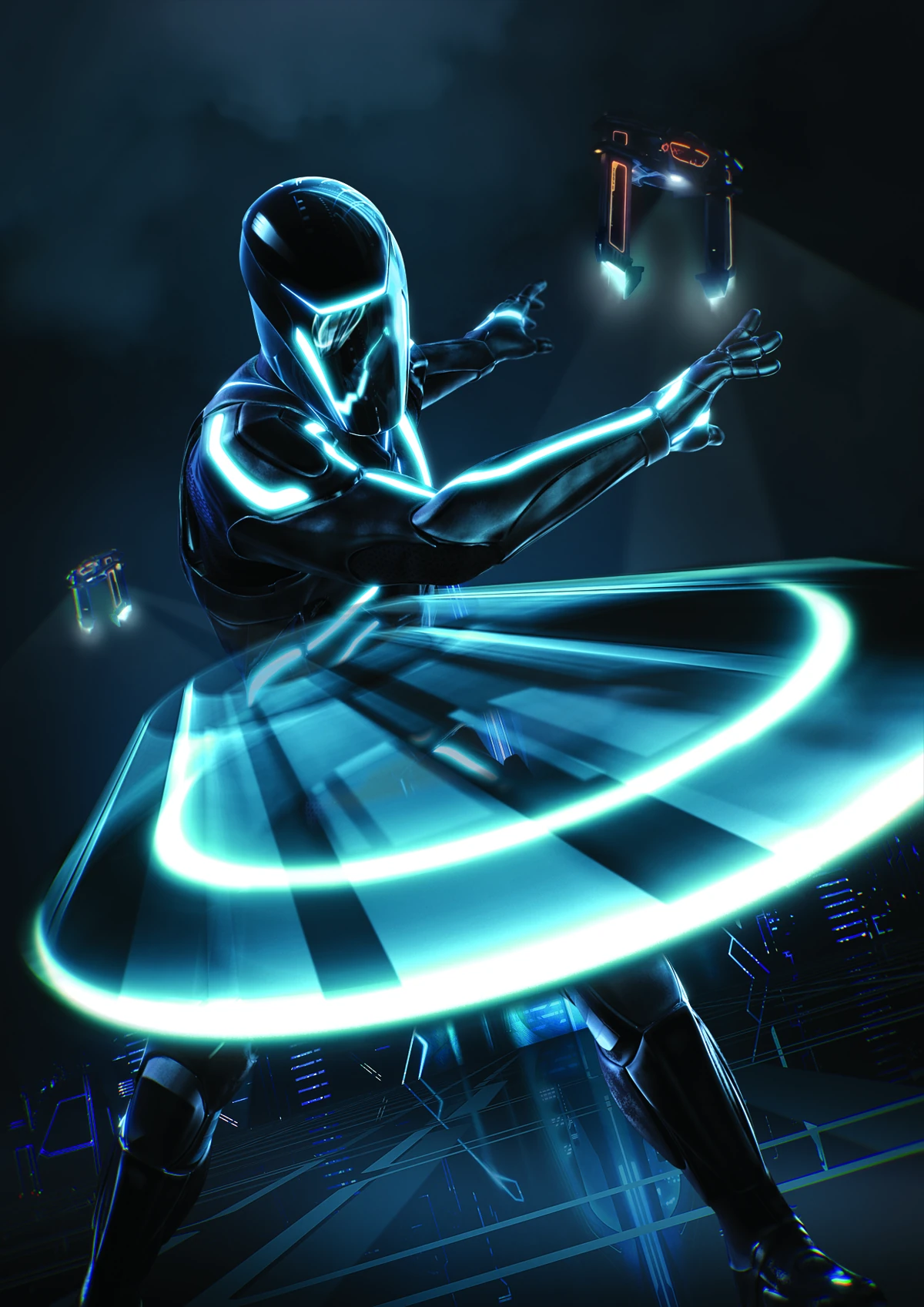
Honestly, if you watched Tron: Legacy and didn't feel a weird sting when the End of Line Club went up in flames, you probably weren't paying attention. It’s one of the most stylish, neon-soaked betrayals in cinema. But for years, people have been debating the same two names: Zeus and Gem derezzed. Did they actually die? Was it all a ploy?
The scene is iconic. Daft Punk is literally in the booth playing "Derezzed" while a floor-wide brawl breaks out. It’s peak 2010s aesthetic. Yet, the fate of the flamboyant Zuse (who goes by the stage name Castor) and his right-hand Siren, Gem, remains one of the biggest "wait, what?" moments in the franchise. Discover more on a connected topic: this related article.
Let's get into the digital weeds of what actually happened.
The Betrayal at the End of Line
Zuse isn't just some flamboyant club owner with a cane. He’s a veteran program. He’s survived the ISO purge. He’s seen the Grid at its best and its absolute worst. When Sam Flynn shows up looking for a way to the Portal, Zuse sees an opportunity. But it's not the opportunity of a hero; it's the survival instinct of a program that has lived far too long under a digital dictatorship. Additional reporting by Entertainment Weekly delves into related views on this issue.
He sells Sam out to CLU. It’s cold.
Gem, played by Beau Garrett, is the one who leads Sam to him. She’s a Siren—one of the programs responsible for "arming" combatants for the games. She’s sleek, silent, and seemingly loyal to Zuse. But the dynamic between them is layered. In the Tron: Betrayal graphic novel and various tie-in materials, we see that Gem isn't just a servant. She’s a strategist.
When the light-disc fight breaks out and Kevin Flynn eventually shows up to wreck shop, the club is left in shambles. CLU’s guards move in. They don't thank Zuse for his help. They take the master disk and leave behind a present: explosives.
Zeus and Gem Derezzed: Why They Stayed
This is where the fan theories go wild. As the explosives are armed, we see Zuse and Gem standing there. They don't run. They don't look for a back door, even though Zuse literally built the place. They just... watch.
Why?
Some people think it was a "captain goes down with the ship" moment. Zuse lost his leverage. He lost the disk. He realized that CLU was never going to let an independent variable like him exist in the "perfect" system. In the world of Tron, to be derezzed (de-resolution) is total deletion. It’s not just death; it’s being wiped from the hard drive.
The Survival Theory
There is a vocal segment of the Tron community that refuses to believe they are gone. The argument is pretty simple: Zuse is a master coder. You don't survive for cycles by being stupid.
- The Hidden Exit: The club is at the top of a massive spire. It’s highly unlikely a program as paranoid as Zuse didn't have a digital trapdoor.
- The Flash: We see the explosion from the outside. We never actually see them shatter into voxels. In movie logic, if you don't see the body (or the glowing shards), they might still be in the code.
- The White Suits: Both characters wear white, which often symbolizes independence or "User-adjacent" status in the Grid. This has led some to speculate they were more than just standard programs.
But honestly? The narrative weight of their "death" works better if they actually bit the dust. It shows the futility of trying to bargain with a tyrant like CLU. You can give him everything he wants, and he’ll still delete you because you’re an "imperfection" in his eyes.
Why "Derezzed" Defined the Moment
You can't talk about Zeus and Gem derezzed without talking about the track playing in the background. Daft Punk’s "Derezzed" is barely two minutes long, but it’s a masterclass in tension. The glitchy, driving synth line mirrors the chaos of the fight.
It’s meta. The song is literally titled after the act of dying in that world.
When the beat drops and the discs start flying, you aren't just watching a fight; you're watching the end of an era for the Grid’s underground culture. Zuse represented the old "wild west" of the digital world—the bars, the deals, the grey areas. By derezzing him, CLU effectively sanitized the Grid. He removed the soul of the city to make room for his rigid, glowing military state.
What This Means for Tron: Ares
With Tron: Ares on the horizon, the question of whether old programs can return is front and center. If a program is derezzed, are they gone forever?
Usually, yes. But we've seen "backups" and "corrupted data" used as plot devices in gaming and sci-fi for decades. If Disney wanted to bring back Michael Sheen’s scenery-chewing performance, they could easily argue that Zuse had a remote backup stored in a different sector.
However, bringing them back might cheapen the tragedy. Gem’s quiet realization in those final seconds—realizing that her loyalty to Zuse led her to a dead end—is a powerful, wordless beat.
Actionable Insights for Tron Fans
If you're looking to dive deeper into the lore of why these characters ended up the way they did, don't just stop at the movie.
- Check out Tron: Uprising. This animated series (which is criminally underrated) fills in a lot of the gaps about how CLU took over and what happened to the "independent" programs.
- Read the Tie-in Comics. Tron: Betrayal shows the transition from the old Grid to the new one and gives Gem more of a backstory.
- Watch the background. Next time you view the club scene, look at the other Sirens. Gem is the only one who shows a hint of hesitation or "human" emotion when things go south.
The story of Zeus and Gem derezzed is a reminder that in any system—digital or otherwise—the middleman eventually gets squeezed out. They tried to play both sides, and in the end, they were just data to be deleted.
Keep your discs close and your backups closer. The Grid is a cold place for programs without a User.