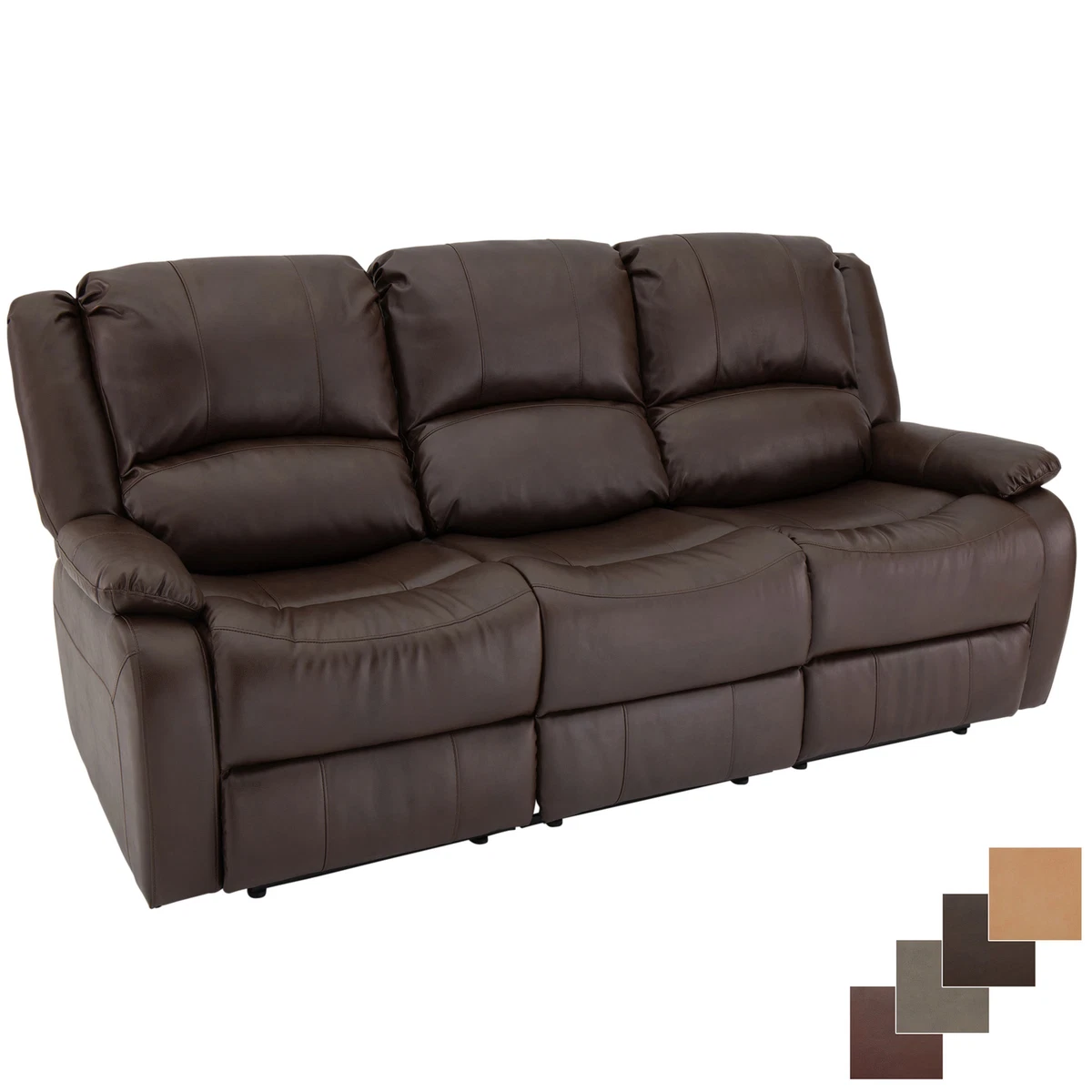
You've probably been there. You find the perfect leather recliner, drag it into your living room, and realize it needs about three feet of "breathing room" from the wall just to function. It’s a design nightmare. Your living room suddenly looks like a furniture showroom gone wrong because the sofa is sitting in the dead center of the rug. This is exactly why the zero wall reclining sofa—sometimes called a wall-hugger—became a thing. But honestly, most people don't actually understand how the engineering works or why some "zero wall" units still end up scuffing their paint.
Most standard recliners operate on a simple pivot. The back goes down, the front goes up. Simple. But a true zero wall reclining sofa uses a linear track system. Instead of just tilting, the entire seat carriage slides forward as you lean back. It’s a clever bit of physics. The footprint of the sofa moves toward your TV rather than toward your drywall. This means you can park the back of that couch about two to five inches from the wall and still hit a full snooze mode without a collision.
The Mechanics of the "Wall Hugger" Label
We need to clear something up right away. In the furniture industry, manufacturers use terms like "wall-away," "wall-hugger," and "zero wall" almost interchangeably, but they aren't always the same. A true zero wall reclining sofa is designed so that the mechanism stays within its own footprint.
Check the hardware. Brands like Leggett & Platt, who basically own the patent market on reclining mechanisms, produce different "series" of tracks. If you’re looking at a sofa, look underneath. If you see a heavy-duty steel rail that looks like a miniature train track, you’re looking at a high-quality sliding mechanism. Cheaper knock-offs often use a standard pivot with a slightly modified pitch, which they'll still market as "wall-saving." It’s not the same. You'll end up with a torn wallpaper or a dented baseboard within a week.
Why does this matter? Because of the center of gravity. When a sofa slides forward to recliner, the weight distribution shifts. If the frame isn't weighted properly at the front, a zero wall unit can actually feel "tippy" when you're fully extended. Real experts in upholstery, like the folks over at Furniture Today, often point out that the frame integrity of a wall-hugger needs to be significantly higher than a stationary piece because of this constant weight shifting.
Space Savings: The Math Behind the Hype
Let's do some quick math. A traditional recliner needs 12 to 18 inches of clearance. If you have a standard 12-foot wide living room, giving up 1.5 feet of space just for the "swing" of a chair is a massive waste of square footage.
In a condo or a townhome, that 18 inches is the difference between having a coffee table and walking sideways like a crab just to get to the kitchen. With a zero wall reclining sofa, you reclaim that territory. You can push the piece right up against the window or the wall.
- Standard Recliner: 15" clearance required.
- Wall-Saver: 7" to 10" clearance required.
- Zero Wall: 2" to 5" clearance required.
It’s worth noting that "zero" is rarely literally zero. You still need a tiny bit of gap so the fabric doesn't rub against the wall during the movement. Friction is the enemy here. If you have a leather sofa and you press it tight against a painted wall, the movement of the motor will eventually "buff" the paint off your wall or, worse, cause the leather to squeak loudly every time you move. Give it two inches. Trust me.
Power vs. Manual: The Longevity Trade-off
You have a choice. You can go with the old-school pull-handle or the fancy "power" buttons with USB-C ports. Honestly, with a zero wall reclining sofa, power is almost always better.
Manual mechanisms rely on a spring-loaded "kick." You pull the lever, and the footrest pops out. The problem? You’re using your own body weight to force the seat forward on that track. It’s clunky. Power motors, on the other hand, provide a smooth, consistent force. This puts less strain on the steel tracks and the wooden frame.
I’ve seen plenty of manual wall-huggers where the tracks get bent because someone tried to "muscle" it shut. If you're spending the money, go electric. Plus, many modern power sofas now include "home" buttons that reset the whole thing to a seated position with one touch. Just make sure you have an outlet nearby, or you'll be tripping over a cord in the middle of your floor. Battery packs exist, but they’re hit or miss. Brands like Ashley Furniture or La-Z-Boy offer them, but you’ll be charging them every couple of weeks if you use the recline feature daily.
The Design Compromise Nobody Mentions
There is a downside. There is always a downside.
Because the seat has to slide forward, the base of a zero wall reclining sofa is usually "closed." You won't find many models with high, tapered wooden legs that look like Mid-Century Modern pieces. The mechanism needs to be hidden. This means the sofa usually looks a bit bulkier or sits closer to the floor.
If you’re obsessed with the "airy" look of furniture with legs, you might struggle to find a wall-hugger that fits your vibe. However, some newer designs from European brands are starting to hide the tracks better. They use "zero gravity" positions that lift your knees above your heart—great for circulation, by the way—while still maintaining a relatively slim profile.
Comfort Levels and "Pitch"
Does it feel different? Yeah, a little bit. In a standard recliner, you feel like you’re falling backward. In a zero wall unit, you feel like you’re sliding into a lounge. Some people find the sliding sensation a bit weird at first.
But for people with back pain, the wall-hugger is often superior. Because the seat slides forward, it often maintains better lumbar support throughout the transition. In a traditional chair, a gap often opens up between the seat and the backrest when you recline. A well-engineered zero wall sofa keeps that gap closed.
What to Look for When You're Actually Shopping
Don't just trust the tag. Sit in it.
- The "Wall" Test: Push the floor model near a wall in the showroom. Recline it. See what happens.
- Motor Noise: If it sounds like a dying blender, walk away. Quality motors from companies like Okin are nearly silent.
- Fabric Bunching: Watch the back of the sofa as it moves. Does the fabric pinch? If it bunches up, it will eventually wear a hole in the material.
- Gap Covers: Good sofas have a "flap" of fabric that covers the mechanism in the back so you don't see the guts of the chair when it's reclined.
The zero wall reclining sofa is essentially a specialized tool for small-space living. It’s for the person who wants the comfort of a theater seat without the footprint of a Greyhound bus.
Moving Forward With Your Purchase
If you're ready to pull the trigger, don't just measure your wall space. Measure your doorways. A lot of these sofas are incredibly heavy because of the extra steel in the sliding tracks. Many come with "removable backs," which is a lifesaver for getting them through a 30-inch door frame. Ask the salesperson specifically if the backs come off.
Before you buy, check the warranty on the mechanism specifically. The fabric might have a 1-year warranty, but the "metal bits" should ideally be covered for 5 years or more. If the manufacturer won't stand behind the track system, they don't trust the engineering.
Next Steps for Your Space:
- Measure your "clearance zone" and aim for at least 3 inches of space regardless of the "zero" marketing.
- Locate your nearest power outlet; if it's behind the sofa, buy a flat-plug extension cord so the sofa doesn't crush the plug against the wall.
- Test the "pinch points" if you have pets or small children; some mechanisms are more "open" underneath than others, which can be a safety hazard.
- Prioritize top-grain leather or high-performance polyester; the friction of reclining wears down cheap "bonded" leather in record time.
The reality is that a zero wall reclining sofa is a massive upgrade for anyone living in an apartment or a smaller home. It turns a cramped room into a functional lounge without forcing you to sacrifice your floor plan. Just do your homework on the motor and the track—your walls will thank you.