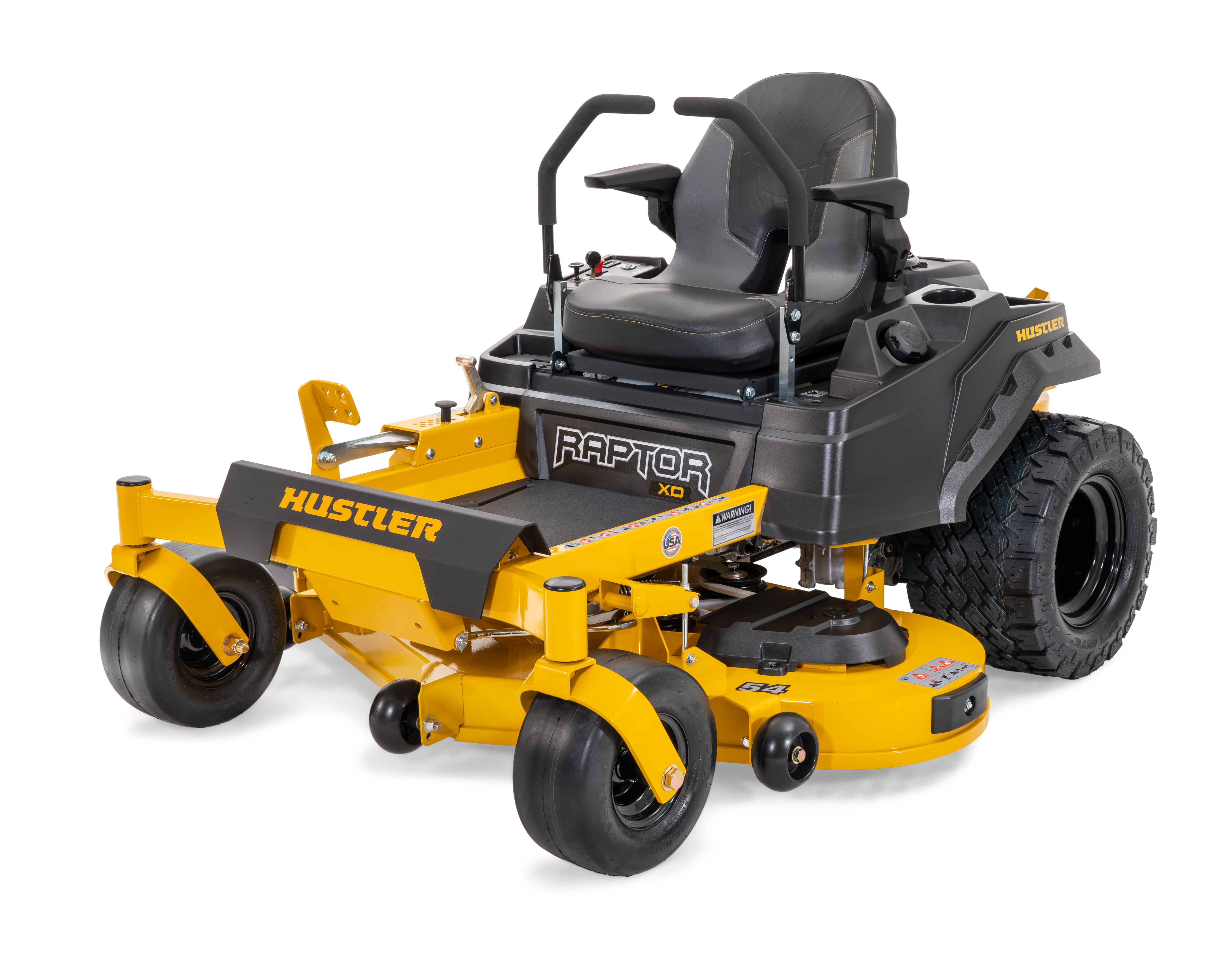
You’ve seen them. Those sleek, orange or green machines spinning on a dime while you’re stuck doing a seven-point turn at the end of your driveway with a steering wheel that feels like it belongs on a 1970s school bus. It’s tempting. The allure of the zero turn vs riding mower debate usually starts the moment your neighbor finishes their two-acre lawn in forty minutes while you’re still working on your first beer and the front paddock.
But here is the thing. Most people buy the wrong one because they’re chasing speed without looking at their actual dirt.
The Steering Wheel Trap
A traditional riding mower—basically a lawn tractor—is familiar. You’ve driven a car, so you know how to drive a Deere S100. You turn the wheel left, the deck follows, and life is simple. But simplicity has a cost. That cost is a massive turning radius that leaves "mohawks" of uncut grass every time you try to circle a maple tree.
Zero turn mowers don't have steering wheels. They have lap bars. Think of it like a tank. If you push the left lever forward, the left wheel spins. Pull it back, it reverses. If you want to spin in a circle, you push one and pull the other. It’s intuitive for some, but for others? It’s a recipe for tearing up turf.
If you have a lawn that’s mostly flat and full of obstacles like flower beds, birdbaths, or those annoying decorative rocks, the zero turn is a godsend. You can trim so close to an edge that you might actually be able to sell your weed whacker on Craigslist. However, if your yard looks like a Windows XP wallpaper—all rolling hills and steep banks—the zero turn might actually be dangerous.
Why Hills Change Everything
Physics is a jerk. On a standard riding mower, the front wheels steer. On a zero turn, the front wheels are just casters. They’re like the wheels on a grocery cart. They go wherever the back wheels push them.
This means if you’re mowing across a slope on a zero turn, the front end wants to "crab" or slide downhill. Consumer Reports has frequently pointed out that for slopes greater than 15 degrees, a traditional riding mower or a specialized tractor is significantly safer. I’ve seen people slide right into their own ponds because they thought "zero turn" meant "zero gravity." It doesn’t.
Honestly, if your property is a literal hillside, you shouldn't even be looking at a standard zero turn. You need something with a low center of gravity. Or just goats. Goats don't have transmissions to blow out.
The Transmission Reality Check
Let’s talk about the guts. Most entry-level riding mowers use a single hydrostatic transmission. It’s basic. It works. Zero turn mowers use two independent transaxles. That’s twice the moving parts.
If you buy a "big box store" zero turn for $2,500, you’re likely getting EZT transmissions. These are sealed units. You can’t service them. When they die, you replace the whole thing, which usually costs enough to make you consider just letting the grass grow into a meadow.
- Hydro-Gear ZT-2800: This is the gold standard for homeowners who want something that lasts. It has an external filter and you can actually change the oil.
- The "Cheap" Alternative: Many budget models use the TL-200 or similar. They're fine for a flat quarter-acre, but they hate heat and they hate hills.
When you’re weighing the zero turn vs riding mower cost, don't just look at the sticker. Look at the transaxle model number. It’s the difference between a five-year machine and a fifteen-year machine.
Comfort and the "Back Pain" Factor
Speed kills. Not you, hopefully, but your lower back.
Riding mowers are slow. They top out around 5 mph. Zero turns can hit 7, 8, or even 10 mph. Flying across a bumpy field at 9 mph on a machine with no suspension is a great way to compress a disc. Professional landscapers use suspension seats or "MyRIDE" systems for a reason.
If you're going the zero turn route, look for a deck that’s "fabricated" (welded steel) rather than "stamped" (pressed from a single sheet). Fabricated decks are heavier and stiffer. They handle the vibration of higher speeds much better. Plus, if you hit a rogue stump, a stamped deck might fold like a taco. A welded deck will just make a loud noise and keep going.
Maintenance: The Stuff Nobody Mentions
You’re going to spend more time maintaining a zero turn. It’s just the truth. You have two transmissions to worry about, more grease points, and a belt system that looks like a Rube Goldberg machine.
Also, tires. Zero turn tires are designed for grip, but because the machine pivots on a single point, you will go through rear tires faster than you would on a lawn tractor. And if you’re heavy-handed with the levers? You’ll be reseeding the "divots" you carved into your lawn every weekend. It takes a delicate touch to avoid "turf tear." You have to master the three-point turn even on a machine that can spin 360 degrees.
The Conclusion of the Matter
So, who wins?
The riding mower is for the person with a big, straight, hilly property who doesn't mind taking an extra hour to finish the job. It’s for the person who wants to pull a small trailer, a dethatcher, or a snowblower in the winter. Most zero turns are terrible at towing because the transmissions aren't designed for that specific type of load.
The zero turn is for the person with a flat, complex yard who values their Saturday afternoon more than anything else. It is a specialized tool. It does one thing—cut grass fast—and it does it better than anything else on earth.
Real-World Action Steps
- Measure your slope. Get a clinometer app on your phone. If your hills are over 15 degrees, stick to a riding mower or a zero turn specifically rated for slopes (like the Cub Cadet Pro Z series with steering wheels).
- Check the deck. Stick your hand under the rim. If it feels like a thin cookie sheet, walk away. You want a 10-gauge or 11-gauge fabricated deck if you have more than an acre.
- Sit on it. Seriously. Sit on it for ten minutes in the showroom. If the levers feel stiff or the seat feels like a church pew, you’ll hate it by July.
- Verify the service center. Don't buy a brand that doesn't have a local mechanic. When a belt snaps in the middle of May, you don't want to wait three weeks for a part to ship from overseas.
- Test the "Bypass." Make sure you know how to put the mower in "neutral" to push it manually. On zero turns, this involves flipping two hidden levers near the rear wheels. If the battery dies and you don't know where those are, that machine stays exactly where it stopped until the end of time.