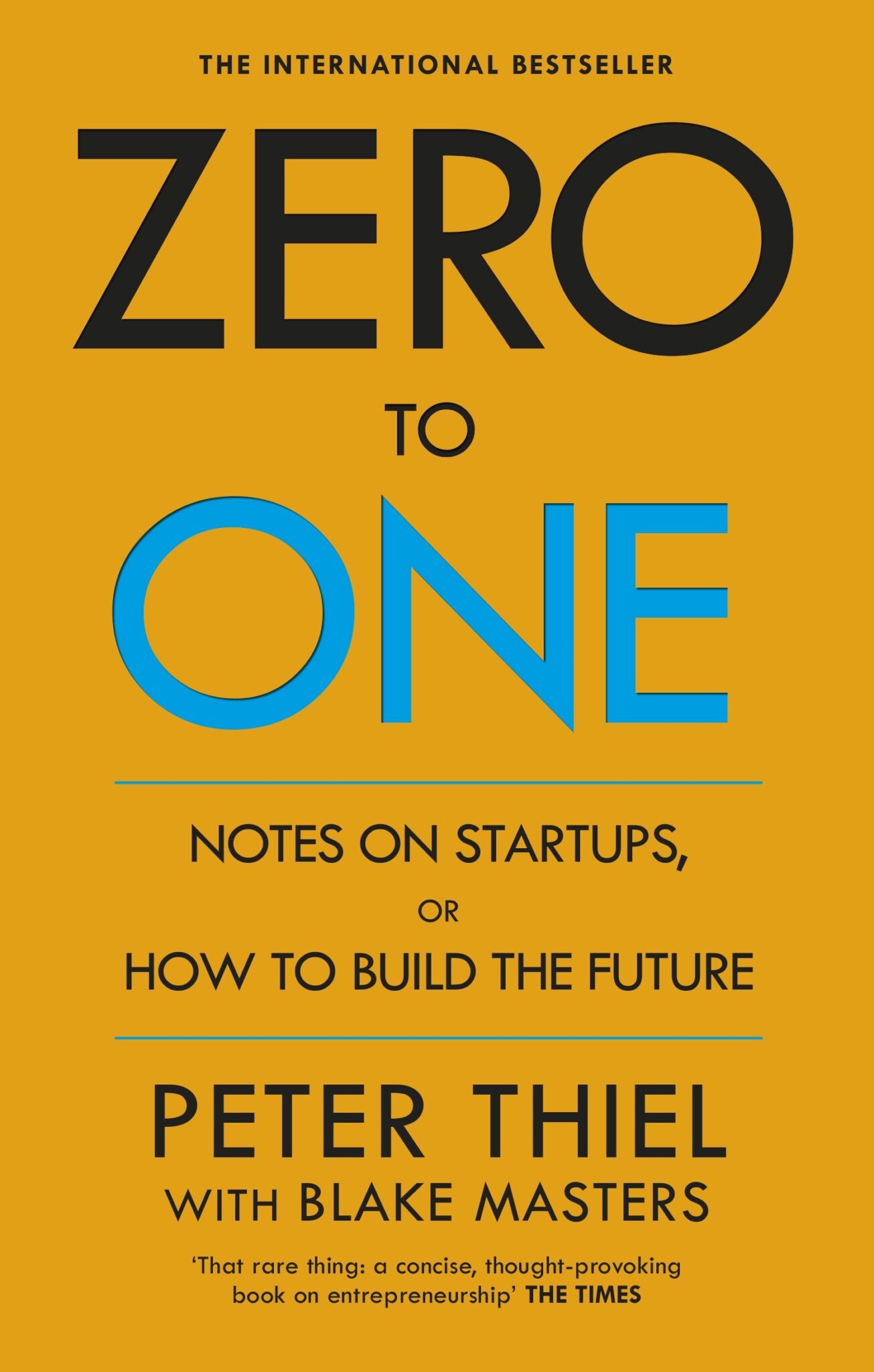
People talk about Peter Thiel’s Zero to One like it's some kind of holy scripture for Silicon Valley. It’s not. Honestly, it’s more of a provocative philosophical argument masquerading as a business book. Most business books tell you how to do things better—how to optimize your marketing, how to hire faster, or how to manage a remote team. Thiel doesn't care about any of that. He’s obsessed with the idea that if you’re doing something that already exists, you’re basically wasting your life.
Going from one to n is easy. It’s copying. It’s globalization. It’s taking a typewriter made in the US and building a hundred more in China. But going from zero to one? That’s vertical progress. That’s doing something nobody has ever done before. It’s the difference between a typewriter and a word processor.
The Monopoly Lie We All Believe
Most people think competition is healthy. We’re taught that in school, right? Competition drives prices down and quality up. Thiel thinks that’s a trap for losers.
If you’re in a perfectly competitive market, your profits eventually hit zero. You’re fighting for scraps. You’re the restaurant owner in a street full of restaurants, constantly tweaking your menu by fifty cents just to keep people from walking next door. That’s a nightmare.
The goal of every successful business, according to Zero to One, is to become a monopoly.
But wait. "Monopoly" is a dirty word. Companies like Google spend decades pretending they aren't monopolies so the government doesn't come after them. They talk about themselves as "tech companies" or "advertising platforms" to hide their dominance in search. Conversely, companies in hyper-competitive markets pretend they are unique. A struggling local pizza shop might claim they are the "only authentic wood-fired Neapolitan spot in the tri-state area." They’re lying to themselves to feel like they have an edge.
Thiel’s point is simple: If you want to create lasting value, don't build a slightly better version of what already exists. Build something so unique that you have no competition.
Secrets and the Death of Curiosity
Where do these ideas come from? They come from secrets.
This is probably the most "out there" part of the book, but it’s the most important. Thiel argues that there are two types of secrets: secrets about nature and secrets about people. A secret is something important that very few people agree with you on.
Think about it.
If you believe what everyone else believes, you can’t see the opportunities hiding in plain sight. In the 1990s, everyone "knew" that you couldn't trust people on the internet. Then eBay showed up and proved that people would buy used junk from strangers if the incentives were right. Everyone "knew" you couldn't stay in a stranger's house. Then Airbnb happened.
The tragedy of modern society is that we’ve stopped looking for secrets. We think everything worth discovering has already been found. We’ve become "indefinite optimists"—we think the future will be better, but we have no idea how, so we just sit back and wait for it to happen.
Thiel hates this. He wants "definite optimists." People who have a specific plan for the future and the guts to execute it.
The Seven Questions Every Startup Must Answer
In Zero to One, Thiel provides a framework that isn't just for tech bros in hoodies. It’s a litmus test for any venture. If you can’t answer these, you’re probably headed for a crash.
- The Engineering Question: Can you create breakthrough technology instead of incremental improvements? You need to be 10x better than the closest substitute.
- The Timing Question: Is now the right time to start this particular business?
- The Monopoly Question: Are you starting with a big share of a small market?
- The People Question: Do you have the right team?
- The Distribution Question: Do you have a way to not just create but deliver your product? (Engineers often forget this one. They think if the product is good, the world will beat a path to their door. They’re wrong.)
- The Durability Question: Will your market position be defensible 10 and 20 years into the future?
- The Secret Question: Have you identified a unique opportunity that others don’t see?
Most clean-tech companies in the early 2010s failed because they couldn't answer more than one or two of these. They had "okay" tech, terrible distribution, and no real secrets. They were just riding a trend.
Why Sales is Not a Dirty Word
There’s this weird bias in the tech world. People think that if you have to "sell" something, the product must not be that good. If it were great, it would sell itself, right?
That is total nonsense.
Thiel is very clear: Sales is hidden because we’re all conditioned to hate being "sold" to. But everyone is a salesperson. An engineer is selling their vision to a recruiter. A CEO is selling their vision to investors. If you’ve built a zero to one product but you haven't figured out how to sell it, you have a dead business.
Distribution is actually more important than the product in many cases. You can have a mediocre product with world-class distribution and win. You can almost never win with a world-class product and zero distribution.
The Power Law of Everything
We like to think the world is linear. We think that if we work 10% harder, we’ll get 10% better results.
The startup world doesn't work like that. It follows the Power Law.
In venture capital, a small handful of companies (the Ubers, the Facebooks, the SpaceXs) generate more returns than all other companies combined. This means you shouldn't diversify your life. You shouldn't try to be "well-rounded." You should focus intensely on the one thing you are best at, in the one place where you can have the most impact.
This flies in the face of everything we’re told in high school. We’re told to get straight As in every subject. We’re told to be mediocre at everything so we can be "safe."
Thiel says that’s the path to a "one to n" life.
The Controversy of the Founder Myth
Thiel has a weird obsession with founders. He thinks they need to be a little bit crazy.
He looks at people like Howard Hughes or Elon Musk—people who are "extreme" in both positive and negative ways. He argues that a company needs a "king" or a "god" figure at the start to give it a soul and a direction. This is a bit controversial. It ignores the thousands of people who actually do the work. But from a high-level strategic perspective, it’s hard to argue that Apple would have been Apple without the specific, borderline-obsessive personality of Steve Jobs.
The book suggests that the most successful founders are often "outsiders"—people who are slightly misaligned with society and therefore able to see things differently.
Actionable Insights for Your Next Project
If you’re sitting on an idea or running a business, Zero to One shouldn't just be a book you read and put on a shelf. You need to apply the friction.
- Audit your "uniqueness": Are you actually doing something new, or are you just "Uber for Dog Walkers"? If you’re just a derivative, your margins will always be thin. Find a way to be 10x better at one specific thing.
- Start small, then dominate: Don't try to take over the world on day one. Facebook started with just Harvard students. PayPal started with just "power sellers" on eBay. Find a tiny niche, become the absolute monopoly there, and only then expand.
- Look for the secret: What is something you believe to be true that almost no one else agrees with? If you can’t answer that, you don't have a strategy; you have a hope.
- Focus on the "Definite": Stop trying to keep all your options open. Keeping options open is a recipe for mediocrity. Pick a path. Commit to it. Build a plan that spans years, not weeks.
- Review your team: Is your team joined by a common vision of a different future, or are they just there for the paycheck and the "perks"? A company is a group of people convinced of a secret.
The reality is that most businesses will fail. Most people will continue to compete in crowded markets. But for those few who actually manage to go from zero to one, the rewards aren't just financial—they’re the architects of the future. It’s not about being a "disruptor" (a word Thiel actually dislikes because it implies you're focused on the competition). It’s about being a creator.
The next Bill Gates will not build an operating system. The next Mark Zuckerberg won't create a social network. If you are copying them, you aren't learning from them. Learning from them means doing the one thing they did: finding a vacuum and filling it with something the rest of us didn't even know we needed yet.
Next Steps for Applying Zero to One Logic
- Write down your "Contrarian Truth": Take ten minutes. Write down one thing you believe about the future of your industry that most people think is crazy. If it’s actually true, that’s your business.
- Evaluate your 10x: Look at your product. Is it 10% better or 10x better? If it’s only 10% better, stop developing features and start rethinking the core value proposition.
- Narrow your focus: If you are targeting "everyone," you are targeting no one. Identify the 1,000 people who would be devastated if your product disappeared tomorrow. Focus exclusively on them for the next six months.