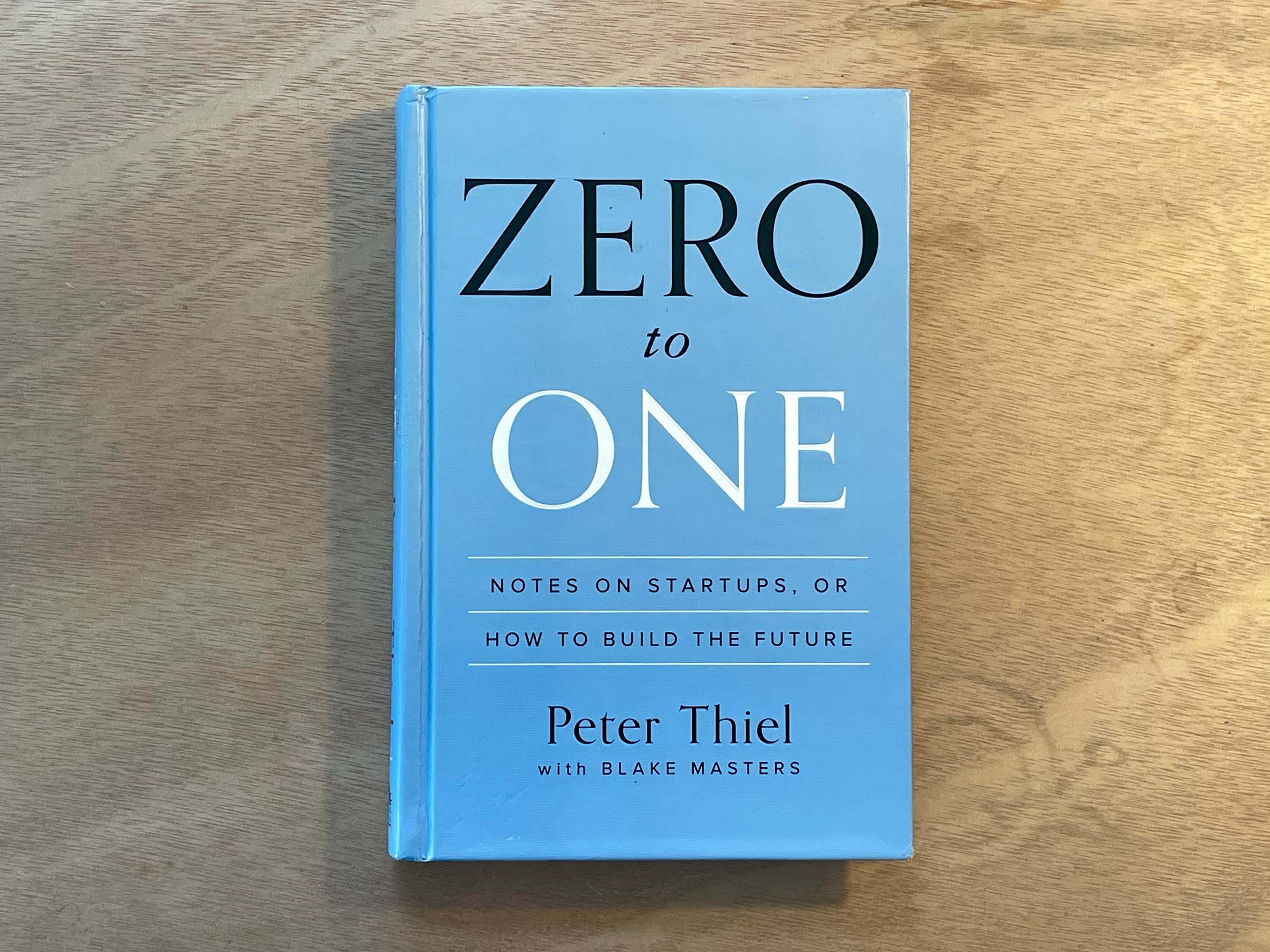
Most business books are a total waste of time. They’re basically just long-winded LinkedIn posts stretched out into 200 pages of fluff about "synergy" or "finding your why." But Zero to One by Peter Thiel is different. It’s weird. It’s contrarian. Honestly, it’s a bit aggressive. Thiel isn’t interested in helping you build the next marginally better coffee shop or a slightly faster project management tool. He wants you to build something that has never existed before.
Going from 0 to 1 is the hardest thing in the world.
It’s easy to go from 1 to $n$. That’s just globalization. That’s taking a thing that works in Palo Alto and making it work in Mumbai. We do that all the time. But 0 to 1? That’s vertical progress. That’s technology. It’s the difference between a typewriter and a word processor. If you’re just copying what someone else did, you’re adding to the noise. You’re not creating value; you’re just competing. And Thiel hates competition.
The Monopoly Lie We All Believe
You’ve probably been taught that competition is healthy. It’s the "engine of capitalism," right? Thiel thinks that’s total nonsense. In Zero to One by Peter Thiel, he argues that competition is for losers. When companies compete, their margins disappear. They get so focused on beating the guy next to them that they forget to actually innovate.
Think about the airline industry. They compete like crazy. They fight over every nickel, every seat, and every route. The result? They barely make any money. Now look at Google. For years, they’ve had a functional monopoly on search. They don’t have to worry about someone undercutting their price because their product is just fundamentally better. Because they have a monopoly, they have the "leisure" to actually care about their employees, invent self-driving cars, and think long-term.
But here’s the kicker: Monopolists lie.
If you’re a monopoly, you pretend you have tons of competition so the government doesn’t come after you. Google might claim they compete with "advertising" or "information services" generally. On the flip side, people in a hyper-competitive market lie and say they’re unique. The guy opening the third British-fusion restaurant in a three-block radius will tell you he’s the "only one doing authentic Cardiff-style chips." He’s lying to himself. He’s in a commodity business.
The Last Mover Advantage
We always hear about "first-mover advantage." It sounds cool. It sounds like you're a pioneer. But being first doesn't matter if someone else comes along and does it better, effectively ending the game. You don't want to be the first mover; you want to be the last mover.
Look at Facebook. They weren't the first social network. Not even close. Friendster and MySpace were already there. But Facebook built something that made the others irrelevant. They were the last mover in that specific category. They went from 0 to 1 by creating a network effect so strong that nobody could leave.
Thiel breaks down what a monopoly actually looks like in the real world. It's not just "being big." It's a combination of four things:
- Proprietary Technology: Your stuff has to be at least 10 times better than the closest substitute. Not 10% better. 10x.
- Network Effects: The product gets more valuable as more people use it.
- Economies of Scale: It gets cheaper to run as you grow.
- Branding: Think Apple. You can't just copy the brand.
If you don't have at least one of these, you’re just another person in a crowd, shouting for attention.
The "Secret" That Nobody Wants to Talk About
One of the most famous parts of Zero to One by Peter Thiel is the interview question: "What important truth do very few people agree with you on?"
It sounds easy. It’s actually brutal. Most people answer with something like "the education system is broken" or "healthcare is too expensive." But those aren't secrets. Everyone knows that. A real secret is something that is true, but hidden.
Thiel believes there are two types of secrets: secrets about nature and secrets about people. To build a great company, you have to find a secret. If you think there are no secrets left to find, you’ll never try to build something new. You’ll just settle for 1 to $n$.
Why did it take so long for Airbnb to exist? People had spare rooms. People wanted cheap places to stay. The "secret" was that people were actually willing to stay in a stranger’s house if the trust mechanism was built correctly. Before Airbnb, everyone thought that was a crazy, dangerous idea. That’s a 0 to 1 move.
Why "Lean Startups" Might Be Wrong
This is where Thiel gets really controversial. The current Silicon Valley dogma is all about the "Lean Startup." You know the drill: iterate, pivot, listen to customers, build a "Minimum Viable Product."
Thiel kind of thinks that’s for people who don't have a plan.
He argues that a "bad plan is better than no plan." If you’re just iterating based on what customers say, you’re letting the market dictate your future. You’re not leading; you’re following. Steve Jobs didn't conduct focus groups for the iPhone. He had a vision of what the world should look like and he forced it into existence.
In Zero to One by Peter Thiel, there is a heavy emphasis on "definite optimism." This is the belief that the future will be better than the present if we actually plan for it and build it. Today, we live in a world of "indefinite optimism." We think the future will be better, but we have no idea how, so we just buy diversified stock portfolios and hope for the best. Thiel wants us to be builders again, not just gamblers.
The Seven Questions Every Business Must Answer
You can't just wing it. If you're looking at a startup—whether you're starting it or investing in it—Thiel says you have to ask these seven questions. If you don't have good answers for at least five or six of them, the company will probably fail.
- The Engineering Question: Can you create breakthrough technology instead of incremental improvements?
- The Timing Question: Is now the right time to start this particular business?
- The Monopoly Question: Are you starting with a big share of a small market? (Start small, then scale).
- The People Question: Do you have the right team?
- The Distribution Question: Do you have a way to actually deliver your product, not just create it?
- The Durability Question: Will your market position be defensible 10 and 20 years into the future?
- The Secret Question: Have you identified a unique opportunity that others don't see?
Most of the "Clean Tech" companies of the early 2010s failed because they couldn't answer these. They had okay tech, but it wasn't 10x better than coal or gas. They didn't have a secret. They were "indefinite optimists" who thought that because the world needed green energy, their specific business would automatically succeed. It doesn't work like that.
Sales is Not an Option
Engineering types usually hate sales. They think that if a product is good enough, "it will sell itself."
Thiel calls bullshit.
In Zero to One by Peter Thiel, he makes it clear that distribution is just as important as the product. If you’ve invented something new but you haven’t invented an effective way to sell it, you have a bad business—no matter how good the product is. Sales is often hidden. The best sales looks like no sales at all. It looks like "customer success" or "viral growth." But make no mistake: someone, somewhere, is selling.
Actionable Steps for the 0 to 1 Mindset
If you're actually serious about applying these concepts, you have to stop looking at what everyone else is doing. It's tempting to look at the "Top Trending" list on Product Hunt and try to make a better version of #1. Don't do that.
Start with a very small market. Almost every monopoly starts small. Facebook started with just Harvard students. Not all college students—just Harvard. They captured 90% of that tiny market in weeks. Once you dominate a small niche, you earn the right to expand. If you try to take on a giant market from day one, you will get crushed by the "perfect competition" Thiel warns about.
Focus on the "10x Rule." Audit your idea. Is it 10% better? If so, abandon it. The friction of switching to a new product is so high that users won't move for a 10% gain. It has to be so much better that it feels like magic. If you're building a software tool, it should make a task that took an hour take six minutes.
Find your "Thiel Secret." Sit down and honestly ask yourself what you believe about the world that everyone else thinks is crazy. If you don't have an answer, you aren't ready to start a company. You're just ready to have a job.
Building a 0 to 1 company is lonely. It requires believing in something that isn't there yet. It’s about the courage to be a "definite optimist" in a world that prefers to just hedge its bets. Peter Thiel’s philosophy isn’t for everyone—it’s elitist, demanding, and incredibly risky. But if you want to build the future rather than just live in it, there isn't a better roadmap.