Kotaro Uchikoshi basically did the impossible. For years, fans of the Zero Escape series were convinced the story would never actually end. Virtue’s Last Reward had dropped a massive, world-ending cliffhanger in 2012, and then? Silence. The series was on ice because, honestly, visual novels weren't moving the needle enough in Japan. But then "Operation Bluebird" happened—a massive fan campaign that proved the West was hungry for more. That’s how we got Zero Time Dilemma, a game that is somehow both a miracle and a total lightning rod for controversy. It’s been years since it launched on the 3DS, Vita, and PC, yet we’re still arguing about it.
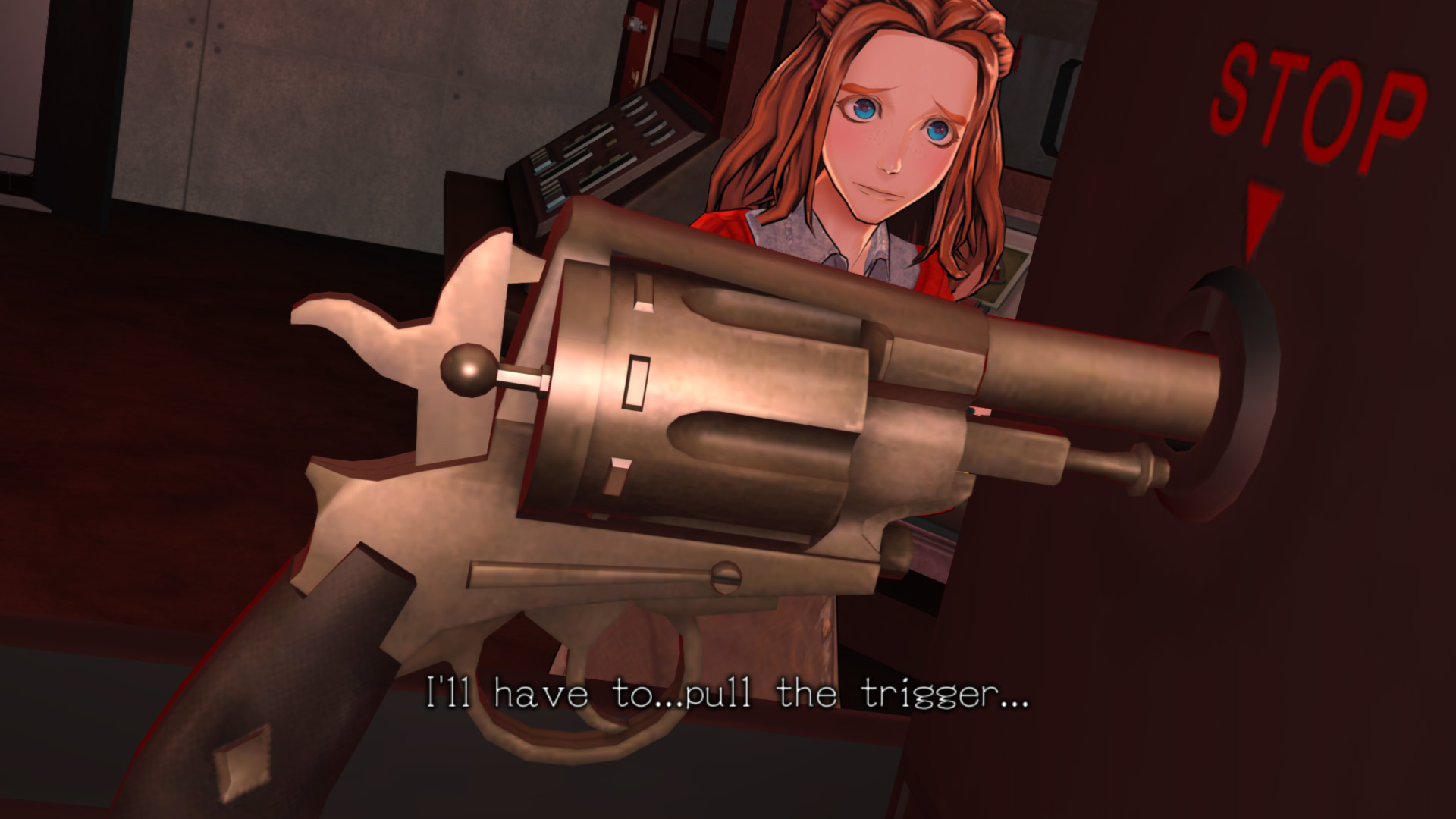
Why? Because it’s weird. It’s jagged. It traded the sleek 2D sprites of its predecessors for janky, low-budget 3D cinematics that look like they belong in a PS2 tech demo. But beneath that awkward exterior is some of the most nihilistic, brilliant, and frustrating writing in gaming history. If you've played it, you know. If you haven't, you're in for a trip through quantum mechanics, snail-induced tragedies, and a guy in a plague doctor mask who loves making you choose which of your friends gets shot in the face.
The Choice Architecture of Zero Time Dilemma
Most games give you a "Moral Choice." Do you save the kitten or kick it? Bor-ing. Zero Time Dilemma isn't interested in your morality. It’s interested in your luck and your logic. The game splits nine characters into three teams—C, Q, and D—and locks them in an underground bomb shelter. To leave, they need six passwords. To get a password, someone has to die. It’s a literal zero-sum game.
What makes the structure of this entry so jarring is the "Fragment" system. Unlike 999 or Virtue's Last Reward, where you followed a relatively linear timeline that branched out, here you're playing out-of-order snippets of memory. The characters are drugged every 90 minutes, wiping their short-term memory. You, the player, are just as lost as they are. You pick a floating bubble on a screen and hope it's not the one where everyone gets melted by acid. It’s a brilliant ludonarrative trick. It forces you to piece together the "when" and "where" while the characters are spiraling into madness.
Think about the Decision Game moments. Early on, Team C has to decide whether to press a button that will kill the other two teams but let them go free. It’s a classic Prisoner’s Dilemma, but with more screaming. There’s no "right" answer. In fact, to see the true ending, you have to choose the "wrong" answer repeatedly. You have to be the villain. You have to pull the trigger. Uchikoshi is basically mocking the idea of a "hero" in a world governed by the Anthropic Principle.
The Snail and the Butterfly Effect
We have to talk about the snail. Honestly, the "Snail Story" is the ultimate litmus test for whether you can handle this game’s writing. Zero (the mastermind) delivers a monologue about how a single snail on a path caused a chain reaction that led to a woman's death, a man's wrongful imprisonment, and eventually, the end of the world.
It’s the Butterfly Effect on steroids.
Some players find this incredibly profound. Others think it's the height of "edgy" writing that tries too hard to be deep. But that’s the soul of Zero Time Dilemma. It takes complex philosophical concepts—like the Monty Hall Problem or Newcomb's Paradox—and weaponizes them. It’s not just flavor text. You actually have to solve the Monty Hall Problem to survive a room full of lockers. Most games treat their players like they can’t handle basic logic; this game expects you to understand quantum superposition while a chainsaw is revving in the background.
The "Low Budget" Elephant in the Room
Let's be real: the animations are rough. When the game was announced, the shift to "Cinema Sections" was supposed to make it more accessible. In reality, it made it more meme-able. Characters move like stiff puppets. Blood splatters look like someone spilled ketchup on the camera lens.
But there’s a weird charm to it.
The voice acting (shoutout to Jameson Price and Elizabeth Maxwell) carries the heavy lifting. When Carlos or Diana breaks down in tears, you feel it, despite the rigid character models. The jank almost adds to the grindhouse horror vibe. It feels like a cult film from the 70s—something you’d find on a dusty VHS tape that might be cursed. If you can look past the technical limitations, the atmosphere is suffocating. The music by Shinji Hosoe—especially the distorted remixes of "Morphogenetic Sorrow"—is haunting. It creates a sense of dread that many AAA horror games fail to capture because they're too busy being "pretty."
Complex Motives and the "True" Ending
The biggest point of contention is the ending. No spoilers here, but the identity of Zero and their "complex motives" became an instant meme in the visual novel community. Some felt it was a cop-out. A "deus ex machina" that came out of nowhere.
However, if you look at the clues scattered through the fragments, it’s all there. The game plays with your perspective in a way that only a digital medium can. It exploits the fact that you are a player looking through a screen. It’s meta-narrative at its most aggressive.
The problem is that Virtue's Last Reward set up a very specific set of expectations. It promised a grand showdown on a Martian testing site. While Zero Time Dilemma delivers on that, it does so in a way that subverts what people wanted. It’s messy. It’s violent. It kills off fan-favorite characters in ways that feel almost cruel. But that’s the point. It’s a game about the harshness of reality and the infinite ways things can go wrong. It’s the "bad timeline" personified.
How to Actually Beat the Game Without Losing Your Mind
If you’re diving in for the first time or replaying it in 2026, you need a strategy. This isn't a game you can "power through" by clicking randomly.
- Take actual notes. You’ll find codes, birthdays, and passwords in one timeline that are only usable in another. The game doesn't always auto-fill these for you. Get a notepad.
- Don't fear the "Bad Ends." In most games, a Game Over screen is a failure. In Zero Escape, a Game Over is a data point. You need to see the horrific ways Team D dies to understand how to save Team C.
- Trust the Flowchart. If you get stuck, look at the Global Flowchart. See those "Lock" icons? They mean you’re missing a piece of information from a completely different character's perspective. Switch teams.
- Watch the background. Uchikoshi loves hiding things in the scenery. The "cinema" style means the camera is often showing you something the characters haven't noticed yet.
Zero Time Dilemma is a flawed masterpiece. It’s a game that shouldn't exist, funded by passion and finished under constraints that would have broken a lesser creative team. It’s the closing chapter of a trilogy that redefined what "escape rooms" could be. Is it perfect? Not even close. Is it memorable? It’ll haunt you for weeks.
If you want to experience the peak of "weird Japan" storytelling, start with 999: Nine Hours, Nine Persons, Nine Doors, move to Virtue's Last Reward, and then let this game wreck your brain. Just watch out for the snails.
Next Steps for the Zero Escape Fan:
- Check the "Quest" Logs: If you’re stuck on a puzzle, revisit the "Files" menu. The game often hides subtle hints in the transcripts of the dialogue you’ve already heard.
- Toggle Japanese Audio: If the 3D lip-syncing is bothering you, many fans find the Japanese voice track fits the exaggerated animations a bit more naturally.
- Explore AI: The Somnium Files: Once you finish the trilogy, check out Uchikoshi’s later work. It carries the same DNA but with a much higher production budget and even weirder humor.