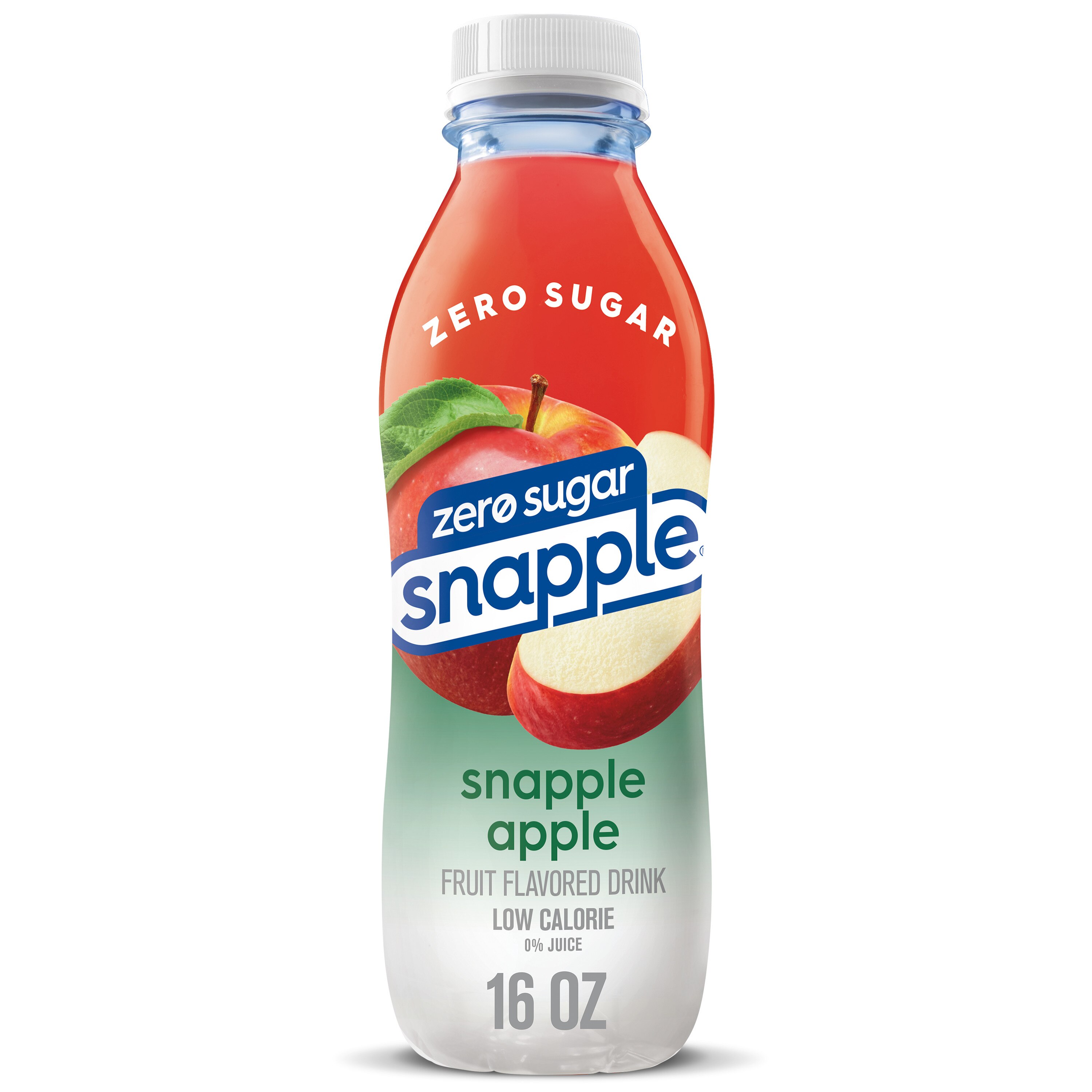
You know that specific, crisp "pop" sound when you crack the metal lid of a Snapple? It’s iconic. But for a long time, if you were watching your glycemic index or just trying to cut back on the massive amounts of corn syrup found in original juices, that sound was followed by a letdown. Diet Snapple was... fine. It was okay. But it wasn't the heavy hitter. It wasn't the Apple.
When the brand finally rolled out Zero Sugar Snapple Apple, people were skeptical. Usually, when you take a flavor as bold and "red apple" centric as this one and strip away the sugar, you're left with a thin, chemical-tasting water that haunts your taste buds. This isn't that. Honestly, it’s one of the few instances where the chemistry actually worked in favor of the consumer.
The Flavor Profile: Is it Actually "Apple"?
Let’s be real for a second. Original Snapple Apple doesn't taste like a Gala apple you just picked off a tree in upstate New York. It tastes like the idea of a red apple. It’s nostalgic. It’s childhood in a glass bottle (or now, plastic). Zero Sugar Snapple Apple manages to keep that specific, punchy sweetness without the syrupy mouthfeel that leaves your teeth feeling fuzzy.
How do they do it? It’s a blend. Most people think "zero sugar" means one single sweetener, but the modern Snapple formula relies on a mix to fill the gaps. You’ve got the punch of the flavor concentrate, which Snapple has guarded pretty closely since the 1970s, and then you have the sweetener profile.
If you take a sip, you’ll notice the tartness hits first. That’s the malic acid. It mimics the natural acidity of a Granny Smith or a Fuji. Without that acid, the drink would just be flat, sweet water. Because there's no sugar to provide "body," the acidity has to do the heavy lifting to make the drink feel substantial. It works. You get that crispness.
What’s Actually Under the Cap?
The ingredient list isn't a mystery, but most people don't bother reading the fine print. You’re looking at filtered water, apple and pear juice concentrates (yes, even in the zero sugar version, there's a tiny trace for flavor, though it's negligible for the carb count), citric acid, vegetable juice for color, and the big ones: Aspartame and Acesulfame Potassium (Ace-K).
Wait.
Why use both?
This is the "pro tip" of the beverage world. Aspartame provides an immediate, bright sweetness that mimics sugar well but dies off quickly. Ace-K has a slower onset but a longer-lasting sweetness. When you combine them, you get a "sweetness curve" that looks more like real sugar and less like a sudden spike followed by a bitter aftertaste.
Some people are still wary of Aspartame. It’s been one of the most studied food additives in history. While the WHO’s International Agency for Research on Cancer (IARC) labeled it as "possibly carcinogenic" in 2023, it’s important to look at the context. That's the same category as aloe vera and pickled vegetables. The FDA still maintains that it's safe within the current ADI (Acceptable Daily Intake) levels. For Zero Sugar Snapple Apple, you’d have to drink dozens of bottles a day to hit those thresholds.
The "New" Bottle Controversy
We have to talk about the plastic.
Snapple fans are loyal. When the company moved from the heavy glass bottles to the 100% recycled plastic (rPET) versions a few years ago, the internet had a meltdown. People claimed the Zero Sugar Snapple Apple tasted different. They said the plastic leached flavor.
Technically, glass is more "inert." It doesn't interact with the liquid at all. Plastic, even high-quality rPET, can be slightly gas-permeable over long periods, meaning the carbonation (not an issue here) or the delicate aromatics could theoretically shift. However, in blind taste tests, most people can't tell the difference between the glass and plastic versions if the temperature is the same. The real "loss" was the tactile experience. The cold glass felt more premium. But from a sustainability standpoint, the move to plastic reduced the weight of shipments significantly, cutting down the carbon footprint of every truckload leaving the factory.
Nutritional Reality Check
If you’re drinking this because you’re on Keto or managing diabetes, here is the breakdown you actually care about:
- Calories: 10 (Some labels say 0, but FDA rounding rules allow for this. It's effectively negligible.)
- Total Carbs: 1g or less.
- Sugar: 0g.
- Caffeine: None.
It is a "safe" drink for most restrictive diets. But—and this is a big "but"—be careful with the "health halo." Just because it has zero sugar doesn't mean it's "health food." It's a treat. It’s a way to satisfy a craving for something fruity and sweet without the 40+ grams of sugar found in the original.
Some nutritionists, like Kelly LeVeque or even those who follow the "Glucose Goddess" method, point out that artificial sweeteners can still trigger a cephalic phase insulin response in some people. Your brain tastes "sweet," and your body prepares for sugar that never arrives. This can lead to increased hunger later in the day for some. It’s not a universal rule, but if you find yourself reaching for cookies an hour after a Zero Sugar Snapple Apple, your brain might be playing tricks on you.
Why it Dominates the Competition
If you look at the "Zero" versions of other fruit drinks, like Gatorade Zero or Powerade Zero, they feel like "athletic" drinks. They have that salty, electrolyte finish. Snapple Apple is purely about the pleasure of the flavor. It’s meant to be paired with a sandwich at lunch.
The competition, like Bai or VitaminWater Zero, often uses Erythritol or Stevia. Stevia has a very distinct "green" or licorice-like aftertaste that a lot of people hate. By sticking to the Aspartame/Ace-K blend, Snapple ensures that the Zero Sugar Snapple Apple stays true to the 90s flavor profile we grew up with. It doesn't try to be a "functional" beverage. It’s just juice-adjacent joy.
How to Get the Best Experience
Don't drink it room temperature. Just don't.
Zero sugar drinks rely on cold temperatures to mask the slight "thinness" of the liquid. When it's ice-cold, the malic acid is sharper and the sweeteners are crisper. If you let it get warm, the chemical structure of the sweeteners becomes more apparent on the back of your tongue.
Actionable Steps for the Snapple Enthusiast
- Check the Date: Artificial sweeteners, especially Aspartame, break down over time and heat. If a bottle has been sitting in a hot warehouse for six months, it will taste "off" or less sweet. Always look for the freshest batch.
- The Mixer Hack: If you find it too sweet (it is quite potent), try cutting it with 25% plain sparkling water. It turns it into a sparkling apple cider vibe that is incredibly refreshing.
- Manage Expectations: Remember that this is a "flavor" product. If you are looking for the nutritional benefits of a pressed apple, you won't find them here. You're here for the taste.
- Watch Your Triggers: If you're using this to lose weight, track whether artificial sweeteners make you crave "real" sweets later. If they don't, you're golden. If they do, keep this as a weekend treat rather than a daily staple.
Zero Sugar Snapple Apple is a feat of modern food science. It managed to preserve a very specific, nostalgic flavor profile while ditching the high fructose corn syrup that defined the original era of the brand. It’s crisp, it’s remarkably close to the original, and it satisfies that "red apple" craving without the sugar crash. Just keep it in the back of the fridge where it’s the coldest. That’s where the magic happens.