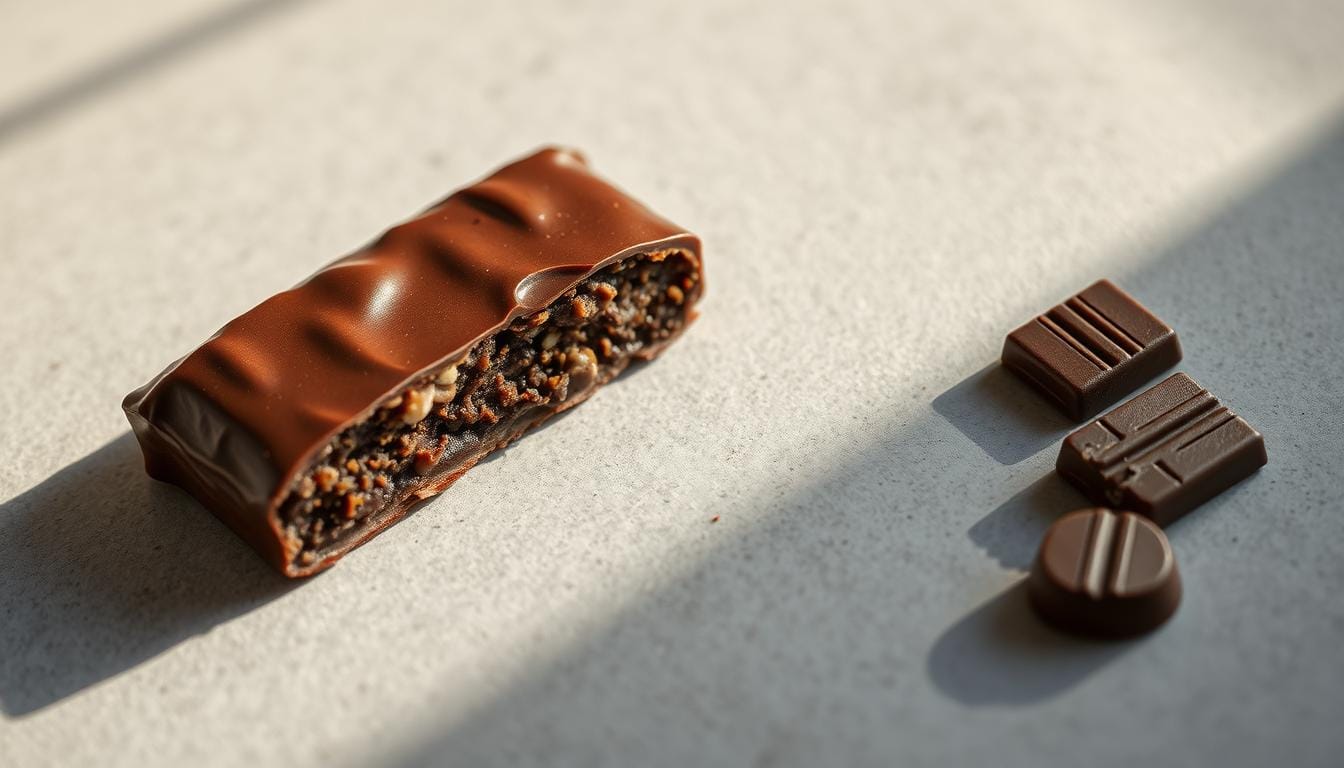
You’re standing in the grocery aisle. It’s 4:00 PM. You’re starving, and you’ve got a workout in an hour or you just finished one and your stomach is screaming. You see it: a glossy wrapper promising 20 grams of protein and—the holy grail—zero grams of sugar. It feels like a cheat code. But honestly, most of what we’ve been told about the zero sugar protein bar is either a half-truth or a clever marketing pivot that ignores how digestion actually works.
I’ve spent years looking at nutrition labels. Not just the big numbers on the front, but the tiny, cramped text on the back where the real story lives. Most people think "zero sugar" means "nothing that affects my blood glucose." That’s wrong. It’s often flat-out incorrect because of how the body processes sugar alcohols and "functional" fibers like isomalto-oligosaccharides (IMOs).
If you want the gains without the gut rot, we need to talk about what’s actually inside that foil wrapper.
The Great Fiber Fake-Out
Manufacturers are smart. They know you're looking for a low net carb count. To get there, they pump bars full of synthetic fibers. For a long time, the industry used IMOs. They labeled them as fiber, which meant they could subtract them from the total carb count.
Here’s the kicker.
Researchers, including those published in the Journal of Insulin Resistance, found that IMOs aren't actually "non-digestible" fibers. They’re partially digested. They can spike your blood sugar almost as much as regular table sugar. The FDA eventually caught on and changed the rules about what can be labeled as "dietary fiber," which is why you see a lot more chicory root and soluble corn fiber these days.
Soluble corn fiber is generally better for your glucose levels, but it can be a nightmare for your microbiome. Eat too many, and you’ll feel like there’s a literal balloon inflating in your small intestine. It’s that "protein bar bloat" everyone talks about but nobody wants to admit to having.
Why "Zero Sugar" Doesn't Mean "Zero Sweetener"
When you take out the cane sugar, you have to replace the taste. Usually, a zero sugar protein bar relies on three things: sugar alcohols, stevia, or monk fruit.
Sugar alcohols like Erythritol, Xylitol, and Maltitol are staples. Erythritol is usually the fan favorite because it has the lowest caloric impact and doesn't mess with insulin much. But Maltitol? That stuff is a trap. It has a glycemic index that isn't zero. It’s actually closer to honey than it is to stevia. If your bar is loaded with Maltitol, you aren't really eating a "zero sugar" product in terms of metabolic impact.
Then there's the "aftertaste issue."
Ever bite into a bar and feel that weird, cooling sensation on your tongue? That’s the sugar alcohol. Some people hate it. Brands like Quest or Quest-style clones have spent millions trying to mask that chemical tang with high-intensity sweeteners like Sucralose. While Sucralose is FDA-approved, recent studies from North Carolina State University have raised questions about "sucralose-6-acetate" and its impact on DNA and gut lining. It’s a rabbit hole, but it’s worth knowing that "sugar-free" isn't "biological-free."
The Protein Source Matters More Than You Think
Don't just look at the grams. Look at the source.
- Whey Protein Isolate: This is the gold standard for a zero sugar protein bar. It’s fast-absorbing and has a complete amino acid profile.
- Milk Protein Isolate: A mix of whey and casein. It’s thicker. It’s why some bars feel like chewing on a yoga mat.
- Soy Protein: Cheaper. Often used as a "filler" protein. It’s fine, but some people find it less effective for muscle synthesis compared to dairy sources.
- Collagen: This is the trendiest one right now. But listen: collagen is NOT a complete protein. It lacks tryptophan. If your "20g protein" bar is mostly collagen, you're getting great skin and joint support, but you’re getting short-changed on the muscle-building front.
I always tell people to check the order of ingredients. If collagen or gelatin is the first protein listed, put it back. You want whey or milk protein at the top.
The Texture Revolution (and the Glycerin Secret)
Have you noticed how bars used to be rock hard and now they're almost like candy bars? That's thanks to vegetable glycerin.
Glycerin is a humectant. It keeps things moist. It’s technically a carbohydrate, but it’s a "polyol." It doesn't cause a massive insulin spike, which is why it’s the secret weapon for keto-friendly bars. But here’s the trade-off: too much glycerin gives the bar a "waxy" mouthfeel. It’s the reason some bars never seem to melt, even if you leave them in a hot car.
There’s a balance. A bar that’s too dry is miserable to eat. A bar that’s too "moist" is usually a chemical soup of glycerin and palm oil.
Real Talk: The Cost of Convenience
Let’s be real. A high-quality zero sugar protein bar is expensive. You're looking at $2.50 to $4.00 per bar.
Why? Because high-grade whey isolate and monk fruit cost significantly more than soy flour and high fructose corn syrup. If you find a bar for a dollar, check the label. It’s probably a "glorified candy bar" with some cheap soy protein thrown in to hit a marketing claim.
You pay for the science. You pay for the fact that the manufacturer had to figure out how to make something taste like a fudge brownie without using a single grain of sugar. It’s an engineering feat, honestly.
Common Misconceptions to Toss Out
- "They are all keto-friendly." Nope. Some have way too many total carbs, even if the "sugar" is zero.
- "They can replace a meal." Rarely. Most lack the micronutrients (vitamins and minerals) you’d get from actual food. They are supplements, not replacements.
- "Natural flavors are always better." The term "natural flavors" is a legal loophole. It doesn't mean it came from a garden; it just means it originated from a biological source. Don't sweat this one too much, but don't think it's "healthier" than artificial flavoring.
How to Actually Choose a Bar That Won't Wreck Your Goals
If you're overwhelmed, keep it simple. Look for a bar that has:
- At least 15g of protein.
- Less than 8g of "Net Carbs" (Total carbs minus fiber and sugar alcohols).
- No Maltitol if you have a sensitive stomach.
- A protein source that starts with "Whey Isolate."
Brands like No Cow (for vegans) or Built Bar (for that marshmallow texture) have changed the game, but even they have pros and cons. No Cow is very high in fiber—sometimes too high for beginners. Built Bar uses collagen, which we already discussed. Everything is a trade-off.
Actionable Steps for Your Next Snack
Don't just grab the brightest box on the shelf.
Start by testing one bar at a time. Do not buy a 12-pack of a new brand. Your gut needs to "veto" the sweetener profile first. Some people handle Stevia fine; others think it tastes like metallic grass. Some people can eat Erythritol all day; others spend the afternoon in the bathroom after one serving.
Check the fat content too. A zero sugar protein bar often replaces sugar with fat to maintain flavor. If the bar has 15g of saturated fat from palm oil, you've just traded a sugar problem for a calorie-density problem.
Next steps to optimize your protein intake:
- Read the "Other Carbs" line: If there’s a big gap between Total Carbs and (Fiber + Sugar), that’s hidden starch.
- Drink 12oz of water: High-fiber protein bars pull water into the gut. If you don't hydrate, that fiber will turn into a brick in your digestive tract.
- Check the "Best By" date: Because these bars use fewer preservatives than traditional candy, the oils can go rancid. A "stale" protein bar isn't just gross; it’s oxidized fat you don't want in your body.
- Prioritize whole foods first: If you have the time, eat three eggs or a chicken breast. If you're in a rush, that's when the bar earns its keep.
The perfect bar is the one that fits your macros, doesn't cause a glucose roller coaster, and actually tastes good enough that you don't crave a Snickers five minutes later.