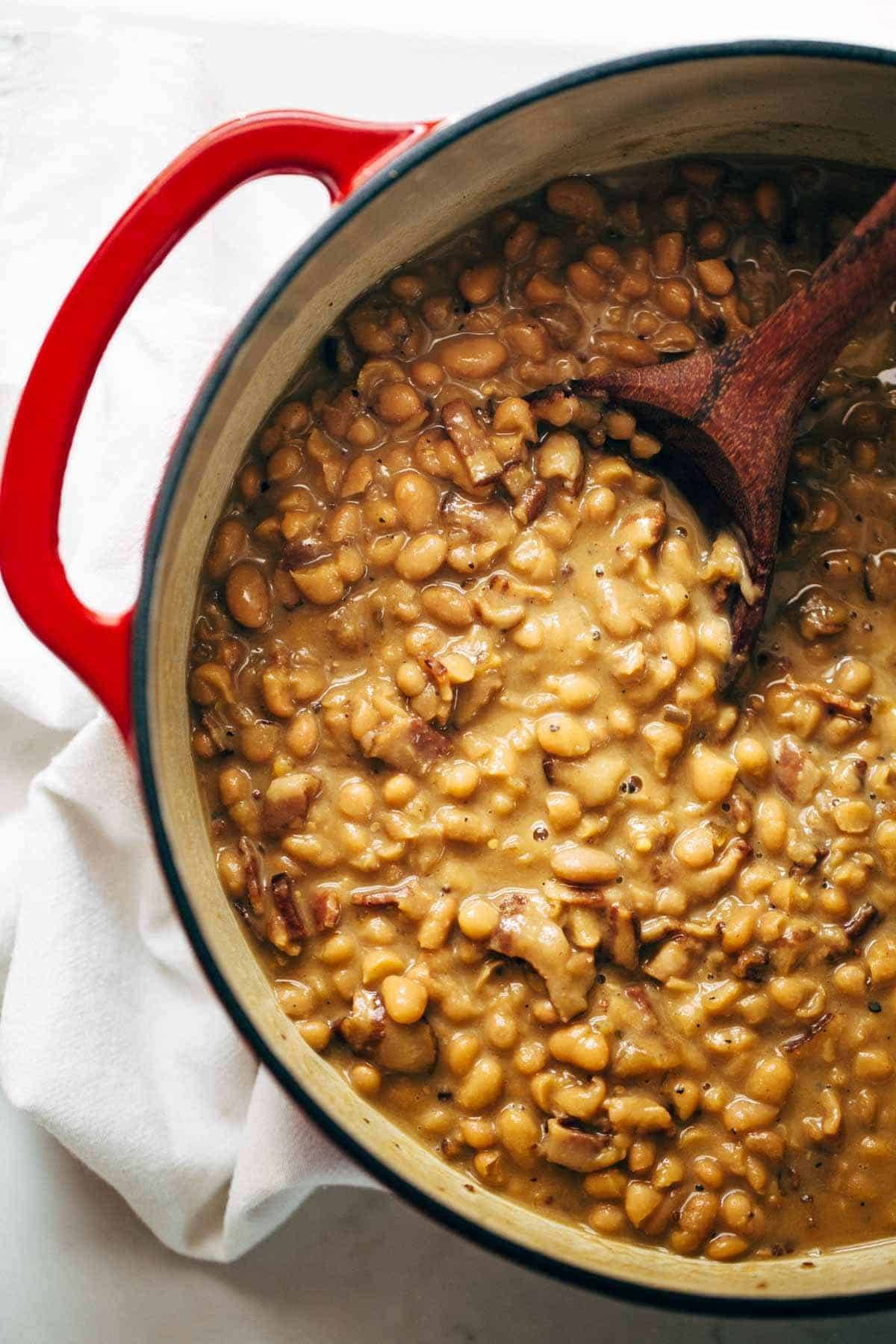
You probably think of baked beans as health food. I mean, they're beans. They have fiber. They've got protein. But if you actually flip that tin over and look at the label, you're usually staring at a sugar bomb. Some of the most popular brands in the UK and US pack up to 10 or 12 grams of sugar into a tiny serving. That’s roughly three teaspoons of the white stuff just for eating some legumes. It’s wild. This is exactly why zero sugar baked beans have suddenly become the obsession of the meal-prep world and the keto community alike.
People are waking up. They realize that "savory" canned goods are often just desserts in disguise.
Honestly, the transition to sugar-free versions isn't always smooth. If you grew up on the classic Heinz or Bush’s flavor profile, your brain is wired to expect that syrupy, thick molasses hit. Taking the sugar out changes the viscosity of the sauce. It changes the "mouthfeel." But once you get used to the actual taste of the navy bean and the tomato acidity, there is no going back.
The gritty reality of what's actually in the tin
When we talk about zero sugar baked beans, we aren't just talking about a lack of sucrose. We're talking about a massive shift in how processed food is engineered. Most "no added sugar" versions, like the ones Heinz released a few years back, rely on stevia or artificial sweeteners like sucralose to bridge the gap.
Does it taste the same? Not exactly. Stevia has that distinct aftertaste—kinda metallic, kinda herbal—that some people absolutely hate.
But here’s the thing: brands are getting better at it. They're using more tomato paste and spices like paprika, onion powder, and garlic to distract your taste buds from the missing sugar. If you look at the nutritional data for a standard 200g serving of no-added-sugar beans, you're looking at roughly 130-150 calories. Compare that to the 200+ calories in the "traditional" versions. You're saving a lot of empty energy.
Why the glycemic index matters more than you think
If you're diabetic or just trying to avoid that 3 PM energy crash, the glycemic index (GI) is your best friend. Regular baked beans have a moderate GI because the sugar causes a spike. Zero sugar baked beans keep things much steadier. Since the fiber in the haricot beans isn't being fought by a massive influx of glucose, your insulin response stays chill.
It’s about more than just weight. It’s about not feeling like a zombie two hours after lunch.
Homemade vs. Store-Bought: Is it worth the effort?
Look, I get it. Opening a tin is easy. It takes thirty seconds. But if you’re serious about avoiding the chemical aftertaste of sweeteners, you might want to try making them yourself.
It's not that hard.
Start with dried navy beans. Soak them. If you skip the soak, you’re going to have a bad time—mostly involving bloating and a very long cooking process. Once they're soft, you simmer them in a base of tomato purée, apple cider vinegar (for that tang), smoked paprika, and maybe a dash of liquid smoke if you’re feeling fancy.
The secret weapon? Dates or apple purée.
Wait, I know what you're thinking. "Those have sugar!" Yeah, they do. But it's whole-food sugar with fiber, not the highly processed high-fructose corn syrup found in the commercial stuff. If you want a truly zero sugar baked beans experience, you skip the fruit and use a tiny bit of monk fruit sweetener or just lean heavily into the savory spices.
What the experts say about "Ultra-Processed" labels
Dr. Chris van Tulleken, author of Ultra-Processed People, often talks about how our food systems are designed to make us overeat. Sugar is a huge part of that "bliss point" engineering. By opting for sugar-free versions, you are effectively "de-processing" your palate.
It takes about two weeks.
That’s how long it takes for your taste buds to reset. After two weeks of eating zero sugar baked beans, the regular ones will taste cloyingly sweet. Like candy. You’ll wonder how you ever ate them for breakfast.
The cultural divide: UK vs. US beans
It's funny how different countries handle this. In the UK, beans on toast is a national treasure. The British version is already less sweet than the American version. In the US, "Boston Baked Beans" are basically a side dish for BBQ, loaded with molasses, brown sugar, and bacon fat.
Trying to find zero sugar baked beans in a standard American grocery store can feel like a scavenger hunt. You usually have to head to the "natural" aisle or look for brands like Eden Foods, which often avoids added sweeteners entirely.
In the UK, the "No Added Sugar" blue tin is everywhere. It's mainstream.
How to make them actually taste good
If you buy a tin of sugar-free beans and eat them plain, you might be disappointed. They can be a bit thin. A bit... sad.
You've gotta doctor them.
- Add fat: A knob of butter or a drizzle of olive oil carries the flavor that the sugar used to handle.
- Acid is key: A squeeze of lime or a drop of balsamic vinegar brightens the whole dish.
- Fresh herbs: Chopped parsley or cilantro makes it feel like a meal instead of a canned commodity.
- Heat: Red pepper flakes or hot sauce. Always.
The hidden benefits of the humble bean
Let's not forget that even without the sugar, you're getting a powerhouse of nutrition. We're talking folate, iron, and magnesium. Beans are one of the few foods that count as both a vegetable and a protein source according to most dietary guidelines.
Fiber is the real hero here. Most adults are drastically under-consuming fiber, leading to all sorts of gut health issues. A single serving of zero sugar baked beans can get you nearly a third of your daily requirement. Your microbiome will thank you, even if your roommates don't (at least for the first few days while your system adjusts).
Reading between the lines of "No Added Sugar"
A quick warning: "No added sugar" does not mean "zero calories."
Legumes are carbohydrates. They contain natural starches that break down into sugars in your body. If you are on a strict ketogenic diet, you still have to be careful with portion sizes. One cup of navy beans has about 45 grams of carbs. Even without the added syrup, that's a lot for someone trying to stay in ketosis.
However, for 95% of the population, the swap to zero sugar baked beans is a massive net win.
Brands worth your money
If you aren't going to make them from scratch, look for these:
- Whole Foods 365: They have a "No Sugar Added" version that uses organic ingredients.
- Heinz No Added Sugar: The gold standard for availability, though it does use sucralose.
- Amy’s Kitchen: They have a "Low Sodium" and "No Sugar" variant that feels very "home-cooked."
- Eden Foods: Honestly the cleanest label you'll find. Just beans, water, and maybe some kombu seaweed for digestion.
Beyond the breakfast plate
Stop thinking of beans as just a side for eggs. Zero sugar baked beans work incredibly well in shakshuka. Drop them into a spicy tomato sauce with poached eggs and feta.
Or use them as a base for a healthy chili.
Since they aren't sweet, they blend into savory stews much better than the traditional sugary versions. They add bulk and creaminess without making your dinner taste like a dessert.
The environmental angle
Eating more beans and less meat is one of the single best things you can do for the planet. It takes far less water and land to produce a gram of protein from a bean than it does from a cow. When you choose zero sugar baked beans, you're making a choice that's better for your heart, your waistline, and the Earth.
It’s a rare win-win-win.
Moving forward with your pantry makeover
If you're ready to make the switch, don't overthink it. You don't have to throw out everything in your cupboard today.
Start by buying one tin of the sugar-free version. Compare it. Notice the difference in the sauce. If it's too thin, simmer it down in a pan for five minutes to concentrate the flavors.
Actionable steps for the transition:
- Check the ingredients list for "High Fructose Corn Syrup" or "Molasses." If they are in the first three ingredients, put the tin back.
- Experiment with spices like cumin or smoked salts to replace the "depth" that sugar usually provides.
- Mix them at first. If the taste jump is too big, mix half a tin of regular beans with half a tin of zero-sugar beans. Gradually shift the ratio over a month.
- Look for BPA-free cans. If you're going healthy, go all the way. Many premium sugar-free brands use better packaging.
- Watch the sodium. Sometimes when brands take out sugar, they crank up the salt to keep the flavor. Check the milligrams. Aim for under 400mg per serving if possible.
By shifting to zero sugar baked beans, you're taking a stand against the "sugarification" of the modern diet. It’s a small change. It’s just a tin of beans. But these small, daily choices are exactly what define your long-term health trajectory. You get the fiber, you get the protein, and you lose the blood sugar spike. That’s a trade worth making every single time.