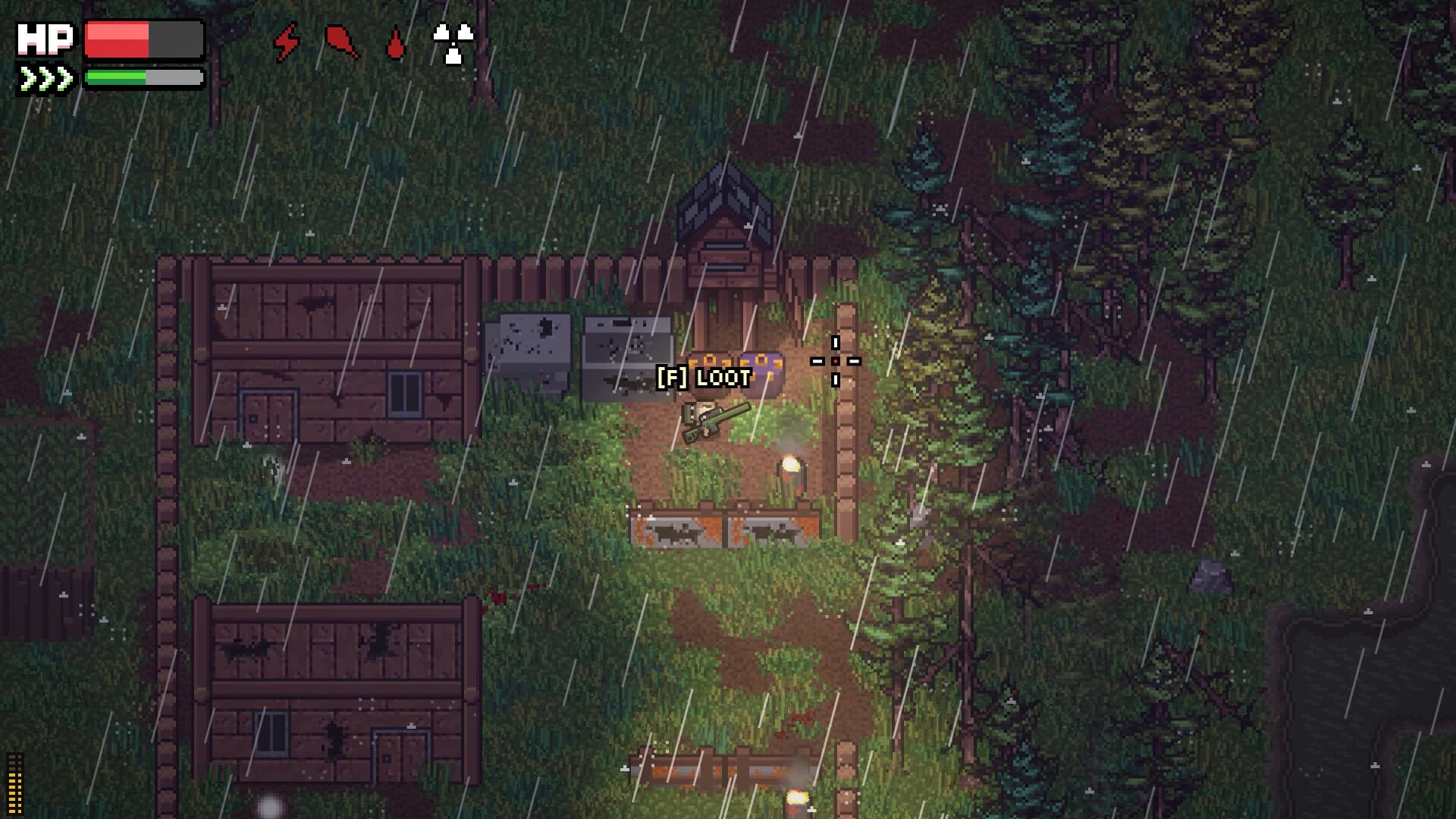
You’re going to die. A lot. That’s basically the core loop of Zero Sievert, and if you aren't okay with losing your favorite scoped M4 because a boar decided to charge you from a bush, you’re in for a rough time. It’s a brutal, top-down extraction shooter that feels like S.T.A.L.K.E.R. and Escape from Tarkov had a pixelated, unforgiving baby. But here’s the thing: most players struggle not because they can’t aim, but because they treat it like a generic twin-stick shooter. It isn't. It’s a game of patience, pixels, and knowing exactly when to run away like a coward.
Learning how to improve at Zero Sievert starts with unlearning the "hero" mentality. You aren't the protagonist of an action movie; you’re a scavenger in a radioactive wasteland where a single bullet from a bandit can end your run.
The Weight of Every Step
Movement is everything. Honestly, if you’re sprinting everywhere, you’re basically ringing a dinner bell for every Ghoul and bandit within three screens. Sprinting drains your stamina, sure, but the real killer is the noise and the recovery time. When you sprint and suddenly see an enemy, there’s a massive delay before you can actually raise your weapon and fire accurately. That half-second is usually when the "Game Over" screen appears.
Try walking. Just walk.
Keep your eyes on the edges of the screen. The fog of war in this game is deceptive. You might think a clearing is empty, but the way the line-of-sight mechanic works means a hunter could be standing right behind a thin pine tree. Use the "Look" key (defaulted to Shift or a mouse bind depending on your setup) to pan your camera ahead. Information is the most valuable resource in the forest, even more than high-tier ammo. If you see them first, you win. If they see you first, you're back at the bunker.
Understanding the Ballistics
The gunplay is crunchy. It feels good, but it's mechanical. Your accuracy isn't just about where the red laser points; it's heavily dictated by your stance and movement.
- Standing: Standard dispersion.
- Moving: Your reticle blooms like crazy. Don't even bother shooting while strafing unless the enemy is literally touching you.
- Crouching: This is the golden rule. If you have time to line up a shot, hit the dirt. It significantly reduces recoil and sway.
Also, caliber matters more than the gun itself. You can have a fully modded, beautiful-looking rifle, but if you’re loading it with "Scrap" or "FMJ" ammo against a Tier 5 armor-clad Big, you might as well be throwing pebbles. Always prioritize armor penetration (AP) rounds. In the early game, get your hands on 7.62x39mm or 5.45x39mm as fast as possible. 9mm is fine for killing radioactive rats, but it’s a death sentence against the Green Army or even well-equipped bandits.
The Bunker Is Your Only Friend
Don't just treat the bunker as a place to dump loot. It's a strategic hub. One of the biggest mistakes I see players making is ignoring the base modules. You need to prioritize the Infirmary and the Kitchen early on. Why? Because buying meds and food from the doctor and barman is a massive money sink.
Once you can craft your own sterile bandages and cooked meat, your profit margins per raid skyrocket.
Every time you come back, check the tasks. General Kibba and the other NPCs offer missions that are the primary way to level up your reputation. High reputation unlocks the "good stuff"—the high-capacity magazines, the suppressors, and the armor that actually stops bullets instead of just looking cool. If you aren't questing, you aren't progressing. You're just spinning your wheels in the mud.
Inventory Management 101
You can't take everything. You just can't.
I know that feeling of finding a cool-looking broken AK and wanting to lug it back, but if it weighs 4kg and is worth 2,000 rubles, while a stack of electronic components weighs 0.5kg and is worth 5,000, leave the gun. Look at the value-to-weight ratio. This is a skill you’ll sharpen over time. Generally, attachments (scopes, grips), jewelry, and certain electronics are your bread and butter.
Map Knowledge and The Extraction Itch
The Forest is your starting ground, but it’s also where most people get complacent. The Mall? That’s a whole different beast. If you want to know how to improve at Zero Sievert, you have to master the maps individually. Learn where the boss spawns are. For instance, Orel in the Forest usually hangs out in the bandit camp. If you aren't ready for a long-range firefight against a guy with an SVD, stay away from the center of that camp.
- Extraction points are not guaranteed safety. Bandits often spawn near these zones. Never let your guard down until the loading screen hits.
- Night raids are a double-edged sword. You’re harder to see, but without Night Vision Goggles (NVGs), you are effectively blind. If you manage to get even the cheapest Tier 1 NVGs, the game changes. You can pick off enemies from the darkness before they even register your presence. It feels like cheating. It isn't. It’s survival.
Radiation is the silent killer. You'll be looting a box, feeling great, and suddenly your health bar is turning yellow. Always carry at least two anti-rad pills or a couple of bottles of vodka. Just remember that vodka makes your aim shaky. It’s a trade-off. Do you want to die of radiation poisoning or be too drunk to hit the broad side of a barn?
Skills and Specializations
As you do things, you get better at them. It’s a standard RPG system, but the specializations at level 10 are where the real power lies.
For the Fitness skill, many people jump at "Sprinter," but "Mule" is often the better choice for earners. Being able to carry an extra 10kg of loot means more money, which means better gear, which means you don't die. For Style, "Looter" is incredible because it speeds up the time spent in menus while you're out in the field. Every second you spend looking at a backpack's contents is a second you aren't looking at your surroundings.
If you’re struggling with combat, look into the Shooting specializations. "Sniper" increases your critical hit chance, which is vital for one-shotting high-tier enemies before they can react. "Fast Shooter" is better for those who prefer the SMG life, but in the current meta of Zero Sievert, distance is your best armor.
Stop Taking Fair Fights
This isn't a competitive shooter. There is no honor in the wasteland. If you see a group of bandits, don't walk into the middle of the road and start blasting. Use trees for cover. Use the fact that the AI has to "acquire" you visually. Lean out, take a shot, and then reposition.
If you shoot from the same tree three times, the AI will suppress that position. Flank them. Circle around through the brush and catch them looking where you were, not where you are. This is the single most effective combat tactic in the game.
Also, grenades. Use them. They are fantastic for clearing out rooms in the Bunker or the Mall. Just... be careful with the bounce. The physics can be a bit wonky, and there’s nothing more embarrassing than bouncing a grenade off a door frame and having it land at your own feet.
Gear Choice: Fashion vs. Function
It’s tempting to wear the heaviest armor you can find. But remember that armor has a mobility penalty. If you’re too heavy, you move slow, you drain stamina fast, and you become a sitting duck. I personally prefer a mid-tier armor with high radiation resistance. It allows for a more versatile playstyle.
And for the love of everything, use a silencer.
Once you get a suppressor for your primary rifle, the game shifts from a frantic shooter to a tactical stealth game. You can clear out half a map without the other half ever knowing you were there. It’s expensive to maintain, and it might lower your damage slightly, but the tactical advantage of not being shot at by ten people at once is priceless.
Actionable Steps for Your Next Raid
To truly get better, you need a plan before you even step into the extraction circle. Don't just "go out and loot." Give yourself a goal.
- Set a specific objective: "I am going out specifically to find two industrial LEDs for my base module," or "I am only here to kill five ghouls for a quest." Once that objective is met, leave. Greed is the #1 cause of death.
- Check your ammo types: Ensure you have at least two magazines of AP ammo for "oh crap" moments with armored foes, even if you use cheaper ammo for trash mobs.
- Repair everything: Never leave the bunker with a gun at 60% durability. It will jam. It will jam at the worst possible moment. Use repair kits or pay the doctor/technician.
- Manage your meds: Bind your bandages and medkits to your quick-slots (1-4). You shouldn't be opening your inventory while bleeding out.
The learning curve is steep, but that's why it's rewarding. Every successful extraction feels like a hard-won victory because it actually is. Stay low, stay quiet, and stop sprinting. You'll find that the wasteland is a lot more manageable when you aren't constantly gasping for air and reloading.
Start focusing on base upgrades immediately. The passive income and crafting capabilities you unlock will do more for your survival than any single lucky gun find ever could. Go get some scrap, build that kitchen, and stop eating raw bread in the woods. You're better than that.