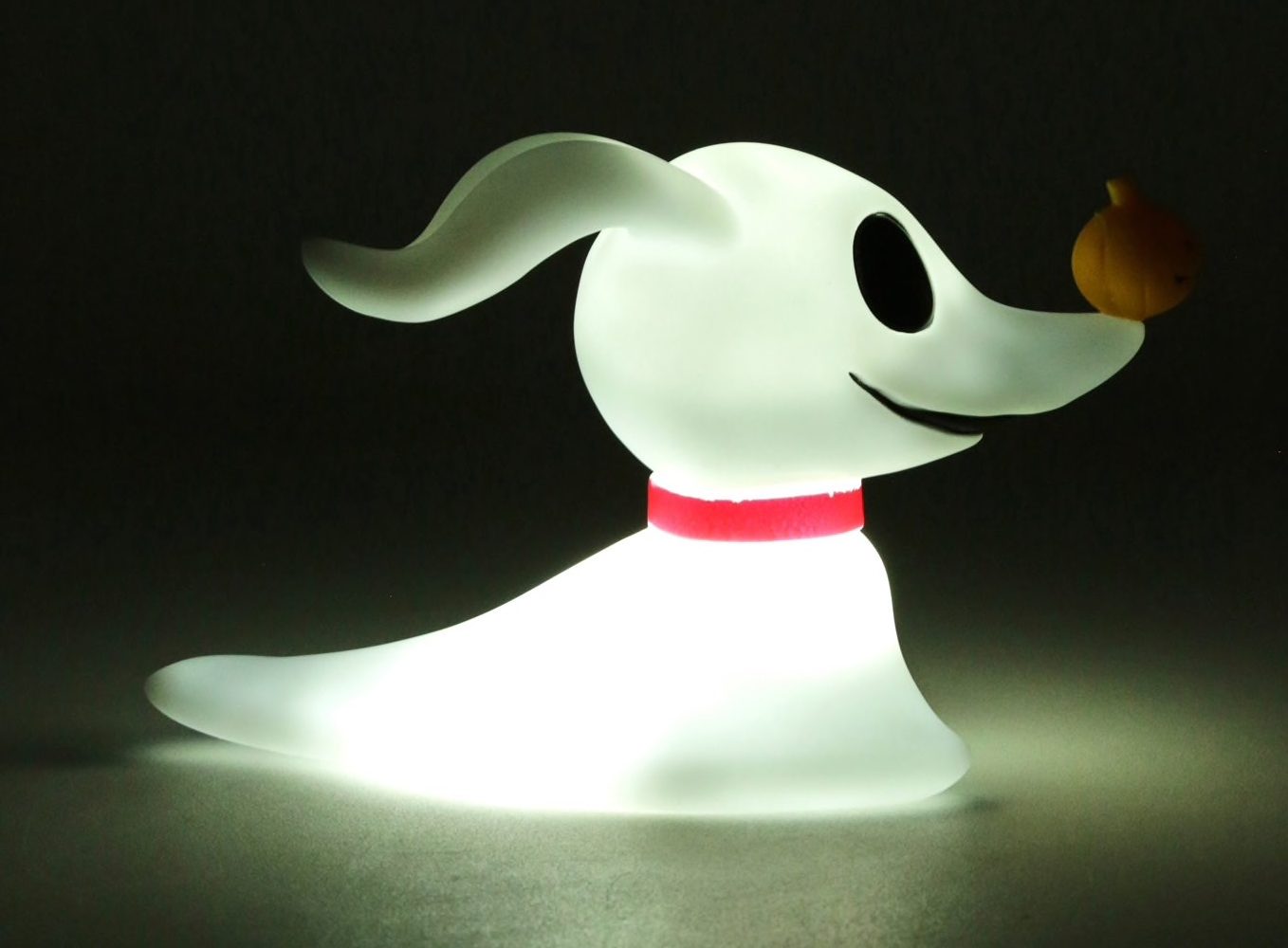
You know the image. A floating, translucent white sheet with a glowing pumpkin for a nose. He’s arguably the most famous fictional dog in stop-motion history, yet most people just see him as a cute accessory to Jack Skellington. But if you actually look at Zero Night Before Christmas history, there’s a lot more going on with that spectral pup than just being a loyal pet who can fetch his own ribs.
He's the heart of the movie. Seriously.
Tim Burton’s The Nightmare Before Christmas (1993) is a weird, beautiful fever dream that shouldn't have worked. It was a cult hit that turned into a multi-billion-dollar merchandising empire for Disney. And Zero? He’s the anchor. While Jack is busy having an identity crisis and trying to hijack a holiday he doesn't understand, Zero is the one providing the literal and metaphorical light.
Why Zero is Actually the MVP of Halloween Town
Think about the climax. It's foggy. Jack is stuck. The skeletal reindeer can't see two feet in front of them. It's a disaster. Then Zero steps up. His glowing jack-o'-lantern nose cuts through the "Christmas Fog" created by Sally’s concoction. It’s a direct, charming nod to Rudolph the Red-Nosed Reindeer, but with a morbid, Burtonesque twist.
Zero isn't just a dog. He's a ghost.
The physics of Zero are actually pretty fascinating from a production standpoint. According to Henry Selick, the film's director (who often gets overshadowed by Burton's producer credit), Zero was one of the most difficult puppets to manage. He had to look weightless. Most of the puppets in the film are heavy, built with intricate metal armatures to allow for frame-by-frame movement. Zero had to look like he was floating. The animators used lead wires and multiple layers of thin, flowing material to give him that "sheet" look.
It worked. He doesn't walk; he ripples.
The Real Inspiration Behind the Pumpkin Nose
People often ask why a dog has a pumpkin nose. It’s not just a festive choice. In the original poem written by Tim Burton in 1982—years before the movie was ever greenlit—Zero was already there. Burton has always had a fascination with the "undead pet" trope. You see it later in Frankenweenie. There’s something deeply personal about the idea of a bond that transcends death.
In the film, Zero lives in a kennel shaped like a gravestone. It’s cute, but it’s also a reminder that everything in Halloween Town is rooted in the afterlife. Zero represents the purest form of loyalty. Jack is a "Master of Fright," a celebrity, a king. But to Zero, he’s just the guy who throws the rib.
Beyond the Screen: Zero in Games and Comics
If you only know Zero from the 76-minute movie, you’re missing half the story. The Zero Night Before Christmas lore expands significantly in the 2004 video game Oogie's Revenge. In that game, Zero acts as a guide and a mechanic for Jack’s "Soul Robber" weapon.
Then there's the manga.
Yes, Disney licensed a manga series called The Nightmare Before Christmas: Zero’s Journey. Published by Tokyopop, this series actually gives Zero his own agency. He gets lost in Christmas Town and has to find his way back. It explores how a ghost dog perceives the "joy" of Christmas versus the "scary" of Halloween. It’s surprisingly deep for a spin-off about a floating sheet.
- The Manga Details: It consists of 20 issues (collected into four volumes).
- The Plot: Zero accidentally falls through a portal and ends up in the woods.
- The Stakes: He has to navigate a world that finds him terrifying while trying to get back to Jack.
It shows that Zero isn't just a follower. He has his own curiosity. He has his own fears. Honestly, the manga does a better job of showing the bridge between the two holidays than the movie does, purely because we see it through the eyes of someone who doesn't have an ego like Jack.
The Technical Wizardry of a Ghost Dog
Let's talk about the 1993 set for a second. Stop-motion is a nightmare. It’s 24 frames for one second of film. If you move a puppet by a millimeter in the wrong direction, the shot is ruined.
Zero presented a unique problem because he was translucent. To achieve the effect of a ghost, they often used a technique called "double exposure." They would film the background first, then film the Zero puppet against a black screen, and then combine the two in post-production.
This is why Zero looks "softer" than Jack or Sally. He lacks the hard edges of the clay and resin used for the other characters. He’s light. He’s ethereal. Pete Kozachik, the Director of Photography on the film, was a genius at lighting these scenes so that Zero appeared to glow from within, rather than just having light bounced off him.
Fun Fact: The Barking Mystery
Have you ever noticed that Zero doesn't really sound like a normal dog? His bark is high-pitched, almost like a flute or a slide whistle. That was intentional. The sound designers wanted him to sound "musical" rather than aggressive. He’s a friendly ghost, after all.
Merchandising: The Zero Phenomenon
Go to any Hot Topic or Disney Store in October (or December, let's be real). Zero is everywhere. From loungefly backpacks to animatronic lawn decorations, the Zero Night Before Christmas aesthetic is a goldmine.
Why? Because he appeals to the "Goth Lite" sensibility. He’s spooky but safe. He’s dead but cuddly.
The most sought-after Zero items are usually the ones that incorporate the glowing nose. There’s a limited edition popcorn bucket that Disney Parks released a few years ago shaped like Zero. People were waiting in four-hour lines just to get one. It’s a testament to the character design. He’s a simple silhouette—a long snout, two floppy ears, and a sheet—but he’s instantly recognizable.
What Most People Get Wrong About Zero
The biggest misconception is that Zero is just a generic "ghost dog." In the context of the film’s internal logic, he’s actually Jack’s conscience.
When Jack is spiraling, trying to calculate the "meaning" of Christmas using scientific formulas and stolen ornaments, Zero is the one who tries to bring him a bit of normalcy. He brings him his slippers. He stays by his side when the military shoots Jack out of the sky.
Zero doesn't care about being Santa Claus. He doesn't care about the "Scientific Method." He cares about Jack.
There's also a fan theory—and keep in mind, this is just a theory—that Zero was a dog Jack had when he was alive. It adds a layer of tragedy to the character. If Halloween Town is a place where souls go, then Zero chose to stay with Jack even in the afterlife. It makes their bond feel much more substantial than just a master and his pet.
The Rudolph Connection: Not Just a Parody
While the Rudolph reference is obvious, it serves a narrative purpose. Jack Skellington is a character who feels trapped by his role as the Pumpkin King. He wants to be something else. By casting Zero in the Rudolph role, Jack is trying to force his world to fit into the Christmas mold.
But Zero doesn't change. Zero is always Zero. He performs the role of the lead reindeer not because he wants to be a reindeer, but because Jack asked him to. It’s a subtle distinction, but it highlights the difference between Jack’s ambition and Zero’s devotion.
How to Celebrate the "Zero" Aesthetic This Year
If you're a fan of the Zero Night Before Christmas vibe, there are actually some cool ways to bring that into your own holiday setup without just buying a plastic toy.
- DIY Ghost Decor: People are using "stiffening spray" on cheesecloth to create floating Zero-like figures for their porches. If you put a small orange LED in the "nose" area, it’s a perfect recreation.
- The "Pink" Zero: In some early concept art, Zero had a slightly pinkish hue to his nose. Collectors often look for items that reference this original color palette.
- Pet Cosplay: Honestly, if you have a white dog, a simple red collar and a tiny felt pumpkin on their nose is the easiest (and cutest) Halloween costume ever.
Actionable Insights for Fans and Collectors
If you're looking to dive deeper into the world of Zero or want to start a collection, here's what you actually need to know to avoid the junk and find the gems.
Check the "Touchstone" Era Merchandise Before Disney fully embraced Nightmare as a "Disney" brand, it was released under their Touchstone Pictures banner because they thought it was too dark for kids. Merchandise from the mid-90s with the Touchstone logo is significantly more valuable and often has a "grittier" look that stays truer to Selick’s original vision.
Focus on the Manga for Story If you feel like the movie left you wanting more, go find the Zero’s Journey manga. It’s the only official source that treats Zero as a protagonist rather than a sidekick. It explains his "powers" (like how he can phase through walls or change shape slightly) in much more detail.
Watch for the 35th Anniversary We are approaching some big milestones for the film. Expect Disney to release high-end "Legacy" figures. The ones to look for are the "prop replicas" that use the original 1:1 scale of the puppets used on set. A life-sized Zero is a holy grail for most collectors.
Understand the Symbolism Next time you watch the movie, don't just look at Zero as a dog. Look at him as the "light" in a world of shadows. He is the only character in the movie who is consistently white and bright. Even Jack is mostly black and grey. Zero is the literal spark of hope in a town built on scares.
The beauty of Zero is his simplicity. In a movie filled with complex monsters, multi-limbed scientists, and gambling burlap sacks, he’s just a dog who loves his human. Whether he’s fetching a femur or guiding a sleigh through a magical fog, he remains the most grounded—and ironically, the most spectral—part of the story.
If you want to recreate the look, focus on the lighting. Use "cool" white LEDs (around 5000K to 6000K) for his body and a "warm" flickering orange for the nose. That contrast is exactly what the filmmakers used to make him pop on screen. It’s a simple trick, but it makes all the difference in bringing the ghost dog to life.