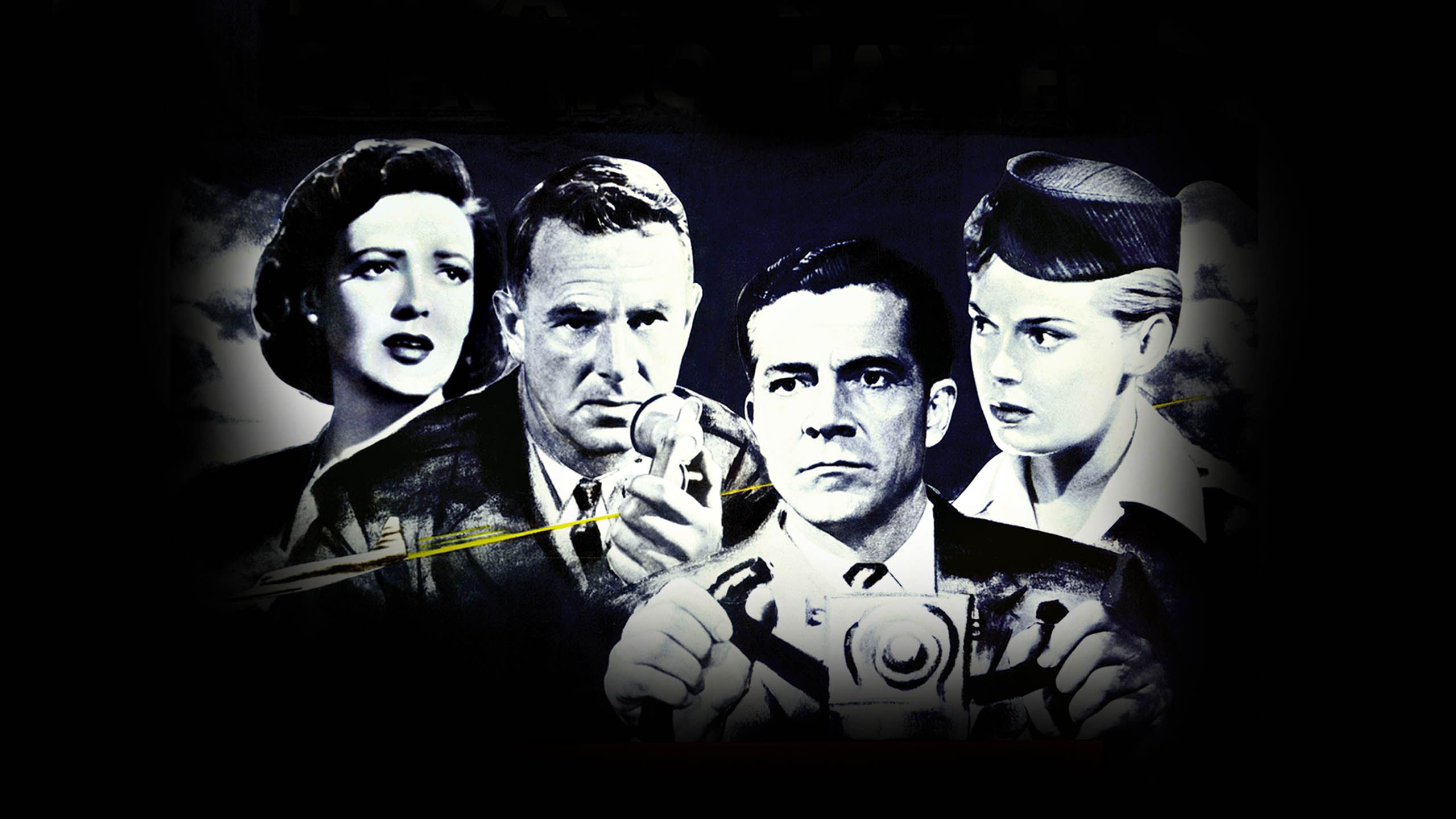
You’ve probably seen the movie Airplane! at least a dozen times. You know the lines about gladiators, the drinking problem, and surely not being serious. But there is a massive chunk of film history most people miss: Airplane! is basically a shot-for-shot remake of a dead-serious 1957 disaster film. That film is Zero Hour! the movie, and honestly, watching it today is one of the most surreal experiences a cinephile can have.
It isn't a parody. It wasn't meant to be funny.
When Dana Andrews stares intensely into the camera and delivers grim dialogue about "the life of every soul on board," he’s playing it straight. He’s the hero. Yet, if you watch Zero Hour! the movie right now, you’ll find yourself waiting for Leslie Nielsen to pop out from behind a curtain. The script for the 1980 comedy was bought—yes, actually purchased—from the original writers of Zero Hour! because the creators of Airplane! (Zucker, Abrahams, and Zucker) realized the original dialogue was already so melodramatic it bordered on insanity.
The Plot That Launched a Thousand Memes
The story follows Ted Stryker. If that name sounds familiar, it should. He’s a former fighter pilot haunted by a traumatic wartime decision that cost the lives of his men. His wife, Ellen, is leaving him because he "can't forget the past." She boards a flight from Winnipeg to Vancouver with their son, Joey. Ted hops on at the last second to win her back.
Then the fish happens.
In Zero Hour! the movie, the "meat or fish" trope started here. The pilots and half the passengers succumb to severe food poisoning from the onboard meal. With the cockpit incapacitated and a thick fog rolling into Vancouver, the only man who can land the plane is the one man who never wants to fly again.
Why the drama feels so familiar
It is genuinely bizarre to hear the exact lines from a legendary comedy delivered with Shakespearean gravity. When the doctor, played by Geoffrey Toone, tells Stryker, "I won't lie to you, it's a long shot," he isn't setting up a punchline. He's trying to win an Oscar.
Hall Bartlett directed this with the grim efficiency of a 1950s B-movie. He wasn't trying to reinvent the wheel. He wanted to capitalize on the "disaster in the sky" trope that Arthur Hailey helped pioneer. Hailey, who co-wrote the screenplay based on his teleplay Flight into Danger, eventually became the king of the "airport" genre. But in 1957, this was cutting-edge tension.
The Dana Andrews Factor
Dana Andrews was a massive star in the 1940s, famous for The Best Years of Our Lives and Laura. By 1957, his career was shifting into these types of gritty, high-stakes thrillers. His performance in Zero Hour! the movie is incredibly sweat-soaked. He clenches his jaw so hard you expect his teeth to shatter.
Compare this to Robert Hays in Airplane!. Hays played it "straight," but with a wink to the audience. Andrews? No wink. He is genuinely portraying a man on the edge of a nervous breakdown.
The supporting cast is equally committed. Linda Darnell plays the long-suffering wife with a level of 50s-era stoicism that feels like a time capsule. Then there’s Sterling Hayden as Captain Treleaven, the man on the ground who has to talk Stryker down. Hayden is a powerhouse—the same guy from Dr. Strangelove and The Godfather. When he barks orders into the radio, he’s terrifying.
Realism vs. 1950s Hollywood Logic
We have to talk about the plane. It’s a Douglas C-54 Skymaster (the military version of the DC-4). For 1957, the cockpit sets were relatively detailed, though aviation nerds will notice the physics are... questionable.
The movie handles the technical aspects of flight with a sort of frantic "button-pushing" energy. It emphasizes the sheer manual labor of flying a large prop plane. There’s no autopilot save-the-day moment here. It’s all muscle and grit.
- The tension comes from the radio communication.
- The weather is the primary antagonist.
- The "ticking clock" is the fuel gauge.
Interestingly, the film was released by Paramount Pictures, the same studio that would eventually release its parody twenty-three years later. Talk about owning the market on both sides of the coin.
The Legal Oddity of Airplane!
Most parodies just spoof a genre. Airplane! did something different. The ZAZ team (Zucker, Abrahams, and Zucker) actually bought the remake rights to Zero Hour! the movie. This is why they were able to use the character names, the specific plot beats, and even large chunks of the original dialogue without getting sued into oblivion.
They used to record late-night movies on their VCRs and keep the tapes running. They found Zero Hour! and realized it was perfectly structured for a comedy if you just didn't change the script, but changed the world around the characters.
If you watch them side-by-side, the similarities are jarring.
- The "I've got to get out of here" monologue.
- The scene where the doctor explains the symptoms (the "white, runny movements").
- The flashback to the wartime trauma.
Is Zero Hour! Actually a Good Movie?
If you can strip away the baggage of knowing the parody, is it worth watching?
Yes. But with caveats.
It’s a masterclass in 1950s tension. It’s short—running only 75 minutes—so it doesn’t overstay its welcome. It moves fast. It’s a "pure" version of the hero’s journey. There are no subplots about corporate greed or hijacking. It’s just man vs. machine vs. fish.
However, the pacing is reflective of its time. Some scenes drag. The emotional beats between Ted and Ellen feel a bit dated, rooted in a version of masculinity that feels stiff by today's standards. But the stakes feel real. You actually care if the kid (Joey) makes it, even if his dialogue is a bit sugary.
The Legacy of the "Disaster" Genre
Without Zero Hour! the movie, we might not have the Airport franchise of the 70s, or Sully, or Flight. It established the blueprint.
- The reluctant hero.
- The expert on the ground with a past grudge.
- The mounting medical emergency.
- The final, harrowing landing in zero visibility.
It’s the "Ur-text" of aviation cinema.
Finding a Copy Today
Tracking down Zero Hour! the movie isn't as easy as finding a Marvel flick, but it’s out there. It’s occasionally on TCM (Turner Classic Movies) and has seen various DVD releases, often as a "Special Feature" or a "Hidden Gem" in disaster movie collections.
It’s a black-and-white film, which adds to the noir-adjacent feel of the cockpit scenes. The shadows are deep. The sweat on Dana Andrews’ forehead looks like mercury.
How to Watch it for Maximum Impact
Don’t watch it as a comedy first. Try to watch it as if you were an audience member in 1957. The Korean War was a fresh memory. Commercial flight was still a luxury and somewhat terrifying to the average person.
The idea of both pilots dying was a genuine nightmare scenario.
Then, after you’ve seen it, immediately put on Airplane!. The experience is transformative. You’ll realize that some of the funniest jokes in history weren't written as jokes at all. They were just the standard tropes of an era that didn't know how funny it was being.
Why It Still Matters in 2026
In an era of CGI-heavy spectacles, there is something deeply satisfying about the practical effects and focused storytelling of Zero Hour! the movie. It doesn't need a multiverse. It doesn't need a villain with a cape.
It just needs a man who is scared to death, a radio, and a runway he can't see.
It reminds us that the best stories are often the simplest ones. It also serves as a warning to writers: be careful how serious you take yourself, because today’s tragedy is tomorrow’s punchline.
Actionable Steps for Film Fans
If you want to truly appreciate this cinematic transition, follow this sequence:
- Locate a physical or digital copy: Check library databases or specialty classic film streamers.
- Research Arthur Hailey: Read about his influence on the disaster genre to understand the context of the script.
- The Double Feature Challenge: Watch Zero Hour! at 7:00 PM and Airplane! at 8:30 PM.
- Note the Dialogue: Write down three lines from the first movie that you thought were jokes in the second. You’ll be surprised how many are verbatim.
- Observe the Lighting: Pay attention to how the "serious" lighting in the cockpit actually creates the claustrophobic atmosphere that parodies thrive on.
This isn't just a movie; it's a piece of DNA that helped build the modern comedy and action landscape. It’s worth the 75 minutes of your life just to see where it all began.