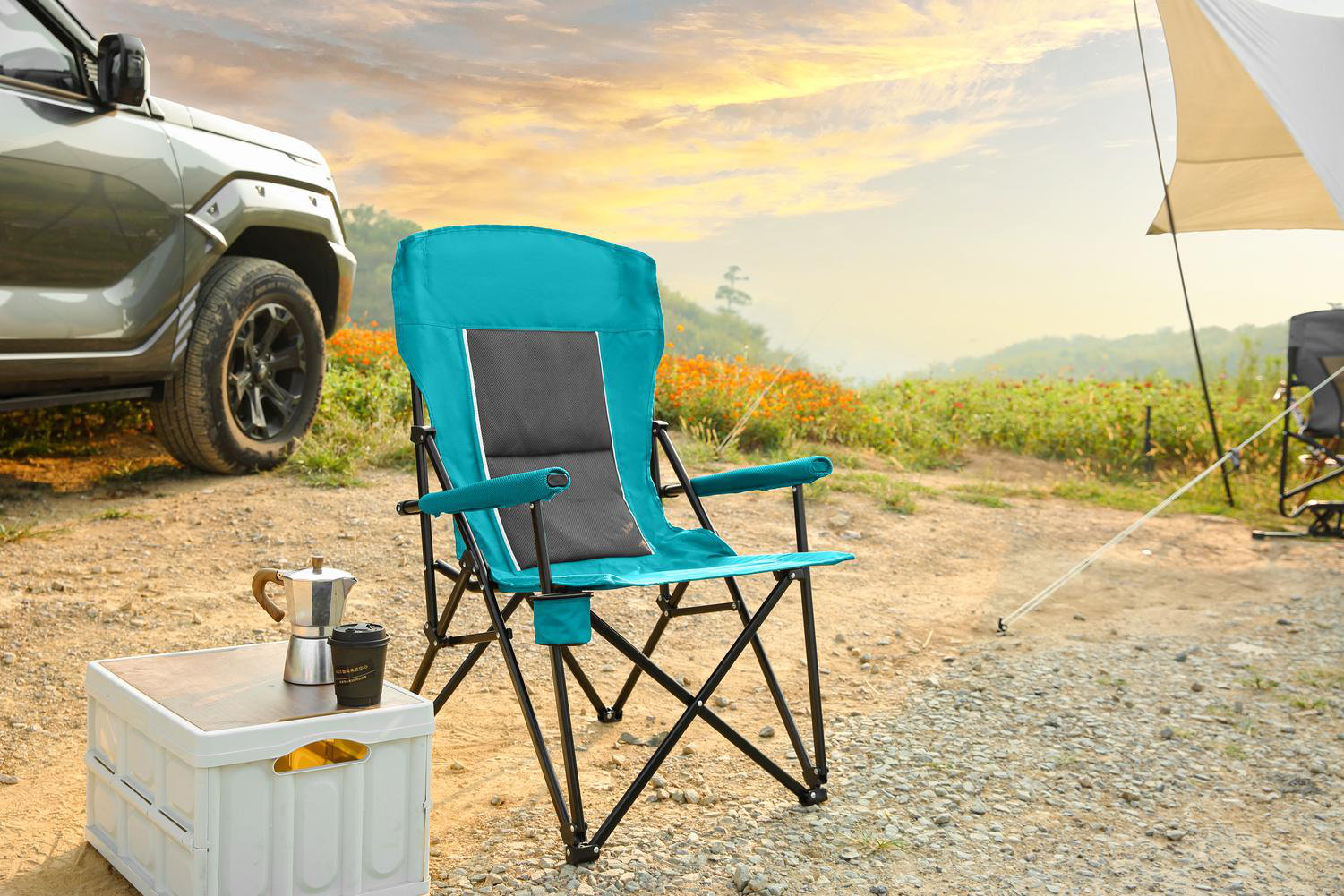
You’ve seen them at every backyard barbecue and high-end patio shop. They look a bit like lawn furniture designed by NASA, usually featuring a mesh seat suspended by a zig-zag of bungee cords. People call them a zero gravity lawn chair, and honestly, they aren't just for show. While the name sounds like marketing fluff designed to sell you a glorified folding chair, the science behind the design is actually legitimate. It traces back to the "neutral body position" developed by NASA to help astronauts endure the massive stress of takeoff.
It’s about weight distribution.
When you sit in a standard chair, your lower back takes a beating. Gravity pushes down, your spine compresses, and by the end of an hour, you're shifting around trying to find a spot that doesn't ache. A zero gravity chair changes the game by reclining you to a specific angle—roughly 120 degrees—where your knees are slightly above your heart.
What’s Actually Happening to Your Body?
Most people think "zero gravity" means you'll feel like you're floating in space. You won't. You still weigh the same. However, because your weight is evenly distributed across the entire chair rather than concentrated on your tailbone and sit-bones, the pressure on your spinal discs drops significantly.
Dr. Roger Sperry, a Nobel Prize winner, once noted that 90% of the brain's energy is used to relate the physical body to gravity. By reducing that gravitational strain, you're basically giving your nervous system a break. It's why people with chronic sciatica or lower back pain swear by these things. When you hit that "sweet spot" recline, the muscles in your lower back finally stop firing to keep you upright. They just... let go.
It’s a weird feeling the first time you do it. You lean back, the chair locks into place, and suddenly the tension in your neck and lumbar region starts to dissipate.
Why the Zero Gravity Lawn Chair is a Modern Essential
We spend too much time compressed. We sit at desks. We hunch over phones. We drive in seats that are ergonomically disasters. By the time the weekend hits, our spines are basically accordions that have been squeezed shut.
The zero gravity lawn chair serves as a low-cost decompression tool. You don't need a $5,000 inversion table or a dedicated massage room. You just need a patch of grass and five minutes.
Material Matters: Not All Chairs Are Built Equal
If you go to a big-box store, you'll find these chairs for $40. They look fine. But here is where it gets tricky. Cheap chairs use thin powder-coated steel that starts to rust the second it smells humidity. The "bungee" cords on the sides—which are the most critical part of the suspension—are often just cheap elastic that loses its snap after one summer.
If you're serious, look for:
- Textilene Fabric: This is a polyester yarn coated with PVC. It’s breathable. This matters because if you're sitting in the sun, a non-breathable fabric will turn your back into a swamp.
- Double-Bungee Systems: Look at where the fabric meets the frame. Is it one thin cord or a thick, doubled-up loop? The double-loop handles weight much better and prevents that "sinking" feeling over time.
- Locking Mechanisms: Most chairs have a ring lock under the armrest. The best ones use a metal tooth lock rather than a plastic friction lock. Plastic wears down. Metal stays put.
I’ve seen people buy the cheapest version possible, only for the locking mechanism to fail while they’re mid-nap, sending them jolting upright. It ruins the vibe. Spend the extra twenty bucks for a frame that won't buckle.
The Circulation Factor (The Part Nobody Talks About)
We talk a lot about back pain, but the real "secret sauce" of the zero gravity lawn chair is what it does for your blood.
When your legs are elevated above your heart, it's easier for your body to pump blood back from your lower extremities. If you struggle with swollen ankles or edema after a long day of standing, sitting in one of these for 20 minutes is a revelation. It reduces the workload on your heart. It’s passive recovery in its purest form.
Athletes have been using this tech for years. You’ll often see pro cyclists or runners lounging in zero gravity positions between heats. It’s not because they’re lazy; it’s because it flushes lactic acid and reduces swelling faster than sitting on a bench.
Misconceptions and Reality Checks
Let's be real: these aren't the most beautiful pieces of furniture. They look like camping gear. You probably won't put one in your formal living room. And despite the "lawn chair" label, they are surprisingly heavy.
Most quality models weigh between 15 and 22 pounds. They fold up, sure, but they’re "lugging to the beach" heavy, not "toss in a backpack for a hike" light. If you’re planning on carrying one a long distance, get a model with a shoulder strap or a dedicated carrying bag.
Also, the "extra wide" or "XL" models are almost always worth the upgrade. Even if you aren't a large person, the extra three or four inches of width allow you to move your arms around without hitting the metal frame. It makes the experience feel much less restrictive.
The Maintenance Most People Ignore
If you leave your zero gravity lawn chair outside all winter, it will die. Period.
Even the "weather-resistant" ones have limits. The sun’s UV rays are the real killer. They break down the elastic in the bungee cords until they become brittle and snap. If you want your chair to last five years instead of one, buy a cheap cover or just throw it in the garage when you aren't using it.
Also, keep a can of silicone lubricant handy. The pivot points on these frames are high-friction areas. A quick spray once a season keeps the recline motion smooth and prevents that annoying "screech" that happens when you're trying to relax.
How to Maximize Your Relaxation Time
To get the most out of a zero gravity lawn chair, you have to actually use the accessories.
- The Headrest is a Lumbar Support: Most of these chairs come with a sliding pillow. Don't just keep it behind your head. Slide it down to the small of your back. It fills that gap between your spine and the fabric, providing even more support for the lower lumbar.
- Angle is Everything: Don't just go halfway back. To get the "zero gravity" benefit, you need to go all the way until your feet are at or above heart level. That’s where the pressure release happens.
- Side Trays: Some chairs come with a clip-on tray for a phone and a drink. Get one. Once you’re locked into that perfect reclined position, the last thing you want to do is sit up because you forgot your water.
A Quick Word on Safety
If you have severe spinal issues, like a herniated disc that's currently flared up, check with a physical therapist before jumping into one of these. While they help most people, the specific angle of a zero gravity chair can sometimes put pressure on certain types of injuries. For 95% of people, it's a godsend, but it's always worth a quick check if you're in active treatment.
Actionable Steps for Choosing Your Chair
Ready to pull the trigger? Don't just click the first "sponsored" ad you see. Follow this checklist to ensure you aren't buying junk.
- Check the Weight Capacity: Most standard chairs max out at 250 lbs. If you want something sturdier, look for "Oversized" or "Heavy Duty" models that are rated for 350 to 500 lbs. They use thicker steel tubing.
- Test the Lock: If you're buying in-person, sit in it and try to force the chair to move while it's locked. If it slips even a little, pass on it.
- Feel the Fabric: It should feel like a thick, plastic-coated mesh, not a soft fabric. Soft fabrics hold water and grow mold. Mesh drains and dries in minutes.
- Measure Your Trunk: If you're over 6'2", look specifically for "Tall" versions. Standard chairs might leave your ankles hanging off the end bar, which is uncomfortable and defeats the purpose of the leg elevation.
The zero gravity lawn chair is one of those rare products that actually lives up to the hype, provided you know what you're looking for. It’s a tool for your health disguised as a piece of patio furniture. Whether you're recovering from a long shift, dealing with a cranky back, or just wanting to take the best nap of your life, the physics of neutral body position is on your side.
Stop sitting in 90-degree angles that crush your vertebrae. Lean back, get those feet up, and let gravity do the work for a change. Your spine will thank you by the time Monday rolls around.
Next Steps for Long-Term Comfort:
- Identify your primary use case: Is this for the beach (lightweight) or the back deck (heavy duty)?
- Measure your storage space to ensure the folded dimensions fit.
- Invest in a UV-resistant cover if you plan to keep the chair outdoors year-round.
- Set a 15-minute timer for your first "decompression" session to allow your muscles to fully adjust to the position.