You’re sitting wrong. Honestly, most of us are. We spend all day hunched over keyboards or slumped on couches that offer about as much lumbar support as a marshmallow. Then we wonder why our lower backs feel like they’ve been through a meat grinder by 7:00 PM. This is exactly why the zero gravity chair indoor trend isn't just some gimmick for people who want to pretend they’re on a SpaceX mission; it’s actually rooted in some pretty heavy-duty NASA science from the 1970s.
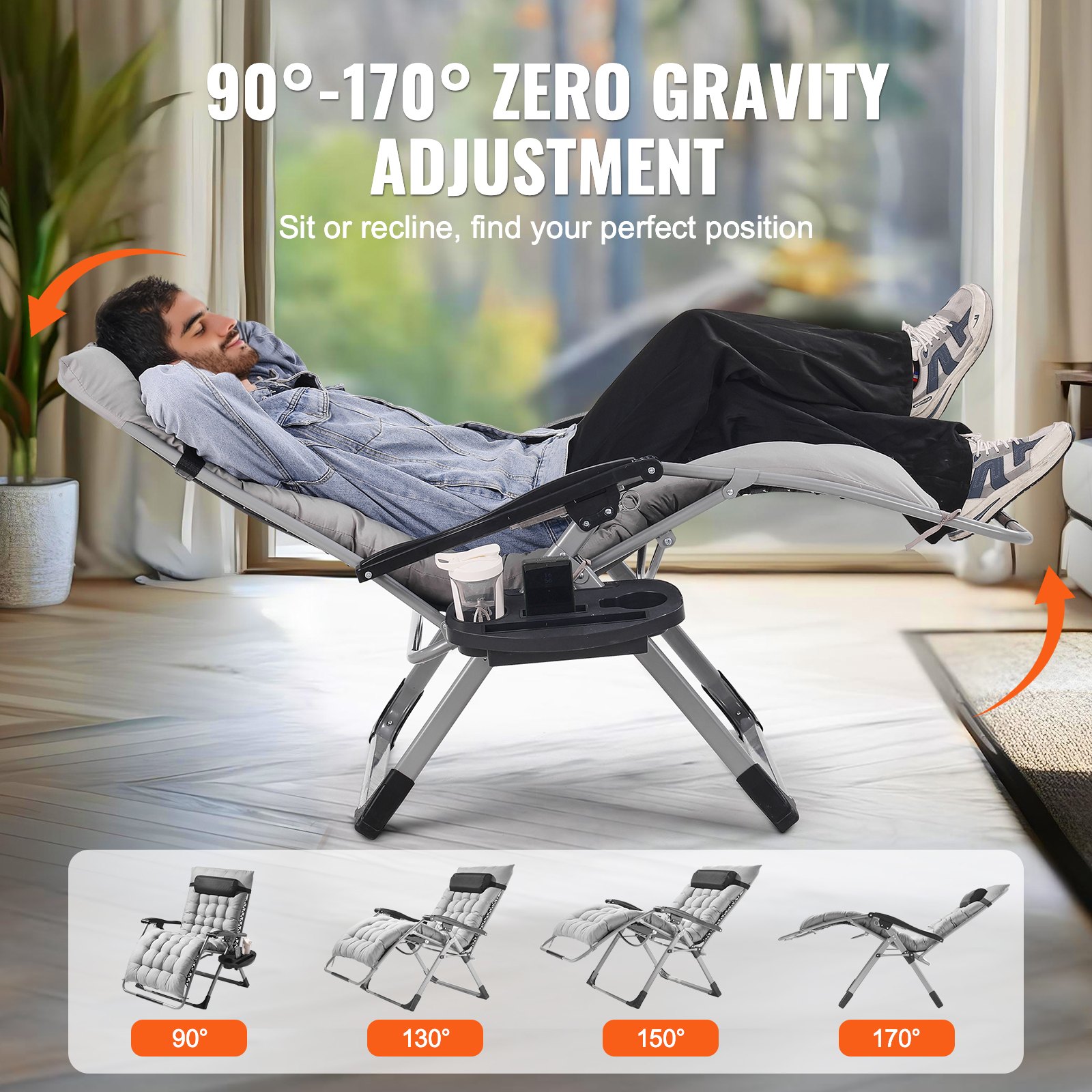
When NASA was figuring out how to launch humans into space without snapping their spines, they identified the "Neutral Body Posture." It’s the position the human body naturally assumes in microgravity. Your knees are slightly above your heart. Your spine is in a neutral S-curve. Pressure? Gone.
The Science of Sitting in a Zero Gravity Chair Indoor Space
Most people think "zero gravity" means you’re literally floating. You aren't. It’s about weight distribution. In a standard office chair, your tailbone takes the brunt of your entire upper body weight. That’s a lot of Newtons of force hitting a very small, sensitive area.
By reclining into a zero gravity chair indoor, you’re distributing that weight across the entire surface area of your back and thighs. It reduces the load on your intervertebral discs. Think of it like this: your spine finally gets to stop fighting Earth's gravity for a minute.
Why the "Indoor" Distinction Matters
You’ve seen the folding lawn chair versions at Costco or Target. They’re fine for a barbecue, but they’re miserable for a living room. An actual indoor model is a different beast entirely. We’re talking top-grain leather, solid wood bases, and motorized actuators.
Brands like Human Touch or Svago have turned this into a science. Their chairs don't just lean back; they use high-end motors to find that exact 128-degree angle (give or take a few degrees depending on your height) where your heart and knees align.
The Circulation Secret Nobody Mentions
Everyone talks about back pain. It’s the obvious selling point. But the real "aha!" moment for many people using a zero gravity chair indoor is the swelling—or rather, the lack of it.
If you stand all day or sit with your feet on the floor, gravity is pulling blood and interstitial fluid down into your ankles. It’s called edema. By elevating your legs above your heart, you’re using gravity to help your veins pump blood back to your ticker. It’s passive recovery. Pro athletes use these chairs for a reason.
Dr. Leroy Perry, a famous sports chiropractor who worked with Olympic athletes, was one of the early proponents of decompression through specialized seating. He realized that if you could offload the pressure from the spine, the nervous system could communicate more effectively. It’s not magic; it’s physics.
What Most People Get Wrong When Buying
Don't just buy the first thing you see on Amazon. Seriously.
Many "zero gravity" chairs are just recliners with a fancy name. If the chair doesn't lift your knees above your heart level, it is NOT zero gravity. It’s just a chair that leans back. You need to look for "true zero gravity" specs.
Another big mistake? Ignoring the neck pillow. In a full recline, your head needs specific support to keep your airway open. If the pillow is too thick, you’re jutting your chin forward. If it’s too thin, you’re straining your neck muscles.
Material Choices: Leather vs. Synthetic
- Top-grain leather: Smells great, lasts decades, but it's cold when you first sit down.
- Performance fabric: Better if you have cats (leather is a scratch magnet).
- Synthetic "Sofft" leather: Usually found on mid-range Svago models; it’s easier to clean than the real stuff.
The Hidden Psychological Impact
There's something called the "relaxation response." When your body feels physically supported and the "threat" of gravity is neutralized, your parasympathetic nervous system kicks in. Your heart rate slows. Your cortisol levels drop.
Honestly, it’s hard to stay stressed when you’re in a neutral posture. It’s like a physical "off" switch for the day’s anxiety. You’ll find yourself falling asleep in these chairs constantly. It’s a bit of a hazard if you’re trying to watch a movie, but a godsend if you struggle with insomnia.
Price Tags and Reality Checks
Let’s be real: a good zero gravity chair indoor is going to cost you. You’re looking at anywhere from $1,500 to $5,000.
Why the jump? The $1,500 models are usually manual or have a single motor. The $4,000+ models, like the Human Touch Perfect Chair PC-610, use hand-carved wood bases and high-tensile steel frames. They also include heat therapy and "wave" massage features.
Is it worth it? If you have chronic sciatica or herniated discs, yes. If you’re just looking for a cool chair to play video games in, maybe stick to a high-end ergonomic task chair.
Space Requirements: The "Wall Hugger" Myth
One thing people forget is how much room these things take up. A zero gravity chair indoor needs a significant "recline footprint."
Most of these chairs are NOT wall-huggers. You generally need at least 2 to 3 feet of clearance behind the chair to reach the full neutral body posture. If you live in a tiny studio apartment, measure twice. Nothing ruins the vibe like hitting your head on a bookshelf mid-recline.
How to Test a Chair Before Committing
If you can find a showroom, go there. Don't be shy. Sit in it for at least 20 minutes.
The first 5 minutes in any chair feel good. It’s the 20-minute mark where the pressure points start to reveal themselves.
- Check the lumbar support. Is it adjustable? It should be.
- Listen to the motor. Is it a loud, grinding mess or a smooth hum?
- Feel the footrest. Does it extend far enough for your height? If your feet hang off the end, you won't get the circulatory benefits.
Maintenance is a Thing
These aren't static pieces of furniture. They have moving parts. Over time, bolts can loosen and motors can get dusty. If you buy a motorized zero gravity chair indoor, keep the floor underneath it clean. Dust bunnies are the enemy of electric actuators.
Also, if you go with leather, condition it twice a year. The heat from your body and the mechanical movement of the chair can dry out the hide, leading to cracks in the areas where the chair folds.
Actionable Insights for Your Home Setup
If you're ready to make the leap into high-end indoor seating, follow these steps to ensure you don't end up with buyer's remorse.
- Measure your "Recline Zone": Clear a space that is roughly 7 feet long and 3 feet wide. This ensures you can go into full recline without hitting furniture or walls.
- Prioritize Dual-Motor Systems: If your budget allows, get a chair where the footrest and backrest move independently. This allows you to find a "sweet spot" that a single-motor chair can't reach.
- Check the Weight Capacity: Many indoor models are rated for 250-300 lbs. If you need something sturdier, look for "plus" models specifically designed with reinforced steel frames.
- Incorporate Heat: If you suffer from muscle spasms, a chair with integrated lumbar heat is worth the extra $200. It works synergistically with the decompression to relax the deep tissues of the back.
- Test the Power Outage Reset: High-end electric chairs often have a battery backup. This is crucial. You don't want to be stuck in a "feet over head" position if the power goes out during a storm.
Investing in a zero gravity chair indoor is less about buying furniture and more about buying a recovery tool. When you stop fighting gravity, your body finally has the resources to start repairing itself. It’s a shift in how you think about "sitting" entirely. Use it for 20 minutes after work, and your spine will likely thank you for the next decade.