Ask a room full of people whether zero is even or odd, and you'll get a lot of blank stares. Some might say it's neither. Others might argue it's "neutral." A few might even get a little bit heated about it. Honestly, it’s one of those things that feels like a trick question you’d see on a middle school math quiz, but the answer is actually quite simple. Zero is an even number.
Is that weird? Maybe. It doesn’t "feel" even to a lot of people because it represents nothing. But math doesn't care about feelings. It cares about definitions. If you’ve ever found yourself wondering about the zero even or odd debate during a late-night Wikipedia spiral, you aren't alone. Even some math teachers have been known to pause for a second before committing to an answer.
Why the confusion exists in the first place
Most of us learned about even and odd numbers by looking at pairs. You have two apples? That’s an even pair. Three apples? You’ve got one left over, so it’s odd. When you get to zero, there are no apples to pair up. This lack of "stuff" makes our brains stumble. We tend to categorize zero as a placeholder or a boundary rather than a number with its own properties.
In reality, zero is an integer. Specifically, it is an even integer. If you look at a number line, the pattern of even and odd numbers is perfectly consistent. You have ...-4 (even), -3 (odd), -2 (even), -1 (odd), 0 (even), 1 (odd), 2 (even)... and so on. If zero were anything else, it would break the entire flow of mathematics.
The Parity Rule: Can you divide it by two?
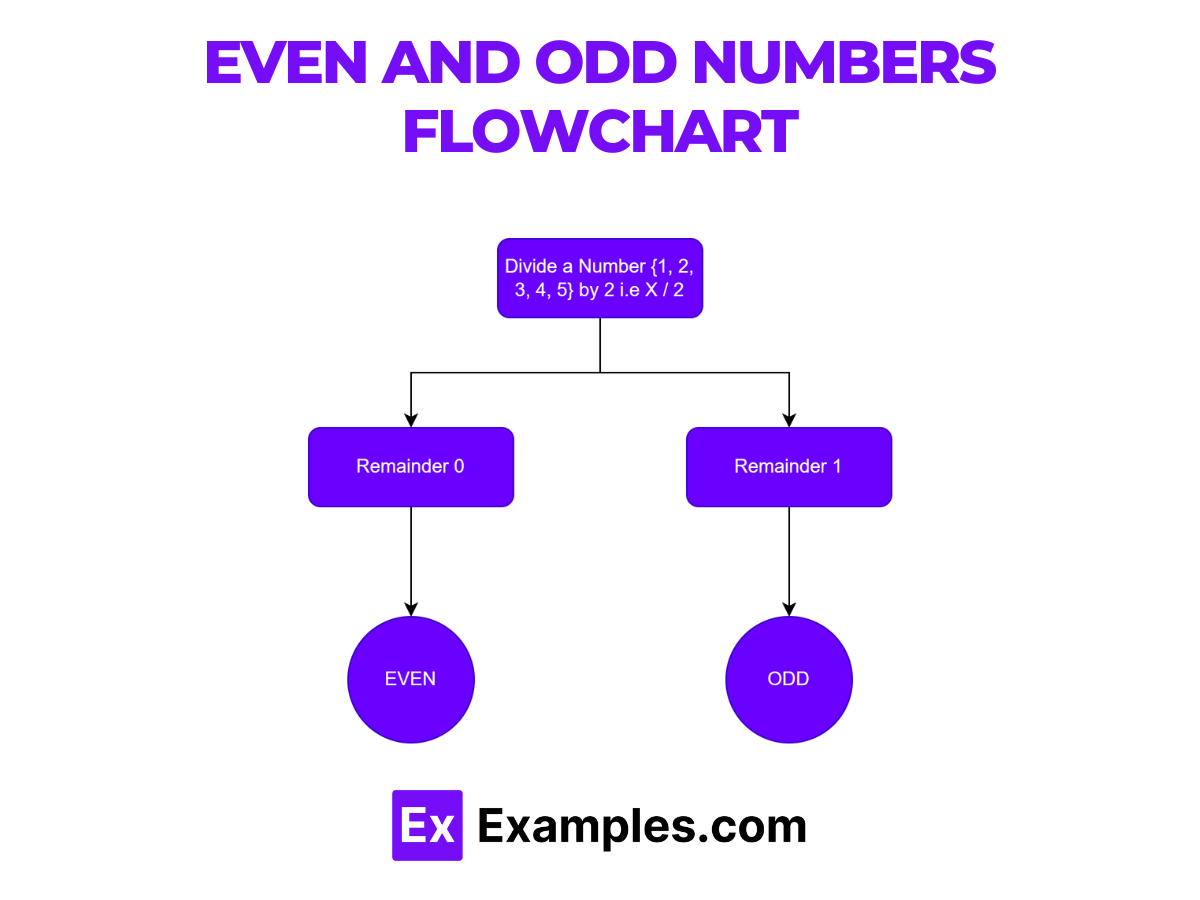
The most basic definition of an even number is any integer that can be divided by two with no remainder. Think about it. $4 / 2 = 2$. No remainder. $10 / 2 = 5$. No remainder.
Now, let's try zero. $0 / 2 = 0$. Is there a remainder? Nope.
Mathematically, an integer $n$ is even if there exists another integer $k$ such that $n = 2k$. In the case of zero, we can say $0 = 2 \times 0$. Since zero is an integer, the definition holds up perfectly. This is what mathematicians call parity. Parity is just a fancy way of saying "the quality of being even or odd." Every integer has parity, and zero's parity is firmly in the even camp.
The "Between" Logic
Think about the neighbors.
Every odd number is sandwiched between two even numbers. One is even. Five is even. Wait—I mean, one is odd and is between zero and two (both even). Look at any odd number, like 7. It’s between 6 and 8. If zero were odd, it would have to be between two even numbers. But it’s between -1 and 1, which are both odd.
If zero were odd, the universe of arithmetic would basically collapse.
Why this actually matters in the real world
You might think this is just pedantic nonsense for people who like calculus too much. But zero being even has real-world consequences. Take computer science, for example.
Computers use binary—zeros and ones. When a programmer writes a piece of code to check if a number is even or odd, they usually use the "modulo" operator. This checks for a remainder after division. If the code is written correctly, it will always identify zero as even. If it didn't, banking systems, digital clocks, and even the "even/odd" day watering restrictions in drought-prone cities would glitch out.
Imagine a city where you can only water your lawn on even-numbered dates. If the date is the 30th, you’re good. If it’s the 2nd, you’re good. But what about the 0? Okay, we don't have a day zero in our calendar, but in data sets that start at index 0, this classification is the difference between a system working and a system crashing.
What the experts say
Dr. James Grime, a mathematician often seen on the popular Numberphile YouTube channel, has spent a significant amount of time explaining this. He points out that children often struggle with zero because it’s abstract. In studies, it takes kids longer to identify zero as even than it does for them to identify 2, 4, or 8.
Interestingly, some research suggests that even adults are about 10% slower at identifying the parity of zero than other single-digit numbers. We have a mental "lag" when it treats zero as a real quantity.
Common myths about zero
- Myth: Zero is neither even nor odd. (Wrong. It’s even.)
- Myth: Zero is "half-even." (There’s no such thing in standard arithmetic.)
- Myth: It’s only even because we decided it was. (It’s even because it follows the unbreakable rules of division.)
Some people get confused because zero is neither positive nor negative. That part is true! Zero is the only integer that is neither positive nor negative. But "positive/negative" is a totally different category than "even/odd." It’s like saying a person can’t be tall because they aren’t a redhead. The two things have nothing to do with each other.
The Sum of Two Odds
Here is a cool way to prove it to yourself. There is a rule in math: An odd number plus an odd number always equals an even number.
- $1 + 1 = 2$ (Even)
- $3 + 5 = 8$ (Even)
- $-1 + 1 = 0$ (...)
If the sum of two odd numbers must be even, and $-1 + 1$ equals $0$, then zero has to be even. You can’t argue with the addition. It’s right there.
How to use this knowledge
Next time you're at a trivia night or helping a kid with their homework, you can be the "actually" person. But do it nicely. Explain that zero isn't just a "nothing" space. It’s a functional, hard-working member of the even number family.
Understanding the zero even or odd question is really about understanding how we define rules. If we start making exceptions for zero because it looks "empty," the rest of the mathematical tower starts to lean.
Moving forward with zero
If you want to get more comfortable with this, try these mental exercises:
- Count by twos starting from a negative number. Start at -6. You’ll hit -4, -2, 0, 2, 4. It feels natural because it is.
- Check your code. If you’re learning Python or Javascript, write a simple
if (x % 2 === 0)script and plug in zero. See what the machine tells you. - Correct the misconception. When you hear someone say zero is "special" or "neutral" regarding parity, gently point out the number line.
Zero is a hero in mathematics. It’s the anchor of our number system. Treating it as an even number isn't just a quirk—it's a requirement for the logic we use every single day to build bridges, fly planes, and code the internet.
The next time someone asks, you won't have to guess. You know. Zero is even. Simple as that.