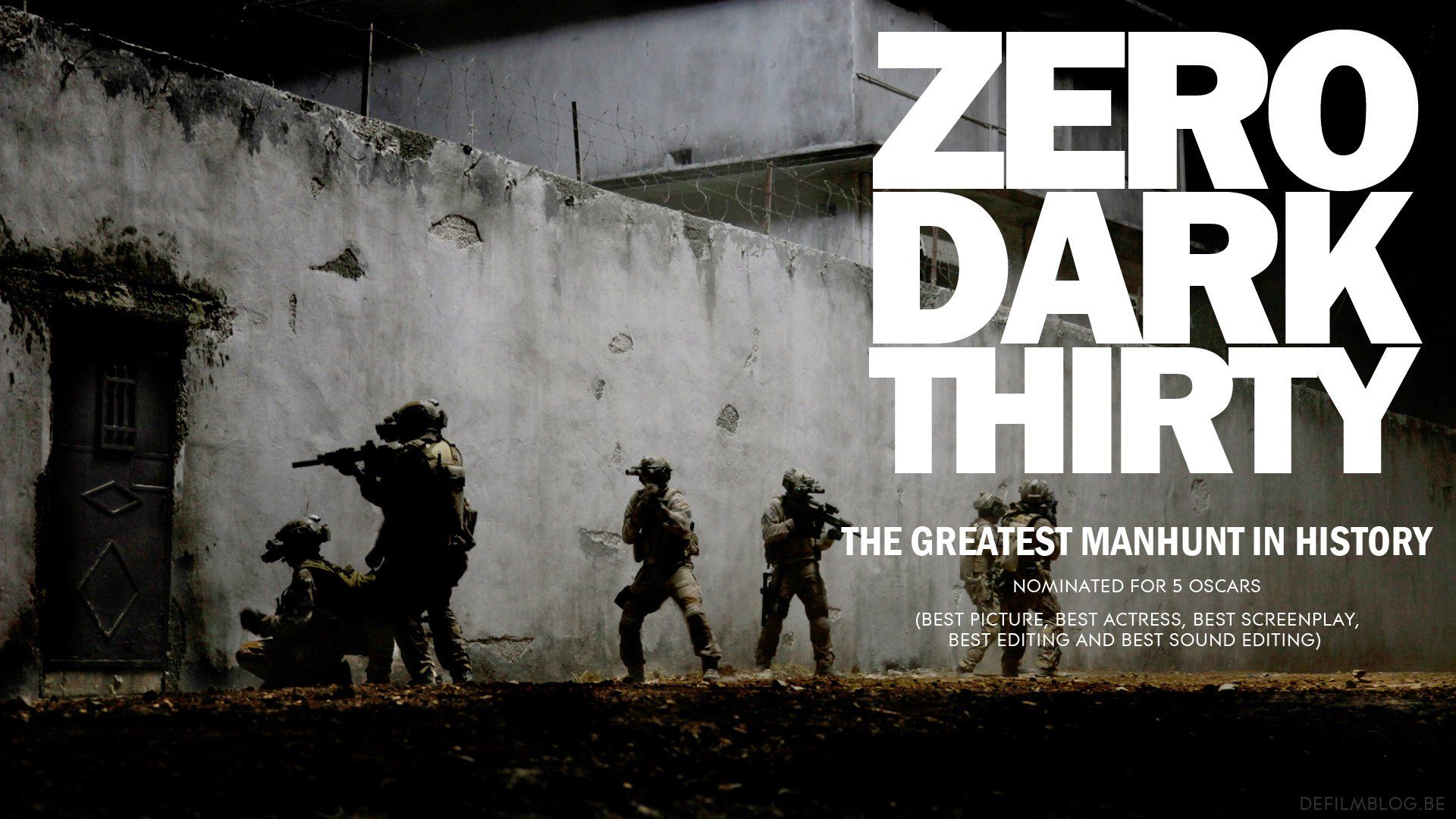
It’s been over a decade since Maya first stared at that body bag on a tarmac in Afghanistan, yet Zero Dark Thirty remains one of the most polarizing pieces of cinema ever to hit the multiplex. Honestly, it’s a weird movie to revisit. It’s cold. It’s clinical. It’s basically two and a half hours of people sitting in dusty rooms looking at spreadsheets, interrupted by bursts of horrific violence and one of the most technically perfect action sequences ever filmed. When Kathryn Bigelow and Mark Boal released this in 2012, they weren't just making a movie; they were drafting a first version of history that the CIA probably didn't want the public to see—even if the agency helped them write it.
The film follows Maya, played by Jessica Chastain in a performance that’s basically all jagged edges and sleep deprivation, as she spends a decade obsessing over a single man: Osama bin Laden. It’s a hunt. It’s an obsession. It’s a tragedy, depending on who you ask.
The Maya Factor: Fact vs. Hollywood Fiction
You’ve probably heard people argue about whether Maya is real. The short answer? Sorta. She’s based on a real CIA officer often referred to in reporting as "Jen," a woman who was instrumental in the Bin Laden hunt. But the movie simplifies things. In the real world, the "courier" lead that eventually led to the Abbottabad compound wasn't just the work of one "stray" analyst. It was a massive, grinding bureaucratic effort involving hundreds of people.
Bigelow chose to funnel that entire decade of frustration into Maya’s face. It works for the screen, but it creates this myth of the "lone truth-teller" that doesn't quite match how the CIA actually functions. Maya is the engine of the film. When she tells her boss, "I'm the motherf***er who found this place," you believe her because Chastain plays her like someone who has forgotten how to have a personality outside of her job.
But here is the thing: the real "Maya" was reportedly passed over for a promotion and eventually left the agency under a bit of a cloud. Life isn't a movie. There was no parade. Just a quiet exit after the biggest win of her career.
That Torture Debate That Won't Die
We have to talk about the "enhanced interrogation" scenes. There’s no getting around it. When Zero Dark Thirty first came out, it got slammed by critics and politicians alike. John McCain, Diane Feinstein, and Carl Levin even wrote a letter to Sony Pictures calling the film "grossly inaccurate" for suggesting that torture led to the breakthrough about the courier, Abu Ahmed al-Kuwaiti.
The movie shows Dan (Jason Clarke) breaking a detainee named Ammar through waterboarding and humiliation. Later, Maya uses the information gleaned from these sessions to track the courier. This is where the film gets ethically murky. Does it endorse torture? Or does it just show it?
Bigelow and Boal always maintained they were just reporting what happened. But the Senate Intelligence Committee’s 2014 report on the CIA's detention and interrogation program basically said the movie was wrong. They argued that the information about the courier was actually obtained through standard intelligence work and that the "enhanced" techniques didn't provide the "Aha!" moment the movie depicts.
Yet, for the viewer, those early scenes are nauseating. They set a tone of moral decay. You see Maya's soul slowly eroding. She starts the movie flinching at the sight of waterboarding; by the middle, she's the one demanding more "pressure." It’s not a hero’s journey. It’s a descent.
The Abbottabad Raid: 25 Minutes of Pure Silence
The final act of Zero Dark Thirty is a masterpiece of technical filmmaking. Most war movies use loud music and frantic editing to make you feel the adrenaline. Bigelow does the opposite. She uses silence.
The raid on the compound is filmed in a way that mimics night vision. It’s green, grainy, and terrifyingly quiet. You aren't watching a "movie" raid; you’re watching a professional execution. The SEAL Team 6 operators (played by guys like Chris Pratt and Joel Edgerton) don't shout catchy one-liners. They move like ghosts. They whisper. They clear rooms with a mechanical efficiency that feels almost predatory.
One detail the film gets right—and it’s a small one—is the "stealth" Black Hawk helicopter crashing. That actually happened. It was a nightmare scenario for the guys on the ground. They had to blow up the multi-million dollar wreckage to keep the tech out of Pakistani hands while they were literally in the middle of a high-stakes assassination. The tension in that scene is real because the stakes were real.
What the Film Leaves Out
Hollywood loves a clean ending. Zero Dark Thirty ends with Maya on a C-130 transport plane, alone. The pilot asks her where she wants to go, and she doesn't have an answer. She cries. It’s a powerful image of the "hollowed-out hero."
But the geopolitical fallout? That’s not in the movie. The film doesn't really touch on the massive strain the raid put on US-Pakistan relations. It doesn't talk about the doctor, Shakil Afridi, who helped the CIA under the guise of a vaccination program and then got left behind to rot in a Pakistani prison. It doesn't talk about how the hunt for one man paved the way for the next decade of drone warfare.
The movie is a character study, not a history book. It focuses on the how and the who, but it largely ignores the why or the what next.
Why It Still Matters in 2026
If you watch this movie today, it feels like a time capsule of a specific American era—the post-9/11 decade where the country was obsessed with closure. We thought killing Bin Laden would end the story. Instead, it just shifted the landscape.
The film's legacy is its refusal to be "pro-America" in a traditional sense. It’s not Top Gun. It’s not Saving Private Ryan. It’s a movie about the cost of obsession. It shows that even when you win, you lose something of yourself in the process.
How to Re-watch Zero Dark Thirty for Maximum Impact
If you’re planning on a re-watch, don't just treat it as an action flick. It’s too slow for that. Instead, pay attention to these things:
- The Sound Design: Notice how the ambient noise changes when they are in the "black sites" versus when they are in the CIA offices in Langley. It’s oppressive.
- The Casting: Look for the "before they were famous" faces. Seeing Chris Pratt before he was a Marvel star playing a gritty SEAL is a trip.
- The Colors: The film moves from the harsh, blown-out yellows of the desert to the cold, sterile blues of the final act. It’s a visual representation of Maya's hardening heart.
- The Ethics: Read the 2014 Senate Torture Report summary alongside the movie. It makes the viewing experience ten times more complex when you know where the film took creative liberties with the truth.
Zero Dark Thirty isn't a comfortable watch. It’s not supposed to be. It’s a brutal, honest, and sometimes factually questionable look at the lengths a nation will go to for a sense of justice. It’s a film that asks if the ends justify the means, and then refuses to give you an answer.
Actionable Insights for Film Buffs and History Seekers
To truly understand the context of what you're seeing on screen, dive into the actual reporting that informed the script. Start with Mark Bowden’s book The Finish, which provides a much broader tactical view of the raid than the movie's narrow focus on Maya. For the CIA side of things, look into the reporting of Jane Mayer at The New Yorker; her work on the interrogation programs provides the necessary "real world" counterpoint to the scenes of Dan and his buckets of water. Finally, compare the film's portrayal of the SEALs with the accounts in No Easy Day by Matt Bissonnette (writing as Mark Owen), who was actually on the raid. Seeing where the Hollywood version aligns—and where it diverges—with the first-hand accounts reveals the true craft of Bigelow's storytelling.