It’s been over a decade since Maya sat on the tarmac, the sole passenger on a massive military transport plane, and cried. That final shot of the English movie Zero Dark Thirty still hits like a physical weight. It wasn't just a movie about a manhunt. It was a movie about the cost of obsession. Most people remember it as "that movie where they catch Bin Laden," but honestly, if you watch it again today, you realize it’s actually a pretty bleak character study wrapped in a procedural thriller.
The film didn't just appear out of thin air. Director Kathryn Bigelow and screenwriter Mark Boal were actually already working on a project about the failure to capture Osama bin Laden at Tora Bora. Then, May 2011 happened. The world changed overnight. They scrapped the old script and started from scratch, gaining unprecedented (and highly controversial) access to CIA officials. This wasn't some polished propaganda piece. It was messy. It was loud. It made people in Washington very, very angry.
The Maya Myth and the Real "Jen"
Jessica Chastain’s performance as Maya is the engine of the film. She’s relentless. She’s "the motherf***er who found this place." But who was she really?
In the English movie Zero Dark Thirty, Maya is presented as a singular force of nature, a composite character based largely on a real-life CIA analyst often referred to as "Jen." The real woman was part of the "Sisterhood," a group of female analysts who had been tracking Al-Qaeda since before the 9/11 attacks. This wasn't a Hollywood invention. Women really were at the forefront of the Alec Station—the CIA unit dedicated to finding Bin Laden.
The movie suggests she was a lonely crusader. That’s partially true, but the reality was much more bureaucratic. She had to fight through layers of middle management who were more interested in "actionable intelligence" regarding immediate threats than the "ghost" of a man many thought was already dead in a cave somewhere. The film captures that friction perfectly. When Maya writes the number of days they’ve failed to act on the glass wall of her boss's office, it’s a cinematic flourish, but it represents a very real, very bitter internal struggle within the agency.
Why the Torture Scenes Still Spark Firestorms
You can’t talk about this movie without talking about the first 20 minutes. The "enhanced interrogation" sequences. They are brutal. They are hard to watch. And they became the center of a massive political firestorm involving John McCain, Diane Feinstein, and the CIA itself.
The controversy boils down to one question: Did torture lead to the courier, Abu Ahmed al-Kuwaiti?
The film suggests a link. It shows information gained under duress eventually leading to the name of the courier. However, the Senate Intelligence Committee's report on CIA torture later argued that this was factually incorrect. They claimed the CIA already had the courier's name from other sources. Bigelow and Boal defended their choice, arguing that they were showing the "messy reality" of the era. They weren't saying torture was good; they were saying it happened.
Honestly, the film’s refusal to provide a moralizing voice-over is what makes it so uncomfortable. It just shows the act. It doesn't tell you how to feel about it. That’s rare in big-budget American cinema. It treats the audience like adults, which, naturally, led to a lot of people yelling at each other on cable news.
The Craft of the Abbottabad Raid
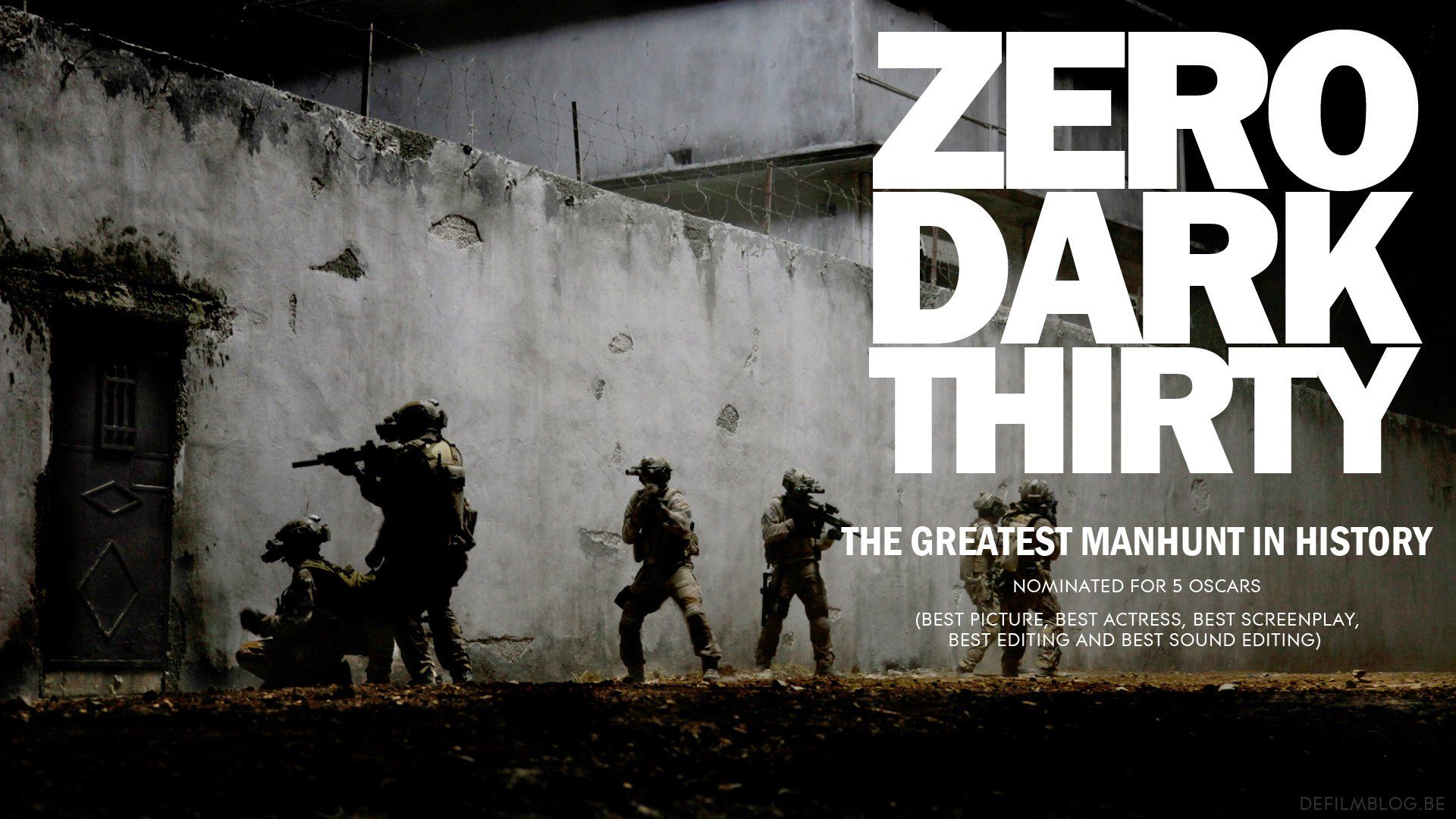
Let’s get into the technical stuff. The final 30 minutes of the English movie Zero Dark Thirty is a masterclass in tension. It’s filmed in near-total darkness, mimicking the night-vision perspective of the SEALs.
They used actual modified Black Hawk helicopters—or at least, highly accurate recreations of the "stealth" versions that were secret until one crashed during the actual raid. The attention to detail is staggering.
- The sound design? Muffled and claustrophobic.
- The pacing? Real-time, or close to it.
- The violence? Fast, confusing, and decidedly un-heroic.
When the SEALs finally reach the third floor, there is no grand speech. There is no "For America" moment. It’s just professional, clinical execution. This is where the film excels as a piece of history-adjacent media. It strips away the Michael Bay-style pyrotechnics and replaces them with the cold, hard reality of urban warfare.
Beyond the Screen: The Political Fallout
The movie didn't just win Oscars and stir up critics. It actually triggered a federal investigation. Republicans accused the Obama administration of giving Bigelow and Boal "top secret" access to help bolster the President's re-election campaign.
The Pentagon and the CIA had to open their files to prove that no classified secrets were leaked. It was a mess.
- Senator Peter King called for an investigation into the "dangerous" leaks.
- The CIA’s acting director, Michael Morell, sent a memo to employees clarifying that the movie was a work of fiction.
- The filmmakers were subpoenaed for their notes.
This level of scrutiny is unheard of for a movie. It speaks to how close to the bone the English movie Zero Dark Thirty actually cut. It wasn't just entertainment; it was a rough draft of history that the people who lived that history weren't ready to see.
Was Maya a Hero or a Victim of the System?
By the end of the film, Maya has won. She got her man. But look at her face in that final scene. She looks hollowed out.
Throughout the movie, we see her lose her friends (the Camp Chapman attack, which killed her colleague Jessica, played by Jennifer Ehle, was a real and devastating blow to the CIA). She has no personal life. No husband. No kids. No hobbies. She is a tool sharpened for a single purpose.
When that purpose is gone, what’s left?
This is the nuance people miss. The film is often accused of being pro-CIA, but it's actually a pretty devastating critique of how the "War on Terror" consumed the people who fought it. Maya didn't just find Bin Laden; she lost herself in the process. It’s a tragedy disguised as a victory.
Specific Details You Might Have Missed
If you’re a gear-head or a history buff, the movie is a goldmine. The "stealth" Black Hawks were designed based on the tail rotor left behind at the compound. The production team built two full-scale replicas that could actually "taxi" on the ground. The compound in the movie was built from scratch in Jordan. It was an exact 1:1 replica of the one in Abbottabad, based on satellite imagery. The film features actors who weren't stars yet. Look closely and you’ll see Chris Pratt as a SEAL, years before he was Star-Lord. You’ll see Joel Edgerton. You’ll see Jeremy Strong from Succession.
The Legacy of Zero Dark Thirty
Is it the definitive account of the hunt for Bin Laden? No. For that, you should probably read No Easy Day by Mark Owen or The Bin Laden Papers by Nelly Lahoud.
But as a piece of cinema? It’s unparalleled. It captured a very specific, very dark mood in the American psyche. It’s a movie that refuses to give you the "feel-good" ending you think you want.
The English movie Zero Dark Thirty stands as a testament to the power of procedural storytelling. It shows that the most interesting part of history isn't just the "what," but the agonizing, bureaucratic, and often morally compromised "how."
How to Engage Further with the History
If you want to move beyond the Hollywood version and get into the real grit of this era, here is how you should actually spend your time. Don't just re-watch the movie; look at the context that created it.
- Read the Senate Intelligence Committee Report on Torture: It’s a heavy read, but the executive summary is available online. It provides the necessary counter-balance to the film's interrogation scenes.
- Compare with "The Report" (2019): For a completely different cinematic perspective on the same era, watch the movie starring Adam Driver. It focuses on the investigation into the CIA's methods and acts as a direct narrative "sequel" or "correction" to the themes in Zero Dark Thirty.
- Study the "Sisterhood": Look up the careers of analysts like Cindy Storer and Nada Bakos. Their real-life accounts of tracking Al-Qaeda offer a much more collaborative (and arguably more interesting) version of the story than the "lone wolf" narrative of Maya.
- Examine the Architecture: If you're interested in the logistics, look up the architectural renderings of the Abbottabad compound. Seeing how the SEALs had to navigate that specific space makes the final sequence of the movie even more impressive from a technical standpoint.
The best way to appreciate a film like this is to recognize where the art ends and the reality begins. Stop looking for a hero and start looking at the systems that were in place. That is where the real story lives.