It has been over a decade since the Zero Dark Thirty movie first hit theaters, and honestly, the dust hasn't really settled. You might remember the headlines. There were senators calling for investigations, human rights groups issuing scathing press releases, and film critics tripping over themselves to praise or pan Kathryn Bigelow’s gritty, procedural-heavy masterpiece. Even now, in 2026, the film remains a weirdly polarizing artifact of the early 2010s.
It's a movie about a manhunt. But it's also a movie about how institutions work, how people break, and whether or not the truth actually matters when you're telling a story "based on firsthand accounts."
The Maya Mystery: Who was the real woman behind Zero Dark Thirty?
Everyone wants to know who Maya actually is. Jessica Chastain played her with this brittle, monomaniacal intensity that made her feel like a ghost inhabiting a human body. In the film, she is the "motherf***er" who found the house.
The truth? Maya is a composite. Mostly.
Journalist Jane Mayer and others have pointed to a real-life CIA officer named Alfreda Frances Bikowsky as a primary inspiration. Bikowsky was a central figure in the Agency’s counterterrorism efforts and, quite famously, was involved in the "enhanced interrogation" program. If you’ve seen the movie, you know Maya watches the waterboarding. She doesn't flinch.
But here’s the thing—Bigelow and screenwriter Mark Boal didn't just copy-paste one person's life. Maya represents a whole generation of "targeteers." These were mostly women who entered the CIA in the 90s and spent their entire careers obsessing over one man in a cave.
It’s actually kinda fascinating. The real "Maya" was reportedly so certain about the Abbottabad compound that she was willing to stake her entire reputation on it when her male superiors were still hovering at a "maybe 40 percent" certainty level. The movie captures that friction perfectly.
Why the Zero Dark Thirty movie remains a political lightning rod
You can't talk about this film without talking about torture. It's the elephant in the room.
The first twenty minutes of the movie are brutal. We see Ammar, a detainee, being humiliated, beaten, and waterboarded. The controversy stems from the narrative's suggestion that this torture directly led to the name of bin Laden's courier, Abu Ahmed al-Kuwaiti.
The Fact vs. Fiction Divide
- The Movie Version: Torture provides the "break" that gives the CIA the courier's name.
- The Real World Version: The Senate Intelligence Committee's 6,000-page report on CIA torture later concluded that "enhanced interrogation" didn't actually lead to the discovery of bin Laden. Most of the usable leads came from standard, rapport-based questioning or signals intelligence.
- The Filmmakers' Defense: Mark Boal has argued that he wasn't saying torture was good, just that it was there. He viewed it as a historical reality that happened during that "dark decade."
It’s a tough pill to swallow. If a movie looks like a documentary—with its shaky cams and date-stamped title cards—audiences tend to believe every frame is gospel. The Zero Dark Thirty movie sits in that uncomfortable gray zone where art meets propaganda. Or maybe it's just art that refuses to give you a moral compass.
The CIA Connection
Internal documents released via FOIA requests showed that the CIA gave Bigelow and Boal "unprecedented" access. We’re talking about Boal being invited to a classified awards ceremony for the raid participants. There were even allegations that the Agency pressured the filmmakers to cut scenes that made them look bad—like a scene involving a dog during an interrogation or CIA agents partying on a rooftop in Islamabad.
Basically, the CIA wanted a "win" on screen. They got it, but it came with a side of immense scrutiny.
Production Secrets: Building Abbottabad in the Desert
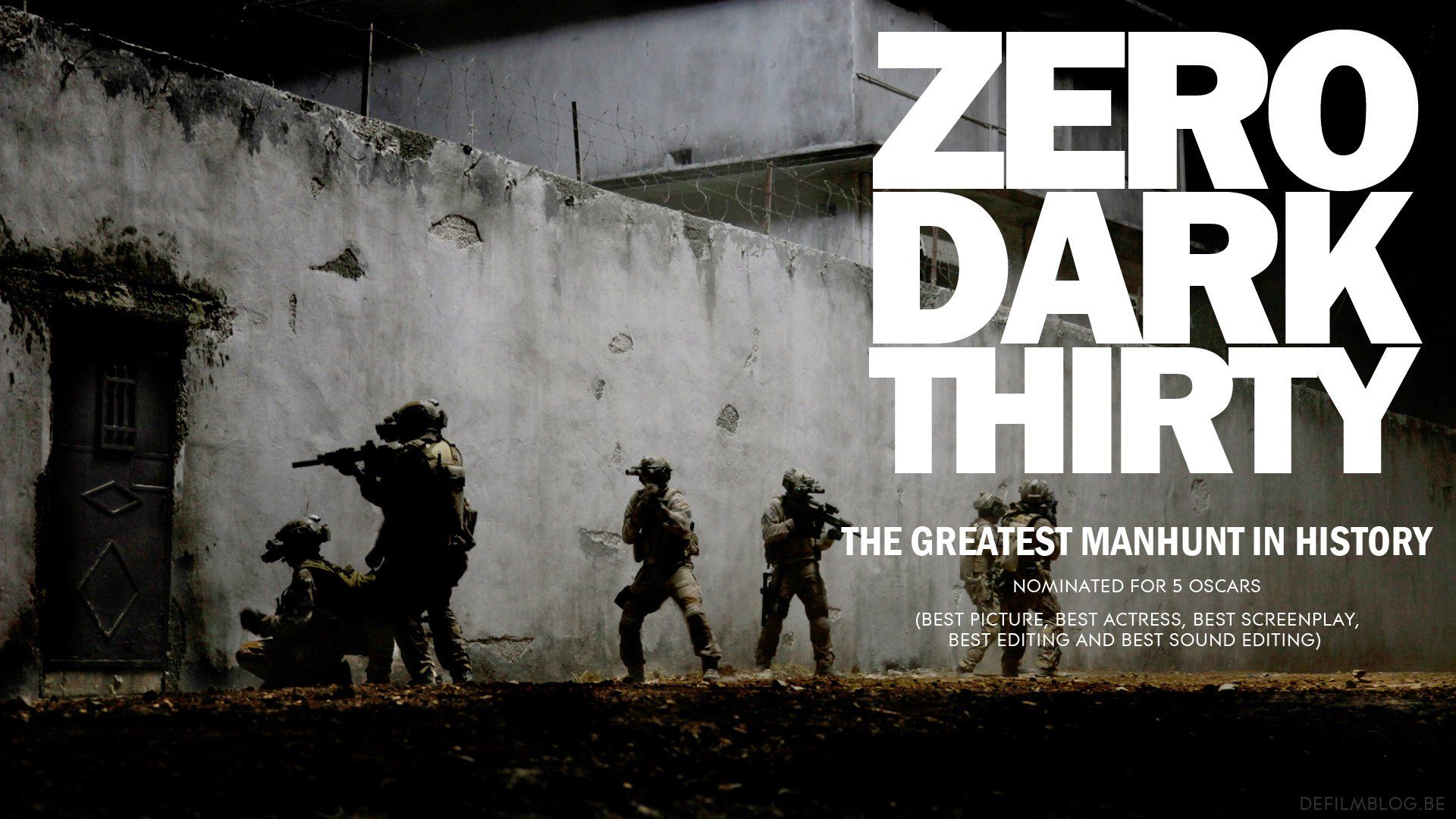
Kathryn Bigelow didn't want to use CGI for the final raid. She wanted it to feel heavy. To do that, the production designer, Jeremy Hindle, literally built a full-scale replica of the Abbottabad compound in the Jordanian desert.
They didn't just build the walls. They distressed the cinder blocks. They made sure the trash in the yard looked like the trash found in Pakistan. When the SEALS (played by Chris Pratt and Joel Edgerton) move through that house in the final act, they are moving through a physical space.
It took years. They even had to deal with protests in India because they were filming scenes in Chandigarh and Mani Majra meant to represent Pakistan. Local groups weren't exactly thrilled about the Pakistani flag being flown on Indian soil, even for a movie.
What it feels like to watch it now
If you watch it today, the ending hits different. After the raid is over, after the body is bagged and the DNA is confirmed, Maya sits on the back of a C-130 transport plane.
The pilot asks her: "Where do you want to go?"
She doesn't answer. She just cries.
It’s one of the most honest moments in modern cinema. She spent ten years—her entire adult life—on one goal. Now that the goal is achieved, she is empty. She has no hobby, no boyfriend, no family we see. She is a tool that has finished its job.
Honestly, that’s the real story of the Zero Dark Thirty movie. It’s not just about a terrorist. It’s about what the hunt does to the hunters.
Actionable Insights for Your Next Rewatch
If you're planning to dive back into this film or watch it for the first time, keep these three things in mind to get the most out of the experience:
- Watch the "Black Sites" carefully: Notice that the information gained during the torture scenes is often conflicting or flat-out wrong. The film subtly shows the "fog of war" even while being accused of being pro-torture.
- Focus on the sound design: The movie won an Oscar for Sound Editing for a reason. The final raid is almost silent, punctuated only by the heavy breathing of the soldiers and the muffled thwip of suppressed rifles. It creates an incredible sense of claustrophobia.
- Compare with "The Hurt Locker": If you really want to see Bigelow's style evolve, watch this back-to-back with her other Iraq war film. You'll see how she moved from the adrenaline-junkie perspective of a bomb tech to the cold, bureaucratic obsession of an analyst.
Go find a copy on a streaming service or dust off the Blu-ray. It’s a piece of history, even if some of that history is debatable.