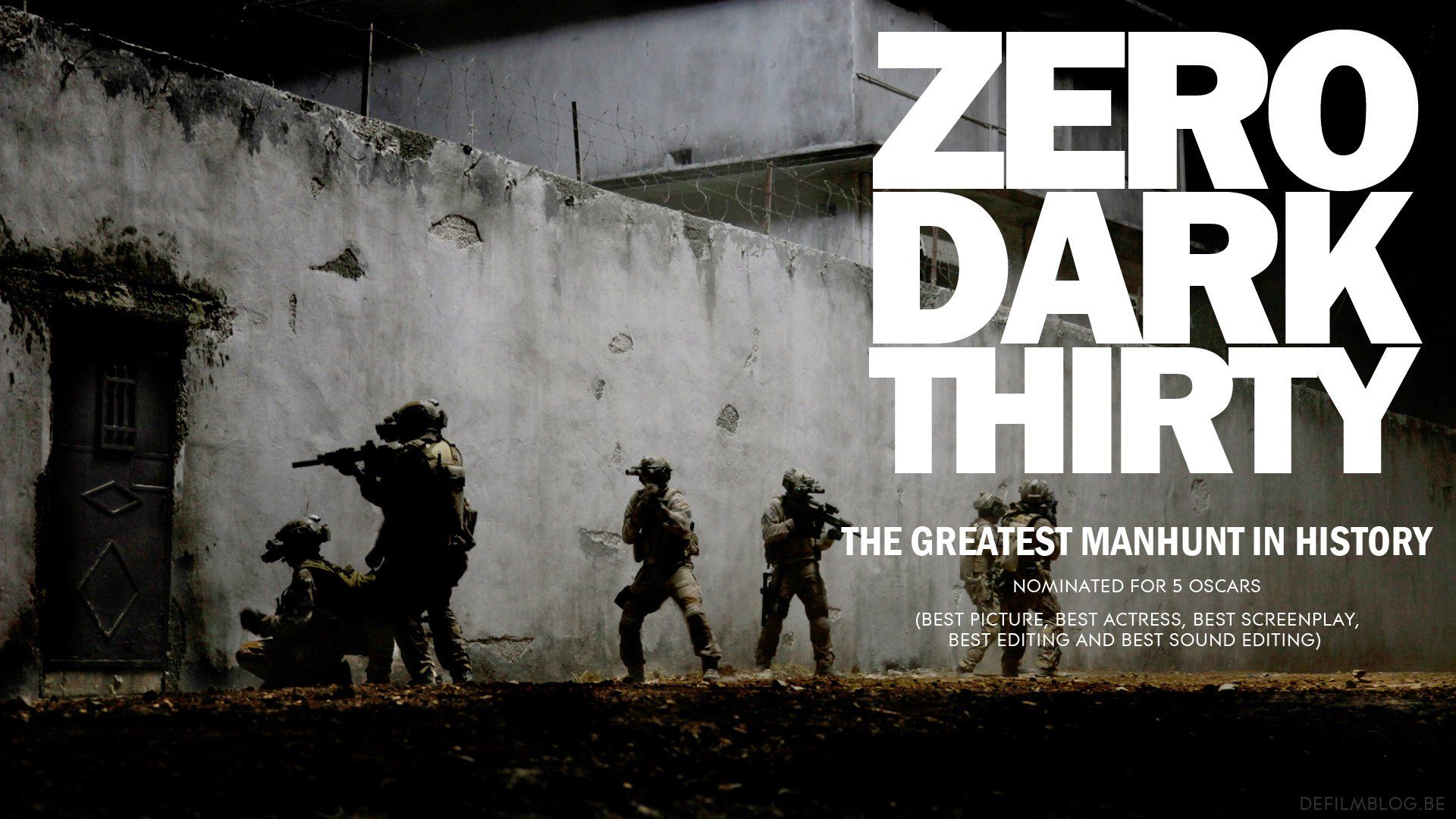
It’s been over ten years since zero dark thirty the movie hit theaters, and honestly, the dust hasn't really settled. Most people remember it as that intense, blue-hued thriller about the hunt for Osama bin Laden. But if you dig back into the headlines from 2012 and 2013, it was way more than just a Friday night at the cinema. It was a political lightning rod that had U.S. Senators writing angry letters to Sony Pictures and the CIA opening internal investigations.
The movie starts with a black screen and the haunting audio of 9/11 emergency calls. It’s brutal. From there, director Kathryn Bigelow and writer Mark Boal take us through a ten-year obsession. It’s not a fun watch. It’s cold, clinical, and arguably one of the most polarizing pieces of filmmaking in the 21st century.
Maya and the Obsession with the Target
The heart of the story is Maya, played by Jessica Chastain. We’re told she’s based on a real person, often referred to in reporting as "Jen," though the CIA never officially confirmed her identity for obvious security reasons. Maya isn't your typical Hollywood hero. She doesn’t have a backstory, a husband, or a hobby. She just has a target.
Chastain plays her with this hardening shell. In the beginning, she winces at the waterboarding scenes. By the middle, she’s the one yelling at the detainees. By the end? She’s a ghost. When she’s finally asked where she wants to go after the mission is over, she just sits there. Empty. It’s a powerful metaphor for what a decade of war does to a person's soul.
Critics like Glenn Greenwald were incredibly vocal back then, arguing that the film served as a sort of pro-torture propaganda. Why? Because the movie suggests that "enhanced interrogation" led to the courier's name. That’s the big sticking point. Did it really happen that way?
Sorting Fact from Hollywood Fiction
If you want to understand zero dark thirty the movie, you have to look at the Senate Intelligence Committee's report on the CIA's detention and interrogation program. Senators Dianne Feinstein and John McCain were livid. They claimed the film was "grossly misleading" because, according to their findings, the CIA already had information on the courier, Abu Ahmed al-Kuwaiti, from other sources that didn't involve torture.
But the filmmakers stood their ground. Boal, who has a background in investigative journalism, argued that he was showing a "composite" of a long, messy process.
It wasn't just a linear path. It was a mess. A decade of dead ends. Paperwork. Luck.
The film depicts a 2009 suicide bombing at Camp Chapman in Khost, Afghanistan. That was a real, devastating hit to the CIA. Jennifer Matthews, a top al-Qaeda expert (portrayed by Jennifer Ehle in the film), was killed in that blast. The movie gets the tension of that scene right—the misplaced trust, the suddenness of the violence. It shows that the hunt wasn't some high-tech cake walk; it was a series of tragic failures punctuated by one massive, tactical success.
The Technical Mastery of the Abbottabad Raid
Let’s talk about the final thirty minutes. Regardless of how you feel about the politics, the raid on the compound in Abbottabad is a masterclass in tension. Bigelow filmed it in near-real-time using night-vision aesthetics that make you feel like you’re actually on the chopper.
They used "Stealth Hawks"—modified Black Hawk helicopters that the public didn't even know existed until one of them crashed during the actual raid. The production team actually built a full-scale replica of the compound in Jordan. They didn't use shaky cam to fake excitement. They used stillness.
- The silence of the desert.
- The rhythmic breathing of the SEALs.
- The dog barking in the distance.
- The horrific realization for the families inside.
It’s not stylized like a Michael Bay movie. It’s claustrophobic. When the SEAL (played by Chris Pratt) finally pulls the trigger, it’s not a "hero moment" with swelling music. It’s a job. It’s "for God and country, Geronimo." Then they bag the body and leave.
Why the Accuracy Debate Still Rages
Journalists like Jane Mayer of The New Yorker pointed out that the film glosses over the fact that many of the leads came from traditional SIGINT (signals intelligence) and human intelligence that had nothing to do with the black sites. Yet, the movie places the torture scenes right at the start, creating a narrative link in the viewer's mind.
Is it a documentary? No. Is it "based on a true story"? Yes. Does that distinction matter when millions of people get their history from movies? Absolutely.
The CIA’s own acting director at the time, Michael Morell, sent a memo to employees saying the film "takes significant narrative liberties." He wanted to make it clear that the hunt was a team effort involving hundreds of people, not just one determined woman tracking a courier. But Hollywood needs a protagonist. It needs Maya.
The Legacy of Zero Dark Thirty the Movie
Looking back from 2026, the film feels like a time capsule of the post-9/11 era’s closing chapter. It captured a specific American mood: exhausted, cynical, and morally compromised. It didn't offer a celebratory parade. Instead, it gave us a woman weeping on a cargo plane, wondering what she’s supposed to do with the rest of her life now that her enemy is dead.
It’s worth noting that the film was originally supposed to be about the failure to find Bin Laden at Tora Bora. Then, mid-production, the real-life raid happened. Boal and Bigelow had to scrap their script and start over. That’s why the movie feels so immediate—it was being written while the history was still wet on the page.
Essential Takeaways for Film Buffs and History Fans
If you're revisiting zero dark thirty the movie, keep these points in mind to separate the cinematic drama from the historical record:
- Check the Sources: Read the executive summary of the Senate Intelligence Committee Report on Torture. It provides a starkly different timeline regarding the courier’s identification than the film suggests.
- Watch the Craft: Pay attention to the sound design. The film won an Oscar for Sound Editing (shared with Skyfall), and it’s easy to see why. The lack of music during the raid is what makes it feel so authentic.
- Explore the "Real" Maya: Research the reporting by Mark Mazzetti and Matt Apuzzo. They’ve written extensively about the real-life analysts who spent years in the "Bin Laden unit."
- Compare Perspectives: Watch No Easy Day (the book by Mark Owen) or the documentary The Manhunt on HBO for a more procedural look at the same events.
What You Should Do Next
To get the most out of your viewing experience, don't take the film as a literal textbook. Instead, treat it as a jumping-off point for a deeper dive into the complexities of intelligence gathering. Start by reading "The Looming Tower" by Lawrence Wright to understand the origins of the conflict, or "Manhunt" by Peter Bergen, which offers a detailed account of the actual search for Bin Laden. These resources fill in the gaps that a two-and-a-half-hour movie simply can't cover. Understanding the distinction between "cinematic truth" and "historical fact" is the only way to truly appreciate what Bigelow was trying to achieve with this film.