It’s been over ten years since the Zero Dark Thirty movie first hit theaters, and honestly, the dust still hasn't settled. If you were around in 2012, you probably remember the absolute firestorm it ignited. It wasn't just another military thriller. It was a cultural lightning rod. One day you had critics calling it a masterpiece, and the next, US Senators like John McCain and Dianne Feinstein were writing letters to Sony Pictures complaining about its depiction of "enhanced interrogation." The film didn't just tell a story; it started a national argument about what it means to win.
Kathryn Bigelow and Mark Boal, the powerhouse duo behind The Hurt Locker, didn't set out to make a comfortable film. They wanted to track the decade-long hunt for Osama bin Laden through the eyes of Maya, a CIA analyst played by Jessica Chastain. Maya is allegedly based on a real-life officer, often referred to in reporting as "Jen," though the CIA has never officially confirmed her identity. The movie is gritty. It’s cold. It feels less like a Hollywood blockbuster and more like a procedural that happened to be filmed in high definition.
The Torture Debate that Won't Die
You can't talk about the Zero Dark Thirty movie without talking about waterboarding. This is where most people get tripped up. The film opens with a black screen and the harrowing audio of 9/11 calls—a visceral reminder of why the hunt began—and then immediately pivots to a "black site" where a detainee is being brutally interrogated.
Critics like Jane Mayer of The New Yorker argued the film incorrectly suggested that torture led directly to the courier who eventually led the CIA to the Abbottabad compound. The CIA’s own internal documents, later released in various forms, suggest the "Aha!" moment came from multiple sources, some of which had nothing to do with coercion. But the movie presents it as a messy, interconnected web. It doesn't explicitly say "torture is good," but it shows it as a functional part of the machine at that time. That nuance—or lack thereof, depending on who you ask—is exactly why the movie remains so polarizing.
Some viewers see a critique of the soul-crushing cost of war. Others see a justification for war crimes. The film refuses to hold your hand and tell you how to feel. It just sits there, bleak and uncompromising, showing you a version of history that is deeply uncomfortable to watch.
Fact vs. Fiction: What Really Happened in the Abbottabad Raid?
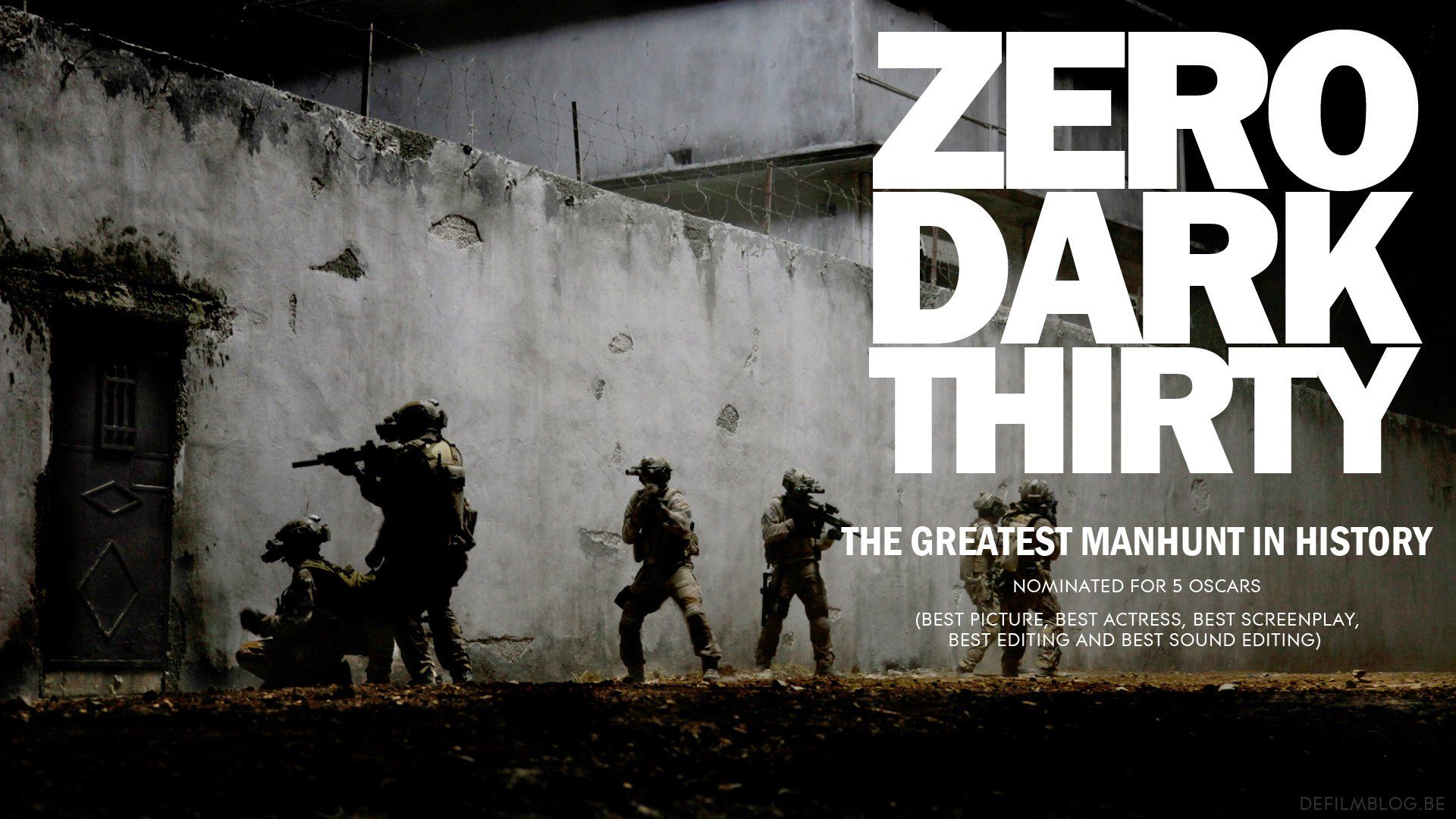
When the SEAL Team 6 sequence starts, the movie shifts gears entirely. This is the part everyone remembers. It’s a 25-minute sequence filmed in near-real-time, using night-vision aesthetics that make you feel like you're sitting in the back of the Black Hawk.
The attention to detail here is actually insane.
- The production team built a full-scale replica of the Abbottabad compound in Jordan.
- They used "stealth" helicopter mock-ups based on the actual wreckage found at the site.
- The movements of the SEALs (played by actors like Joel Edgerton and Chris Pratt) were choreographed to mimic actual Tier 1 operator tactics.
But even here, creative license creeps in. In the Zero Dark Thirty movie, Maya is the singular driving force, the "lone wolf" who convinces everyone that bin Laden is in that house. In reality, it was a massive team effort involving hundreds of analysts over many years. Reality is usually more bureaucratic and less cinematic than a single person screaming at their boss in a hallway.
The film also takes liberties with the timeline of the courier, Abu Ahmed al-Kuwaiti. In the movie, his discovery feels like a linear detective story. In the real world, the intelligence was a giant pile of contradictions that took years to sift through. Leon Panetta, who was the CIA Director during the raid, has noted that while the film captures the spirit of the hunt, the specifics of how the dots were connected were much more fragmented.
Why Maya Is Such a Weirdly Compelling Protagonist
Maya isn't your typical hero. She doesn't have a backstory. We don't see her go home to a husband or kids. She doesn't even seem to have hobbies. Her entire existence is the hunt.
Jessica Chastain plays her with this brittle, focused energy that is honestly kind of terrifying. There’s a scene where she tells the CIA Director, "I'm the motherf***er who found this place." It’s a line that feels like pure Hollywood, yet it captures the sheer obsession required to stay on a single trail for ten years.
By the end of the Zero Dark Thirty movie, when the mission is over and she’s sitting alone on a C-130 transport plane, she starts to cry. It’s not a cry of joy. It’s a cry of "What now?" She spent her entire adult life defined by one man's shadow. Now that he's gone, there’s nothing left of her. That's the real ending of the movie—not the raid, but the void left behind after the mission is accomplished.
The Legacy of the Stealth Hawks and Technical Accuracy
One of the coolest things about the movie is how it handled the technology. Remember the helicopter that crashed during the real raid? The world had never seen a stealth Black Hawk before that night. The movie had to guess what it looked like based on the tail section that survived the explosion.
The designers did such a good job that their "guess" became the de facto image of the stealth hawk in the public consciousness. It’s a rare case where a movie's production design actually influenced how we visualize modern military history.
But even with that accuracy, the film faced accusations of being "pro-Obama propaganda" because it was released near an election, and "anti-American" because it showed the dark side of the War on Terror. It’s one of those rare films that managed to piss off people on every single side of the political aisle. That’s usually a sign that a piece of art is doing something right—or at least something honest.
Watching It Today: A Different Perspective
If you watch the Zero Dark Thirty movie now, in the mid-2020s, it hits differently. We’ve seen the end of the war in Afghanistan. We’ve seen the long-term fallout of the era of "enhanced interrogation." The movie feels like a time capsule of a very specific, very intense era of American history.
It’s not an easy watch. It shouldn't be. It’s a movie about a man-hunt that defined a generation, and it refuses to give the audience the "Ra-Ra" patriotic high that most war movies strive for. It’s cold, it’s clinical, and it’s deeply cynical about the price of victory.
If you're looking for a clear-cut story of good vs. evil, this isn't it. But if you want to understand the sheer, grinding exhaustion of the intelligence world and the moral compromises made in the dark, there’s still nothing quite like it.
Actionable Insights for Your Next Rewatch
To get the most out of the film and understand the context better, consider these steps:
- Read the Senate Intelligence Committee Report on Torture: If you want to see where the movie and reality diverge on the effectiveness of "enhanced interrogation," the executive summary of this report is the primary source.
- Watch for the Sound Design: Pay attention to the silence in the final raid. Bigelow intentionally avoided a sweeping musical score during the Abbottabad sequence to heighten the realism.
- Compare with 'No Easy Day': Read the book by Matt Bissonnette (writing as Mark Owen), one of the SEALs on the raid. It provides a ground-level perspective that helps you see which parts of the movie's tactics were spot-on.
- Look at the Color Palette: Notice how the film gets progressively desaturated. The beginning in Pakistan is vibrant and hot; by the time they get to the compound, everything is a cold, metallic blue and green. It mirrors Maya’s own emotional deadening.
The Zero Dark Thirty movie isn't just a record of a raid. It's a study of obsession. Whether you think it's a masterpiece or a piece of propaganda, it's a film that demands you pay attention to the details.