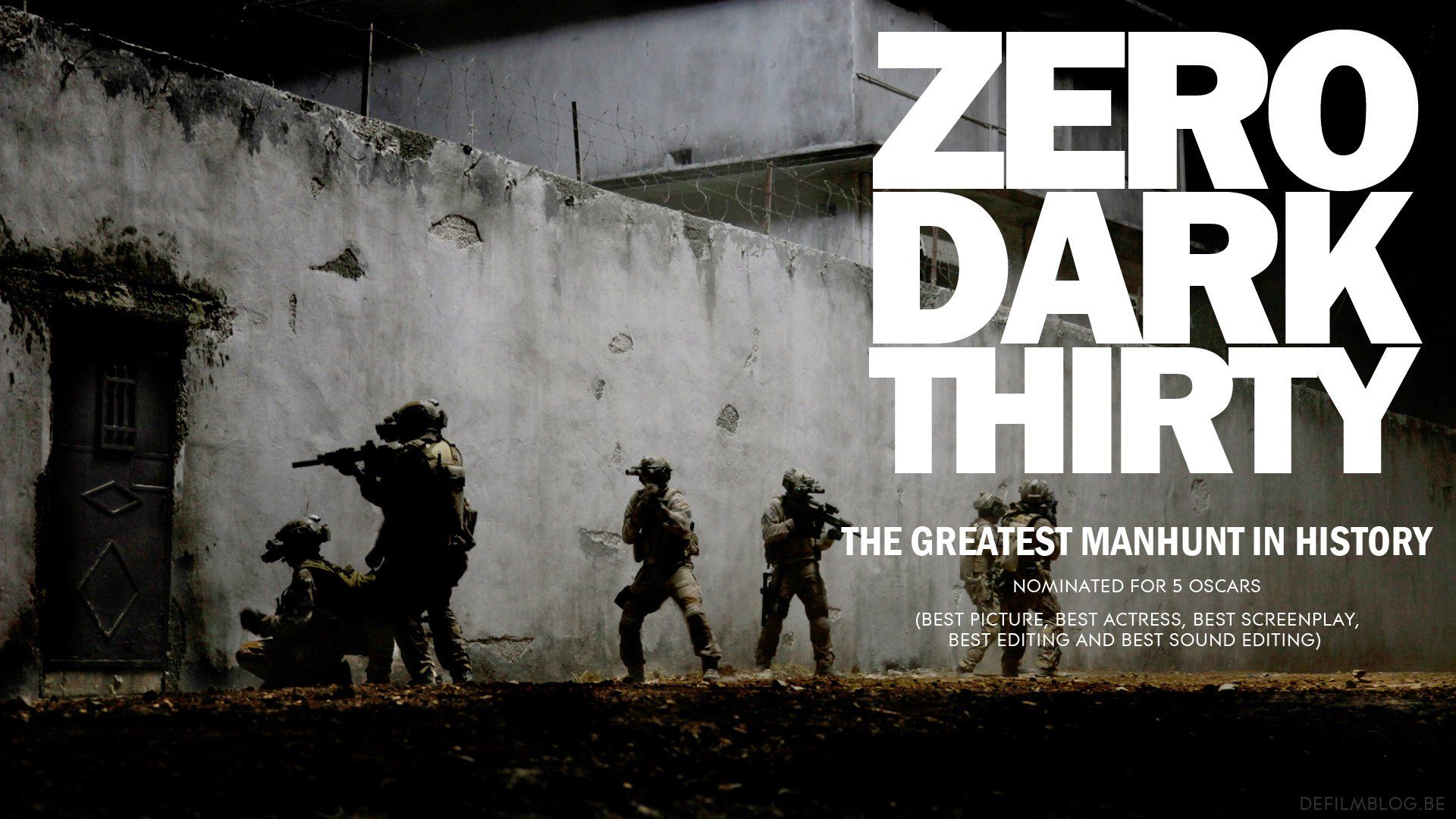
Kathryn Bigelow didn’t just make a movie. She dropped a grenade into the middle of a national conversation that was already pretty frayed. When the Zero Dark Thirty film hit theaters in late 2012, it was supposed to be the definitive cinematic account of the decade-long hunt for Osama bin Laden. Instead, it became a lightning rod for Senate investigations, accusations of CIA propaganda, and a massive debate over whether the ends ever justify the means in modern warfare.
Honestly, it’s a miracle the movie exists in the form we see today. Initially, screenwriter Mark Boal was actually working on a script about the failure to capture bin Laden at Tora Bora. Then, real life happened. Seal Team Six happened. Abbottabad happened. The filmmakers had to pivot almost instantly from a story of failure to a story of a messy, morally ambiguous victory.
The Woman Behind the Hunt: Maya vs. The Real "Jen"
Most people assume Jessica Chastain’s character, Maya, is a total fabrication—a composite character designed to give the movie a singular emotional arc. That’s not quite right. While "Maya" is a fictional name, she is heavily based on a real CIA officer often referred to in reporting as "Jen."
The real-life counterpart was a high-level analyst who spent years obsessed with a single courier named Abu Ahmed al-Kuwaiti. In the Zero Dark Thirty film, we see Maya screaming at her superiors and scrawling the number of days since they failed to find bin Laden on their office windows. Was the real person that dramatic? Maybe not. But the internal CIA politics shown in the movie—the constant friction between the "old guard" who wanted to focus on Iraq and the "targeters" who stayed on the bin Laden trail—is remarkably accurate to the historical record.
It’s interesting to look at the contrast between the movie and reality. In the film, Maya is almost a loner. In reality, the hunt was driven by a group of women often nicknamed "The Sisterhood." These were analysts who had been sounding the alarm about Al-Qaeda since the late 1990s. By focusing so heavily on Maya, the movie simplifies a massive bureaucratic effort into a personal vendetta. It works for cinema, but it leaves out some of the broader context of how intelligence communities actually function.
The Torture Controversy: Did It Actually Work?
This is where things get incredibly messy. If you watch the first thirty minutes of the Zero Dark Thirty film, you see brutal depictions of "enhanced interrogation techniques." We see Dan (played by Jason Clarke) using waterboarding and sleep deprivation on a detainee named Ammar. The film suggests that this lead—the name of the courier—was extracted through these methods.
This sparked a massive backlash. Senators John McCain, Dianne Feinstein, and Carl Levin actually wrote a letter to Sony Pictures calling the film "grossly inaccurate." They argued that the CIA already had the information about the courier from other sources and that torture didn't provide the breakthrough the movie depicts.
- The Movie’s Stance: It portrays a direct line from coercion to information.
- The Senate Intelligence Committee’s Stance: Their 6,000-page report on the CIA detention program concluded that torture was not an effective way to gather intelligence.
- The Filmmakers' Defense: Bigelow and Boal have always maintained they weren't endorsing torture, but rather showing it as a "part of history" that couldn't be ignored.
Whether you think the movie is pro-torture or just "brutally honest" depends on how you interpret the middle hour of the film. After the initial scenes, the movie shifts into a slow, grinding procedural. It shows that finding bin Laden was less about one "Eureka!" moment in a dark room and more about years of tracking cell phone pings, bribery, and satellite imagery.
The Accuracy of the Abbottabad Raid
If the first half of the film is a political minefield, the final forty minutes is a masterclass in technical filmmaking. The raid on the compound in Abbottabad is arguably one of the most accurate depictions of special operations ever put on screen.
The production team built a full-scale replica of the compound in Jordan. They used real Black Hawk helicopter mockups. They even ensured the lighting matched the "Zero Dark Thirty" conditions—which is military speak for 12:30 AM, the time of the operation when there is no moonlight.
You’ve probably noticed how quiet that sequence is. There’s no swelling orchestral score. There are no heroic one-liners. It’s just the sound of boots on gravel and muffled suppressed gunfire. That lack of Hollywood "gloss" is what makes the Zero Dark Thirty film feel so authentic. It captures the frantic, confusing nature of a night raid where nobody—not even the SEALs—is 100% sure what’s behind the next door.
Why the Ending Still Haunts Audiences
Most action movies end with a celebration. Usually, there’s a flag-waving moment or a sense of closure. The Zero Dark Thirty film does the exact opposite.
After the body is identified and Maya is sitting on the back of a C-130 transport plane, the pilot asks her, "Where do you want to go?" She doesn't answer. She just starts crying.
It’s a powerful, jarring moment. After ten years of singular focus, she has nowhere left to go. Her purpose is gone. It reflects a broader sentiment about the post-9/11 era: we got him, but at what cost to our national psyche and our moral standing? Maya’s tears aren’t tears of joy. They’re tears of exhaustion and, perhaps, a realization that the "war on terror" didn't really have a clean finish line.
Technical Details You Probably Missed
The movie is packed with small details that intelligence junkies love. For instance, the use of "the doctor" (the Pakistani physician Shakil Afridi) to try and get DNA samples through a fake vaccination program was a real-world CIA operation. It eventually blew up in the agency's face and led to a massive distrust of health workers in the region, which is a detail the film acknowledges with a brief, tense sequence.
Then there’s the "Stealth Hawk." Before the Abbottabad raid, the existence of stealth-modified Black Hawks was a rumor. When one crashed during the real raid and the SEALs blew it up to protect the tech, the world got its first glimpse of the modified tail rotor. The movie meticulously recreated this experimental aircraft, adding a layer of high-tech realism that most military movies skip.
Expert Perspectives on the Film's Legacy
Mark Bowden, the author of Black Hawk Down, has written extensively about the hunt for bin Laden. He noted that while the movie takes creative liberties with Maya’s role, it captures the "closeness" of the intelligence community—the way people become consumed by their targets.
On the flip side, many critics, including Glenn Greenwald, attacked the film for being too cozy with the CIA. It’s well-documented that Boal and Bigelow were given high-level access to CIA officials during their research. This led to a Department of Defense Inspector General investigation into whether classified information was leaked to the filmmakers. No charges were ever brought, but the controversy added a layer of "forbidden" allure to the movie.
Actionable Insights for Viewers and Researchers
If you want to truly understand the context of the Zero Dark Thirty film, don't just take the movie at face value. It’s a piece of art, not a documentary. To get the full picture, you should look into the following:
- Read the Executive Summary of the Senate Torture Report. It provides a starkly different narrative regarding the effectiveness of the interrogations shown in the film’s first act.
- Compare the film to "The Looming Tower." While Zero Dark Thirty focuses on the end of the hunt, the book (and miniseries) The Looming Tower explains the intelligence failures that led up to 9/11. It provides the "why" that the movie assumes you already know.
- Watch the documentary "Manhunt." This film features interviews with the actual female analysts (the "Sisterhood") who found the courier. It’s a great way to see the real people who inspired the character of Maya.
- Look into the fallout in Pakistan. The movie touches on the tension in Islamabad, but the real-world diplomatic fallout from the raid was massive and continues to affect U.S.-Pakistan relations to this day.
The Zero Dark Thirty film remains one of the most important movies of the 21st century because it refuses to be simple. It’s uncomfortable. It’s technically brilliant. It’s politically problematic. It doesn't tell you how to feel about the war on terror; it just shows you the grit, the blood, and the hollow feeling of finally "winning" a war that felt like it would never end.
To dig deeper into the actual timeline of these events, you can cross-reference the film’s beats with the official 9/11 Commission Report and subsequent declassified memos regarding the Abbottabad compound. Analyzing the discrepancy between Hollywood’s "lone wolf" narrative and the reality of inter-agency cooperation (or lack thereof) offers a much more nuanced understanding of how global intelligence actually operates in the shadows.