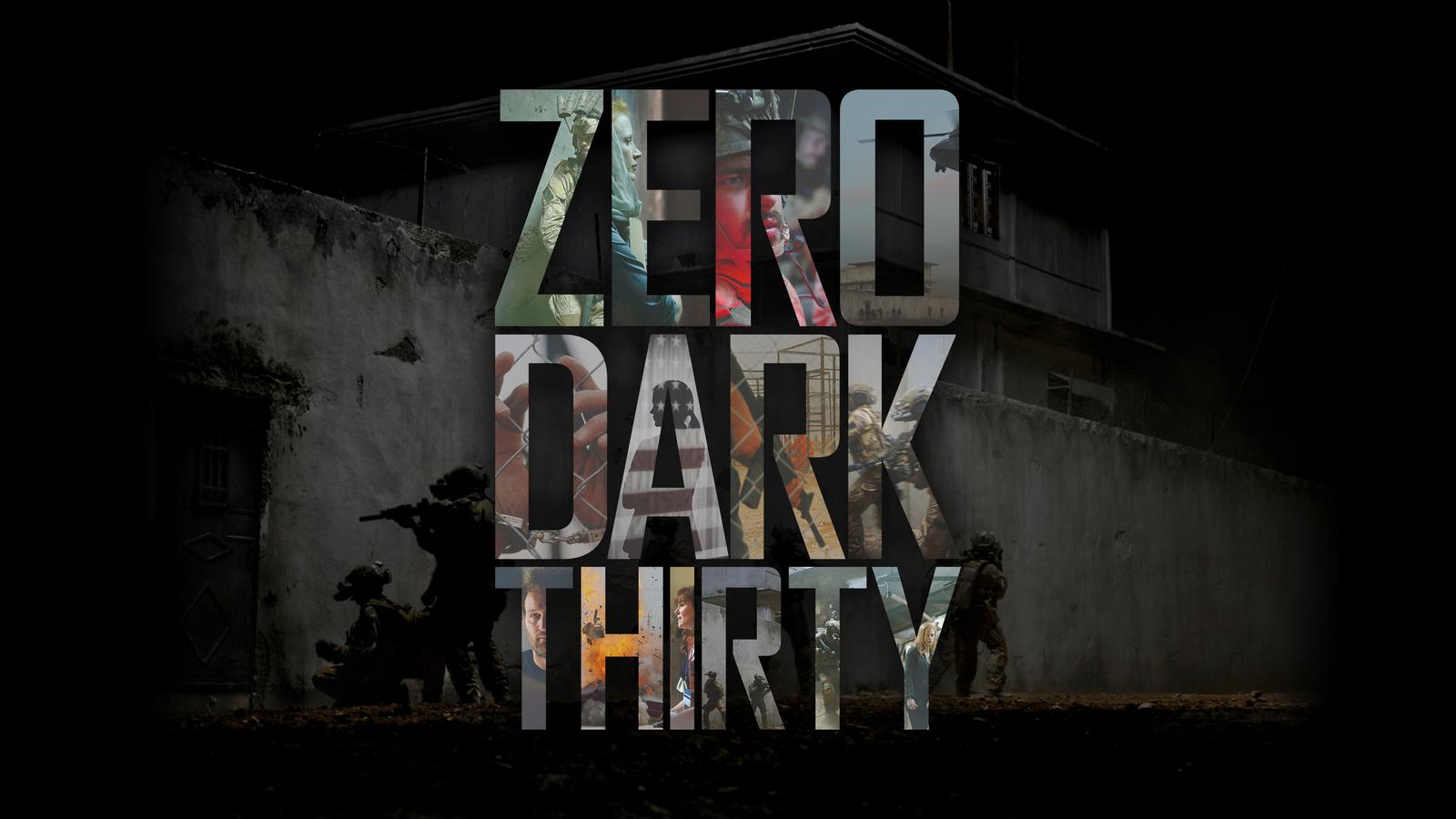
You’ve probably heard the term used by tactical gear nerds or seen the grainy, green-tinted poster of a helicopter crashing into a courtyard. But honestly, if you’re asking what is Zero Dark Thirty about, you’re looking for more than just a plot summary of a 2012 Kathryn Bigelow flick. It’s a messy, controversial, and incredibly dense look at the decade-long manhunt for Osama bin Laden. It isn't just a "war movie." It’s a procedural. It’s a story about obsession.
Most people think it’s a standard action movie where the good guys kick down doors for two hours. It isn't. In fact, for about eighty percent of the runtime, it’s mostly people in dusty offices in Pakistan or sterile rooms in Langley, Virginia, staring at monitors and arguing over scraps of paper. It tracks Maya, a fictionalized CIA analyst played by Jessica Chastain, as she spends years following a single lead—a courier named Abu Ahmed al-Kuwaiti—that everyone else thinks is a dead end.
The Hunt for the Courier
The core engine of the story is the intelligence gathering. It starts in the dark. Literally. The film opens with a black screen and the harrowing audio from the September 11 attacks. From there, it drops us into a "black site," where Maya watches her colleague Dan interrogate a detainee.
This is where the movie gets heavy. It shows waterboarding. It shows sleep deprivation. It shows the sheer, grinding brutality of the early 2000s interrogation programs. The film doesn't really moralize it, which is why it caught so much flak when it came out. Some critics, like Frank Bruni of The New York Times, argued it suggested torture was the key to finding bin Laden. Others, including the filmmakers, argued they were just showing what happened.
The trail is cold for years. Maya is obsessed. She loses friends in bombings, like the 2009 Camp Chapman attack in Khost, Afghanistan, which is a real-life tragedy depicted with startling accuracy in the film. That event—where a double agent blew himself up, killing seven CIA officers—is a turning point. It hardens her. It makes the hunt personal.
Eventually, they find the courier. They track his white SUV through the chaotic streets of Abbottabad. They find a massive compound with twelve-foot walls topped with barbed wire. No phone lines. No internet. They burn their trash.
The Raid on Abbottabad
When people talk about what is Zero Dark Thirty about, they are usually thinking of the final forty minutes. This is the raid. Operation Neptune Spear.
The filmmaking here is masterclass level. Bigelow opted to film the sequence in near-total darkness, mimicking the night-vision perspective of the Navy SEALs (specifically SEAL Team Six). It feels claustrophobic. You hear the heavy breathing, the muffled whispers, and the "zip-zip" of suppressed weapons.
It’s important to note how the film handles the actual death of bin Laden. It’s quick. It’s unceremonious. There’s no grand speech. There’s no "action hero" moment. He’s a shadow in a doorway, and then he’s gone. The movie reflects the clinical nature of the mission. The SEALs bag the body, grab the hard drives, and get out before the Pakistani military arrives.
But the movie ends on a weirdly hollow note. Maya is on a massive transport plane, the only passenger. The pilot asks her where she wants to go. She doesn't answer. She just cries. After ten years of her life being consumed by one man, he's dead, and she has nothing left. It’s a grim look at what "victory" actually feels like.
Fact vs. Fiction: What the CIA Actually Thinks
If you want the real-world context, you have to look at the pushback from the intelligence community. The character of Maya is based on a real person, often referred to in news reports as "Jen." She was a targeter who stayed on the case for years. However, the CIA has been very vocal that the film simplifies a massive team effort into the work of one person.
- The Torture Debate: This is the big one. Former CIA Director John Brennan and senators like John McCain publicly stated that torture did not lead to the courier's name. They argued that the information was gathered through standard, "clean" intelligence work. The movie implies a direct link; the reality is far more debated.
- The "Aha!" Moments: In the film, Maya has several flashes of brilliance. In real life, it was a slow, agonizing process of cross-referencing thousands of names over a decade.
- The Stealth Hawks: The movie features the "stealth" Black Hawk helicopters. One did actually crash during the raid due to a "vortex ring state" (the heat and the high walls of the compound created weird air currents). The film got the technical details of the crash almost exactly right.
Why the Title Matters
The phrase "Zero Dark Thirty" is military slang for thirty minutes after midnight. It refers to the time the raid began. But metaphorically, it refers to the "dark" world of clandestine operations where the rules are blurry and the sun never seems to come up.
Everything about the movie is designed to make you feel uncomfortable. The lighting is harsh. The pacing is deliberate. It’s not a popcorn flick. If you go in expecting Top Gun, you’re going to be bored by the hour of people looking at spreadsheets. But if you want to understand the paranoia and the sheer exhausting scale of the War on Terror, this is the definitive text.
Actionable Insights for Viewers and History Buffs
If you’re planning to watch the film or if you’ve just finished it and want to dig deeper into the actual history, here are a few things you should do to get the full picture.
First, read No Easy Day by Mark Owen (a pseudonym for Matt Bissonnette). He was one of the SEALs on the raid. His first-hand account of the stairs, the rooms, and the "sensitive site exploitation" (the gathering of the hard drives) provides a much more tactile understanding of the mission than the movie can provide.
Second, check out the 2014 Senate Intelligence Committee report on CIA torture. It’s a massive document, but the executive summary gives you the counter-narrative to the film's first act. It argues that the "enhanced interrogation" techniques were not actually effective in finding bin Laden.
Third, look into the "Manhunt" documentary on HBO. It features the real women of the "Sisterhood"—the group of CIA analysts who spent their careers tracking Al-Qaeda. It humanizes the desk-work side of the story in a way that makes Maya's character feel a lot less like a lone wolf and more like a part of a dedicated, often ignored, collective.
The movie is a piece of art, not a history textbook. It’s about the cost of a decade-long obsession. It shows that while the mission was a success, the people who carried it out were left permanently changed, and not necessarily for the better. The real story isn't just about a guy in a house in Pakistan; it's about the shadows we lived in for ten years to find him.