It’s been over a decade since Maya first stared at that whiteboard in a CIA black site, yet people still ask: what is the movie zero dark thirty about? On the surface, it’s a procedural thriller regarding the decade-long hunt for Osama bin Laden. But if you actually sit through those two and a half hours of flickering screens and desert dust, you realize it’s something much heavier. It’s a movie about obsession. It’s about the moral "gray zone" where the United States lived after 9/11. Honestly, it’s a film that refuses to give you the "good guys vs. bad guys" dopamine hit you might expect from a Hollywood blockbuster.
Kathryn Bigelow and Mark Boal, the powerhouse duo behind The Hurt Locker, didn't want to make a recruitment video. They wanted to document a grind. A long, exhausting, often brutal grind.
The story follows Maya, played by Jessica Chastain. She’s a CIA analyst who—fair warning—is based on a real person, though her name was changed for obvious reasons. Maya arrives in Pakistan as a green recruit and spends the next ten years becoming a person who only cares about one thing. One man. Finding UBL. When you look at the arc of the film, you’re watching a human being hollow themselves out in pursuit of a ghost.
The Core Narrative: More Than Just a Raid
So, what is the movie zero dark thirty about in terms of plot? It begins with audio from the September 11 attacks—darkness and voices—setting a somber, terrifying tone. From there, we’re thrust into the "black sites." These are the covert locations where the CIA used "enhanced interrogation techniques." This is where the movie got into a massive amount of hot water in the real world. Critics and politicians, including John McCain, slammed the film for suggesting that torture led directly to the lead that found bin Laden.
Whether or not the film takes a pro-torture stance is a huge debate. Some say it just depicts what happened. Others argue it implies a causal link that isn't backed up by the Senate Intelligence Committee report on CIA torture. Basically, the movie shows a prisoner named Ammar being brutalized, and eventually, a name slips out: Abu Ahmed al-Kuwaiti.
Maya tracks this name. She pulls threads. She watches thousands of hours of grainy surveillance footage. Most of her colleagues think she’s chasing a dead end. They think Abu Ahmed is a myth or long dead. But she doesn't stop. She’s like a dog with a bone. That’s the middle hour of the movie—it's not action. It's bureaucracy. It’s yelling at bosses in Langley. It’s sitting in a car for eighteen hours waiting for a courier to show up. It’s the boredom of intelligence work punctuated by sudden, horrific violence, like the Marriott Hotel bombing in Islamabad or the Camp Chapman attack.
Then comes the finale. The Abbottabad raid.
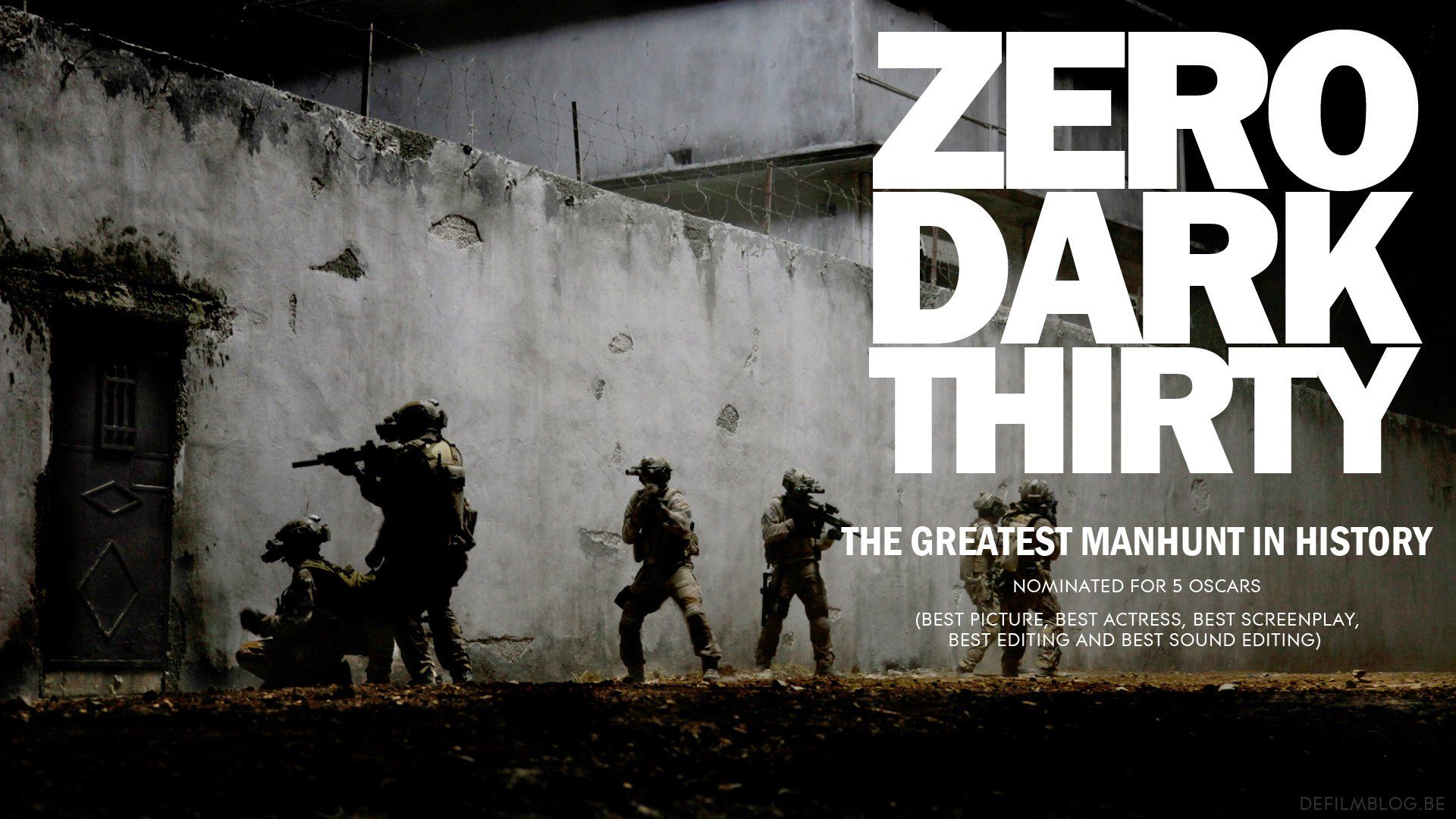
The last forty minutes of the film are almost real-time. It’s a technical masterpiece of filmmaking. The SEALs (Team 6) fly in on stealth Hawks. They crash. They move through the compound with night-vision goggles. It’s quiet. It’s clinical. There’s no swelling orchestral music when they finally pull the trigger. It just... happens. And then they leave.
The Real-World Friction
You can't talk about this movie without talking about the mess it caused in Washington D.C.
When Bigelow and Boal were researching, they got incredible access to the CIA and the Obama administration. This led to accusations from Republicans that the White house was leaking classified info to help make a "campaign film." Then, once the movie came out, Democrats were mad because of the torture scenes. It’s one of those rare films that managed to tick off everyone on both sides of the aisle.
Senator Dianne Feinstein was particularly vocal. She argued that the "courier lead" wasn't actually obtained through the methods shown in the opening scenes. The filmmakers' defense? They weren't writing a documentary; they were writing a "first draft of history" based on their own reporting. It’s a fine line.
The reality of the intelligence gathering was likely much messier. It involved years of data cross-referencing, luck, and traditional sleuthing. But for a movie, you need a protagonist. You need Maya.
Maya and the Cost of the Mission
Jessica Chastain’s performance is the spine of the whole thing. If she didn't sell the fatigue, the movie would fall apart. By the time we get to the end, she isn't cheering. She’s sitting in the back of a massive transport plane, totally alone.
The pilot asks her where she wants to go.
She doesn't answer. She just cries.
This is the most important part of understanding what is the movie zero dark thirty about. It’s not a celebration of a kill. It’s a question: "What now?" If you spend ten years of your life focused on one singular, violent goal, who are you once that goal is achieved? The movie suggests that Maya has nothing left. No friends. No family mentioned. No hobbies. She is a shell.
Why the Title?
People always ask about the name. "Zero Dark Thirty" is military slang for 00:30 (12:30 AM), the time when the raid on the compound actually began. It also works as a metaphor for the "dark" world these characters inhabit. They operate in the shadows, using methods that the public doesn't always want to see, for a goal that is often obscured by politics.
The cinematography reinforces this. Everything is tinted in grays, dusty browns, and that eerie green of night vision. It’s meant to feel oppressive.
Key Takeaways and Context
- Directed by Kathryn Bigelow: She was the first woman to win the Best Director Oscar (for The Hurt Locker), and she brought that same clinical, unsentimental eye to this project.
- The Script: Mark Boal was actually a journalist before he was a screenwriter. He did extensive interviews with the people involved in the hunt.
- The Cast: Before they were huge stars, you had Chris Pratt and Joel Edgerton as SEALs. James Gandolfini shows up as the CIA Director (Leon Panetta, though not named).
- Awards: It was nominated for five Academy Awards, including Best Picture. It only won one—for Sound Editing—partly because of the political firestorm surrounding its release.
The film serves as a time capsule. It captures the post-9/11 era perfectly—the paranoia, the technological leap in drone warfare, and the shifting morality of a nation at war with an invisible enemy. It doesn't provide easy answers. It doesn't tell you if the torture was "worth it." It just shows it and lets you sit with the discomfort.
If you’re watching it for the first time, pay attention to the silence. Most war movies are loud. This one is surprisingly quiet until the very end. The silence is where the tension lives.
Actionable Insights for Viewers
If you want to truly grasp the nuances of the film, consider these steps:
- Read the Senate Intelligence Committee Report (Summary): If the torture controversy interests you, look at the executive summary of the 2014 report. It provides a stark contrast to the film's narrative.
- Compare with 'No Easy Day': Read the book by Matt Bissonnette (writing as Mark Owen), who was on the actual raid. It gives a more tactical, ground-level perspective compared to Maya's high-level analytical view.
- Watch for the "100% Certainty" Scenes: Notice how Maya is the only one willing to say she is 100% sure bin Laden is in that house. Everyone else stays at 60% or 80% to protect their careers. It’s a masterclass in portraying institutional risk-aversion.
- Check the "Black Site" Locations: The film moves through Poland, Pakistan, and Afghanistan. Understanding the global scale of the CIA's reach during this era helps contextualize how "disconnected" these operations were from standard law.
Ultimately, the movie is a mirror. What you see in it says as much about your own views on foreign policy and ethics as it does about the events of 2011. It’s a brutal, brilliant piece of cinema that remains relevant because the questions it asks haven't really been answered yet.
To get the full picture, look into the story of "Jen," the real-life CIA analyst who inspired Maya's character. While she remains largely under the radar, her reputation for being relentless and "difficult" within the agency is well-documented by journalists like Mark Bowden. Knowing she actually existed makes Maya's isolation feel much more grounded and tragic.
Next Steps:
- Watch the film with a focus on Maya's changing wardrobe and physical appearance; it subtly tracks her descent into obsession.
- Research the "Manhunt" documentary on HBO for a more factual, less dramatized account of the same group of female analysts (known as "The Sisterhood") who tracked bin Laden for decades.
- Look up the stealth Black Hawk helicopters used in the raid—the wreckage shown in the film is based on the real-life tail section that the SEALs had to blow up during the mission.