When people ask what is the movie Zero Dark 30 about, the easy answer is that it's a procedural thriller tracking the decade-long hunt for Osama bin Laden. But that’s just the surface level. It’s a gritty, exhausting, and often uncomfortable look at the intelligence community’s obsession with a single target. Directed by Kathryn Bigelow and written by Mark Boal—the same duo behind The Hurt Locker—this 2012 film doesn't play like a standard Hollywood action flick. There are no soaring orchestral swells when the "bad guy" gets caught. Instead, you get a cold, clinical, and controversial depiction of how the United States actually tracked down the world's most wanted man.
It centers on Maya, played by Jessica Chastain. Maya is a CIA analyst who, frankly, doesn't have a life outside of this mission. She is based on a real-life officer (often referred to in reports as "Jen") who spent years convinced that a specific courier would lead them to the Abbottabad compound. The movie spans from the immediate aftermath of 9/11 all the way to the May 2011 raid by SEAL Team Six.
The Search for the Courier: The Core of the Plot
The movie basically functions as a detective story, but the detectives have a multi-billion dollar budget and the authority to operate in the shadows. For the first hour, it’s mostly about the "black sites." These are the undisclosed locations where the CIA interrogated detainees. This is where the movie gets controversial. It shows, in visceral detail, the use of "enhanced interrogation techniques" like waterboarding.
The narrative pushes the idea that a name—Abu Ahmed al-Kuwaiti—was extracted during these sessions. Maya becomes obsessed with this name. While her colleagues are focusing on broader threats or getting burned out by the sheer lack of progress, she stays on the trail of the courier. It’s a grind. You see years of dead ends, bureaucratic red tape, and the tragic 2009 Camp Chapman attack in Khost, Afghanistan, where several of Maya’s colleagues are killed by a double agent.
This isn't just about the "win." It’s about the cost of the pursuit.
What People Often Get Wrong About the History
There is a huge misconception that Zero Dark 30 is a documentary. It isn't. While the filmmakers had unprecedented access to CIA officials (which actually led to a government investigation into potential leaks), it’s still a dramatization.
One of the biggest sticking points for critics like Jane Mayer of The New Yorker or even various U.S. Senators at the time, was the film's implication that torture directly led to the courier's identity. In reality, the Senate Intelligence Committee’s report on CIA torture later argued that the key information was actually obtained through standard intelligence work and that the "enhanced" sessions were largely ineffective or provided false leads.
The movie doesn't explicitly say "torture is good," but it shows it as a link in the chain. This nuance is often lost. The film depicts the reality of what happened in those rooms without necessarily endorsing the morality of it, but by showing it as part of the process that led to the compound, it naturally sparked a firestorm of political debate.
The Realism of the Raid
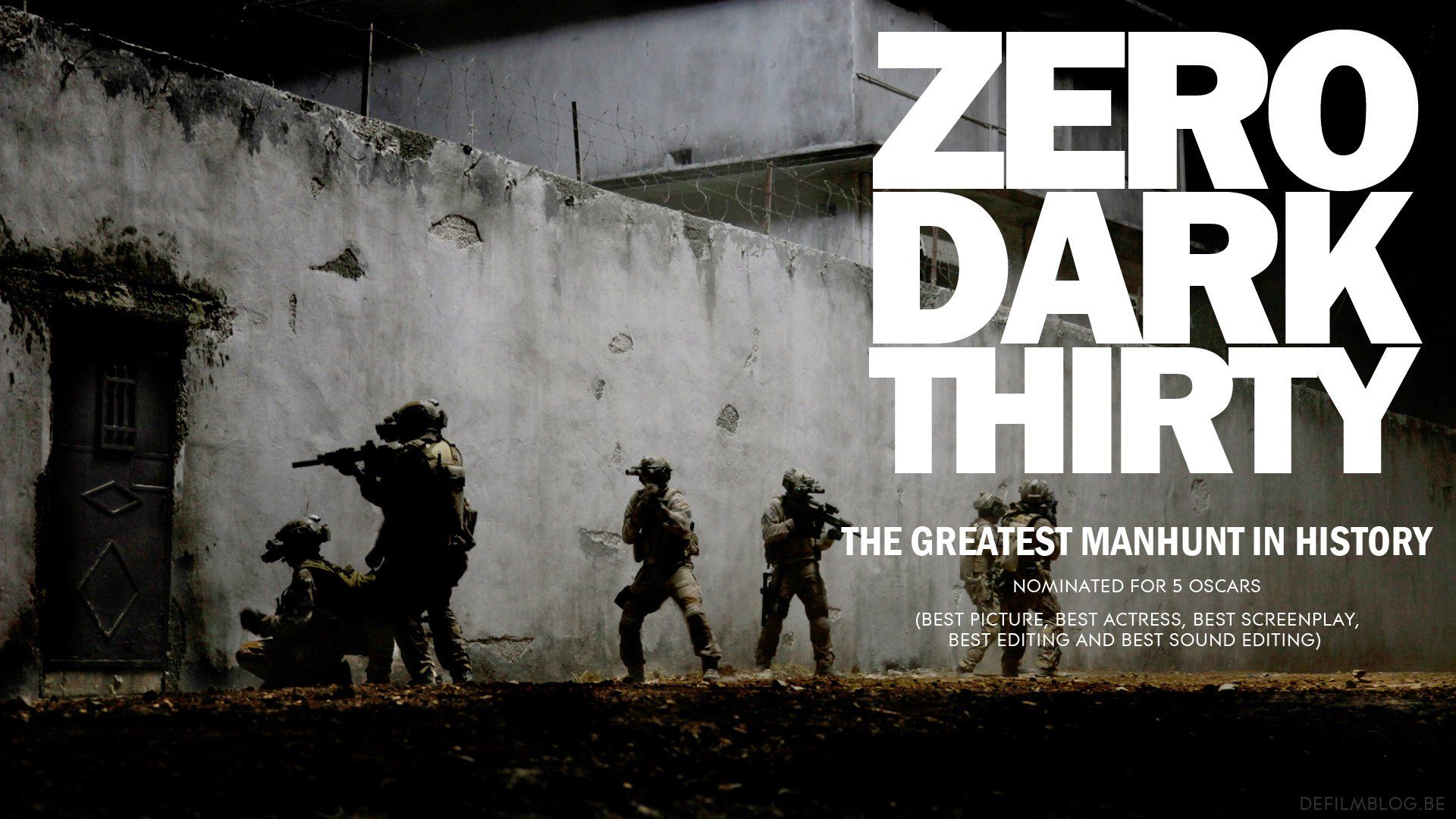
The final act of the movie is almost a shot-for-shot reconstruction of the Neptune Spear operation. It’s filmed in near-total darkness, using night-vision aesthetics to give you a sense of the claustrophobia the SEALs felt. There’s no witty dialogue. There are no heroic speeches. It’s a professional, mechanical execution of a mission.
What’s interesting is how the film treats the death of bin Laden. When the body is finally brought back and Maya looks at it, she doesn't cheer. She doesn't pump her fist. She looks empty. The mission that defined her entire adult life is over, and the film ends with her sitting alone on a massive transport plane, crying. It’s a somber acknowledgment that while the "target" is gone, the world hasn't suddenly become a peaceful utopia.
Why the Title Matters
The term "Zero Dark Thirty" is military slang for thirty minutes after midnight, but it also refers to the state of secrecy and darkness that characterized the entire decade of the hunt. If you're wondering what is the movie Zero Dark 30 about in a metaphorical sense, it’s about the moral gray zones people inhabit when they are convinced the ends justify the means.
Maya’s character arc is essentially the hardening of a human being. At the start, she winces during interrogations. By the end, she’s the one telling the SEALs to "drop the hammer." It’s a study in how "The Long War" changed the people who fought it.
Key Facts and Production Details
- Directed by: Kathryn Bigelow.
- Written by: Mark Boal.
- Release Year: 2012.
- The "Real" Maya: While Maya is a composite character to some degree, she is largely based on a CIA analyst who received the Distinguished Intelligence Cross.
- The Set: The Abbottabad compound was meticulously recreated in Jordan because they obviously couldn't film in Pakistan.
- Awards: It was nominated for five Academy Awards, including Best Picture, though it only won for Best Sound Editing (in a rare tie with Skyfall).
Honestly, if you go into this expecting Rambo, you’re going to be bored. If you go into it expecting a dense, sometimes frustrating, and deeply analytical look at modern intelligence work, it’s one of the best films of the 21st century. It captures a specific moment in American history where the line between "the good guys" and "the bad guys" became increasingly blurred by the methods used to achieve a goal.
How to Approach Watching It Today
To really understand the context, it helps to read a bit about the political climate of 2012. The movie was released shortly after the actual raid, and the wounds were still very fresh. Today, we can look at it with a bit more distance.
- Watch the interrogation scenes as a period piece. These represent a specific era of U.S. policy (2002-2008) that has since been officially repudiated.
- Pay attention to the background noise. The news reports playing on TVs in the background of the CIA offices are all real events from the 2000s, grounding the film in a specific timeline.
- Compare it to the book 'No Easy Day'. If you want to see how the movie stacks up against a first-hand account of the raid, that book by Matt Bissonnette (writing as Mark Owen) provides a very different, boots-on-the-ground perspective that complements the film’s "analyst-heavy" focus.
The legacy of Zero Dark 30 isn't just about the hunt for one man. It's about the machinery of state intelligence and what happens to the individuals who become the gears in that machine. It’s a cold, hard look at a decade of shadows.
Actionable Next Steps
If you want to dive deeper into the reality versus the fiction of the film, your next step should be to look up the 2014 Senate Intelligence Committee report on the CIA's Detention and Interrogation Program. Reading the executive summary provides the necessary counter-narrative to the film's depiction of interrogation. Additionally, watching the 2019 film The Report, starring Adam Driver, serves as a perfect "thematic sequel" as it covers the investigation into the very tactics shown in Zero Dark 30. Pairing these two films gives a much more complete picture of the era's complexities than watching either one in isolation.