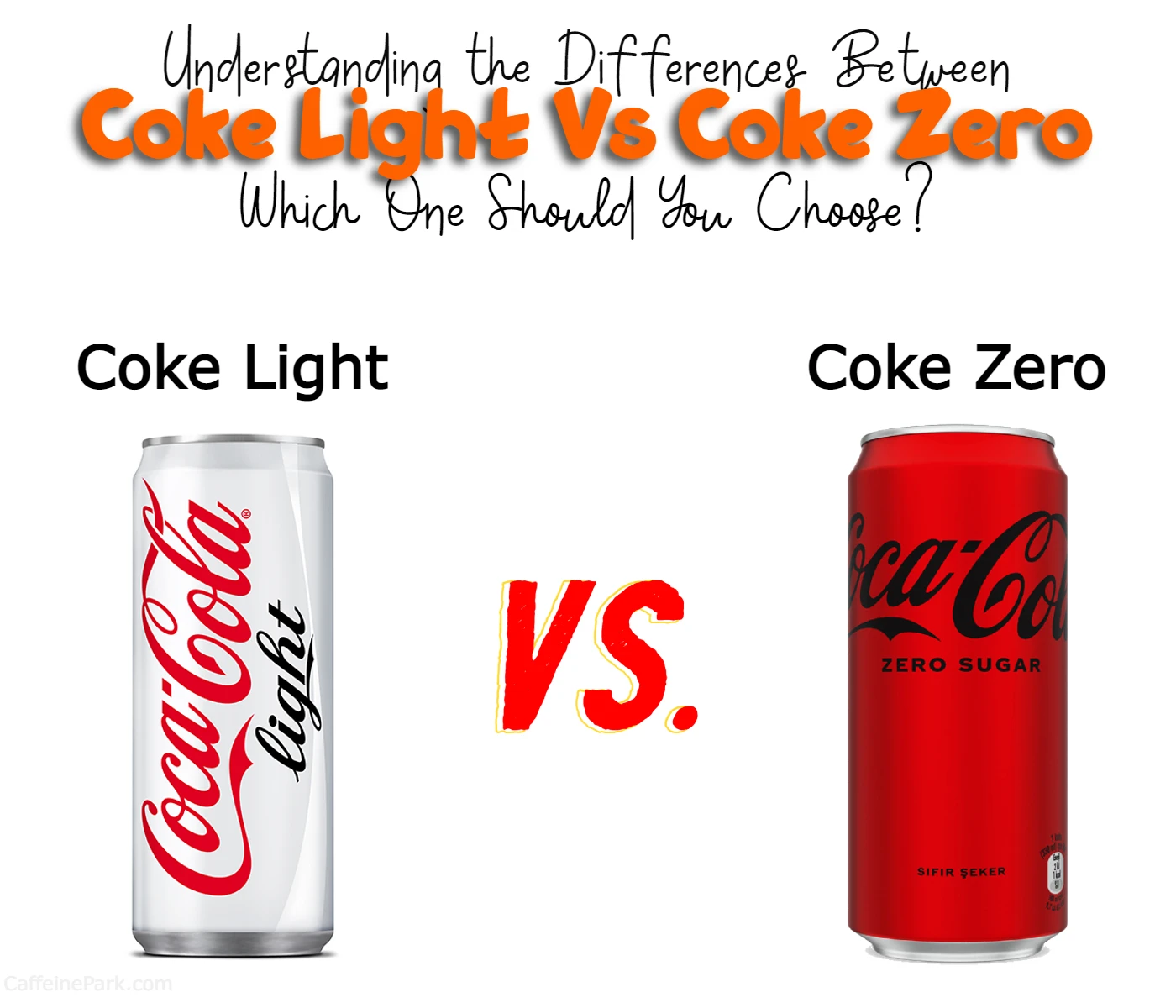
You’re standing in front of a gas station cooler, eyes darting between the iconic red label and the sleek black one. It’s a classic dilemma. Most people think the choice between zero coke vs coke is just about calories, but if you’ve ever actually tasted them back-to-back, you know there’s a weird, almost inexplicable gap in how they hit your tongue. One feels thick and syrupy; the other is sharp, thin, and gone in a second.
The battle between the original Coca-Cola Classic and its sugar-free sibling, Coca-Cola Zero Sugar, isn't just a marketing gimmick. It is a massive feat of chemical engineering designed to trick your brain into thinking it’s getting energy when it’s actually getting... well, nothing.
Let’s be real. We all know the original formula. Created by John Pemberton in 1886, it was originally sold as a "brain tonic." It’s basically carbonated water, a massive amount of high fructose corn syrup (in the US, at least), caramel color, phosphoric acid, and those "natural flavors" that the company guards more fiercely than a nuclear launch code. It’s heavy. It’s iconic. It’s also loaded with about 39 grams of sugar in a single 12-ounce can. That’s roughly ten teaspoons. Your body reacts to that hit of glucose with a massive insulin spike, a temporary dopamine rush, and eventually, the inevitable crash that leaves you reaching for another one.
The Sweetener Science: What’s Actually Inside?
When you look at zero coke vs coke, the biggest differentiator isn't the water or the carbonation. It's the mechanism of sweetness. Coke Zero Sugar doesn't use the older Diet Coke formula—which was actually a completely different flavor profile based on the Tab recipe. Instead, Coke Zero was engineered to mimic the "Classic" taste using a blend of Aspartame and Acesulfame Potassium (Ace-K).
Aspartame gets a lot of hate. Honestly, some of it is based on old, debunked studies, but the flavor profile is undeniably different from sucrose or corn syrup. Aspartame is about 200 times sweeter than sugar, meaning you need a tiny, tiny amount to get the same punch. Ace-K is added because it helps mask that bitter, metallic aftertaste that aspartame usually leaves behind.
But here is the catch.
Sugar has "mouthfeel." Chemists call it viscosity. When you drink a regular Coke, the sugar creates a certain thickness that coats the throat. Artificial sweeteners don't have that physical weight. That’s why Zero often feels "sharper" or more "watery." It’s missing the literal physical body that 39 grams of dissolved solids provide.
The Insulin Myth and Weight Loss Realities
You've probably heard someone say that drinking diet soda makes you gain weight anyway because it "tricks your insulin." This is a point of massive debate in the nutrition world.
Some researchers, like those involved in a 2023 study published in The Lancet, suggest that non-sugar sweeteners (NSS) don't actually help with long-term weight control. The theory is that when your tongue tastes "sweet," your pancreas prepares for a sugar load that never arrives. This can mess with your hunger cues. You might end up eating a brownie later because your brain feels "cheated" by the Zero.
However, from a pure thermodynamics perspective, switching from three regular Cokes a day to three Zeros removes nearly 450 calories from your diet. That’s a pound of fat every eight days. You can't ignore the math. But the nuance lies in the gut microbiome. Recent studies from the Weizmann Institute of Science found that saccharin and sucralose (though not necessarily aspartame in the same way) can alter gut bacteria, potentially affecting how we process real sugar later on.
Why Does Mexican Coke Taste Better?
If we’re talking about the zero coke vs coke debate, we have to mention the "Yellow Cap" or glass-bottle outlier. Mexican Coke uses cane sugar instead of high fructose corn syrup (HFCS).
HFCS is a 55/45 split of fructose and glucose. Cane sugar is sucrose—a disaccharide that breaks down differently. To the average person, cane sugar tastes "cleaner." It doesn't have that cloying, sticky coating that lingers on the back of the teeth like American Classic Coke does. When you compare Coke Zero to Mexican Coke, the gap feels even wider. The Zero tastes like a laboratory achievement; the Mexican Coke tastes like a nostalgic relic.
The Phosphoric Acid Factor
Both drinks contain phosphoric acid. This is the stuff that gives soda its "bite." It’s also the reason people use Coke to clean car batteries or dissolve pennies (don't do that, it's a waste of a good drink).
In the regular version, the acid balances out the intense sweetness of the sugar so your mouth doesn't feel like it's rotting instantly. In the Zero version, the acid is even more prominent because there’s no sugar to buffer it. This is why many people find Coke Zero to be more refreshing or "crisp." It cuts through the palate faster. If you're eating a heavy, greasy burger, the acidity in a Zero might actually cleanse your palate better than the sugary original, which just adds more heaviness to the meal.
The Brain on Artificial Sweeteners
Let’s talk about the neurobiology of the "hit."
Regular Coke provides a dual-pronged attack on the brain. You get the sweetness (dopamine) and the glucose (energy). Your brain marks this as a "high-value" find. Coke Zero provides the dopamine hit from the sweetness, but the "energy" signal never arrives.
For some people, this leads to a "sweetness addiction." Because you aren't getting the caloric satiety, your brain stays in a loop of seeking that sweet sensation. You might find yourself slamming four cans of Zero a day, whereas one regular Coke would have made you feel slightly sick from the sugar load. It’s a trade-off. You’re saving your liver from the fructose processing, but you might be keeping your brain’s reward system on a permanent "on" switch.
What About the Long-Term Health Risks?
There is no "healthy" option here. Let’s be incredibly clear. You’re choosing between a sugar bomb and a chemical cocktail.
The WHO recently classified aspartame as "possibly carcinogenic to humans," but they kept the daily intake levels the same. You would essentially need to drink between 9 and 14 cans of diet soda every single day to hit the limit where it becomes a statistically significant risk. On the flip side, the risks of high sugar consumption—type 2 diabetes, non-alcoholic fatty liver disease, and systemic inflammation—are documented in thousands of peer-reviewed papers.
Basically, if you’re choosing based on health, the Zero wins on a technicality, but water still wipes the floor with both of them.
Flavor Nuances: The "New Coke" Connection
Interestingly, the flavor profile of Coke Zero is actually closer to the disastrous "New Coke" of the 1980s than it is to the original 1886 formula. New Coke was sweeter and smoother, designed to compete with Pepsi’s sweeter profile. When they developed Zero, they used those same flavor notes. That’s why people who grew up on Pepsi often find Coke Zero more palatable than the original "Classic" Coca-Cola. It’s less "spicy" and more "rounded."
Practical Steps for the Undecided
If you are trying to navigate the zero coke vs coke landscape for your own lifestyle, stop looking at the labels and start looking at your habits.
- The Transition Rule: If you’re a regular Coke addict, don’t jump straight to water. You’ll fail. Switch to Zero for two weeks. Your taste buds actually "recalibrate" to the intensity of artificial sweeteners. After a month, a regular Coke will likely taste disgustingly sweet to you.
- The Meal Match: Pair regular Coke with spicy food. The sugar helps neutralize capsaicin. Pair Coke Zero with salty or fatty foods (like pizza or fries) where the extra acidity helps cut through the grease.
- The Dental Check: Both are terrible for your teeth. Even though Zero doesn't have sugar for bacteria to eat, the phosphoric acid still erodes enamel. Drink through a straw if you’re a slow sipper.
- The Late Night Rule: Remember that both usually have caffeine (around 34mg). If you're drinking either after 4:00 PM, you’re likely wrecking your sleep architecture, regardless of the sugar content.
The choice ultimately depends on what you’re willing to compromise. You can have the calories and the "real" mouthfeel, or you can have the chemical sweetness and the caloric freedom. There is no middle ground, and there is no "safe" soda. Just a series of trade-offs designed by flavor chemists to keep you coming back to the red and black cans.
Choose your poison, but do it with the understanding that your brain is being tricked either way. If you want to break the cycle entirely, start by replacing one soda a day with sparkling water flavored with a squeeze of actual lime. It gives you the carbonation and the acidity without the metabolic baggage.
Otherwise, just enjoy the crispness of the Zero or the syrup of the Classic for what they are: marvels of modern food science that we probably weren't evolved to consume in the volumes we do. No more, no less.