The headlines frame it as a classic African governance tragedy. An incumbent president wins re-election, the runner-up cries foul over electoral theft, a police raid turns lethal, and the opposition leader winds up facing treason charges after fleeing to international sanctuary. Western media outlets digest this narrative with predictable fatigue. They point to democratic backsliding and sigh about the fragility of African institutions.
They are missing the structural reality entirely. For another perspective, see: this related article.
This is not a sudden descent into authoritarianism. It is the predictable mechanical outcome of a constitutional system designed with a fatal flaw. When a country builds an institutional framework where losing an election means losing everything, politics ceases to be a contest of ideas and devolves into total war.
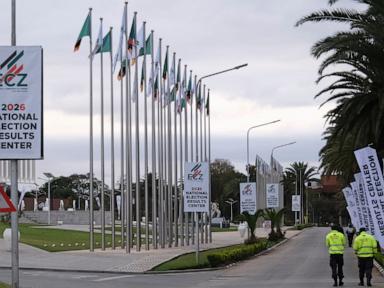
Let us look at the mechanics of the crisis. Brian Mundubile finished second in the August presidential race behind Hakainde Hichilema, pulling roughly thirty-eight percent of the vote against the incumbent’s sixty percent. Predictably, the opposition rejected the tally, citing missing tally papers and chaotic counting centers. Then came the predictable security crackdown, the fatal shooting of a former cabinet minister during a raid, and the dramatic weeks of hiding before Mundubile surrendered to face treason investigations alongside his running mate Makebi Zulu. Related coverage on this matter has been provided by Associated Press.
The lazy consensus blames Hichilema's administration for weaponizing the penal code. That critique stops at the surface. The deeper structural breakdown lies in the weaponization of procedural exhaustion.
Under the Zambian Constitution, an electoral petition must be filed within a razor-thin seven-day window. Filing that challenge automatically triggers a freeze on the presidential inauguration. It is a vital institutional safety valve. Yet, when the entire judiciary shut its doors on the final valid day citing vague security reasons, the system effectively locked the legal exit doors from the outside.
Imagine a pressure cooker with a welded safety valve. When you block every legal avenue for an aggrieved thirty-eight percent minority to contest an outcome, you do not eliminate dissent. You drive it underground. You force political actors into high-stakes brinkmanship where the penalty for losing a legal challenge is political oblivion, or worse.
To understand why this playbook keeps repeating in Lusaka, look at historical precedent. Hakainde Hichilema himself spent years facing treason charges under previous administrations before turning the tables. Zambian politics operates on a cyclical vendetta engine. The party in power spends its tenure creating tools of state coercion, knowing full well those exact levers will be handed over to their bitterest rivals the moment the electorate shifts.
Blaming individual actors lets the structural architects off the hook. Hichilema inherited an economy starved by debt and a bloated state apparatus, steering a macroeconomic restructuring that earned praise from international financial institutions. But economic stabilization without institutional waterproofing is just building a skyscraper on a swamp. If the rules of the game allow courts to slam shut on the exact day an opposition challenge is due, no amount of copper revenue or debt restructuring will save the democracy from itself.
The international community wrings its hands, issuing statements of deep concern while missing the core systemic pathology. Human rights organizations rightly flag the chilling effect of treason probes and the alarming loss of life during security raids. But condemning the symptoms while ignoring the structural incentive for total political warfare is institutional malpractice.
When losing an election risks treason charges, and winning an election means controlling the instruments used to file those charges against your predecessor, compromise becomes an existential risk. Politics becomes zero-sum. Until the legal architecture is rewritten to guarantee that political opposition is not treated as a capital offense, Zambia will remain trapped in this revolving door of high-drama crackdowns and recycled vengeance.
Stop pretending this is a surprise. The rules were written for this exact explosion.