The democratic veneer of southern Africa's copper powerhouse has fractured under the weight of a tense electoral aftermath. Following a contentious national vote that secured President Hakainde Hichilema a second five-year term, the United Nations human rights chief voiced sharp concern regarding a wave of high-stakes arrests targeting opposition officials. Yet, focusing solely on the diplomatic statements misses the deeper institutional decay plaguing the nation's political landscape. This crisis is not an overnight aberration. It represents the collision of high-stakes economic pressure, historical governance tools, and a polarized political class fighting for survival.
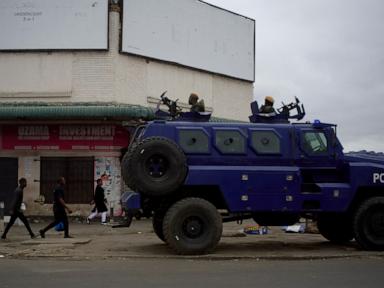
The flashpoint occurred on election night when law enforcement agents raided a property associated with main opposition leader Brian Mundubile. What followed remains fiercely contested by both sides. State authorities claimed they encountered armed resistance, pointing to an exchange of gunfire and the seizure of high-grade military hardware meant for an armed insurrection. Conversely, the opposition dismissed these assertions as fabricated pretexts for political elimination, maintaining that their personnel were unarmed targets of state-sponsored aggression. UN High Commissioner for Human Rights Volker Turk intervened publicly, demanding that authorities cease arbitrary detentions and ensure that any judicial proceedings strictly adhere to domestic laws and international human rights standards.
The Economic Anxiety Driving Political Tensions
Understanding this crackdown requires looking closely at the economic crucible in which the election took place. Hichilema initially rode to power on a wave of immense public exhaustion with past financial mismanagement, inheriting a pandemic-era debt crisis that crippled public services. Copper production, the lifeblood of the national economy, faced immense structural hurdles, and international creditors closely scrutinized every fiscal policy coming out of Lusaka.
When a government stakes its legitimacy entirely on economic recovery, political dissent transforms in the eyes of the ruling party from a normal democratic check into a direct threat to national survival. Hichilema's administration needed a decisive mandate to push through hard fiscal reforms. When the opposition, led by Mundubile who captured roughly 38 percent of the vote, mounted a strong challenge and subsequently rejected the official tallies due to alleged irregularities, the margin for political tolerance evaporated instantly.
The Echoes of Colonial-Era Controls
The legal mechanisms facilitating these arrests are hardly new. For decades, successive administrations in the country have leaned on rigid legislative frameworks inherited from the colonial era to stifle dissenting voices. Statutes like the Public Order Act have routinely been weaponized to restrict public gatherings, clamp down on demonstrations, and harass political rivals under the guise of maintaining public safety.
Veteran observers of the region recognize this playbook intimately. When electoral friction intensifies, fragile democracies frequently retreat into authoritarian habits. The suspension of vote-counting for hours by the electoral commission—officially blamed on localized violence and the theft of ballot papers—only deepened the distrust etched into the process. Whether these administrative disruptions were indicators of systemic fraud or merely logistical breakdowns amid escalating chaos, the damage to public confidence was instantaneous.
As Mundubile prepares to challenge the election outcome in court, the broader implications extend far beyond the immediate legal battles of a few politicians. Civil society groups and international monitors are watching to see if the judiciary can act as an independent arbiter or if it will be swallowed by executive overreach.
The path forward for the nation requires more than polite diplomatic advisories from international bodies. It demands structural reform of the institutions meant to guarantee transparent governance. Until the political elite relinquish the habit of utilizing state security apparatuses to settle electoral disputes, the specter of instability will continue to overshadow any economic gains claimed by the ruling party. The courtroom battles now looming will test whether democratic norms can survive the friction of raw political ambition.