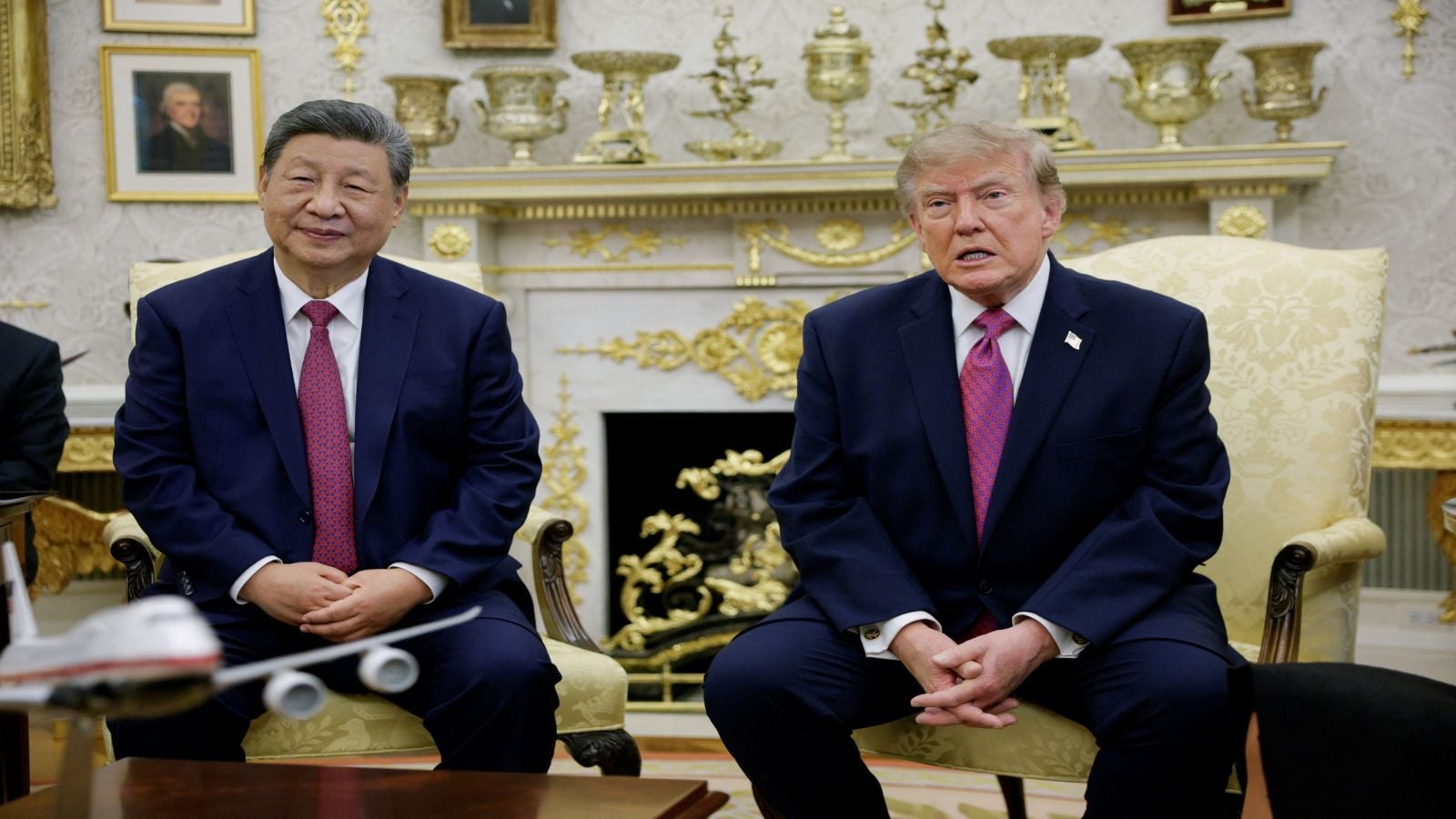
Diplomacy is mostly professional acting for domestic audiences. When foreign ministers stand behind mahogany lecterns and declare that a handshake between two heads of state has advanced strategic stability, they are selling you a fairy tale. Wang Yi can call a Xi-Trump sit-down a triumph for bilateral ballast all he wants. The reality on the ground in the Taiwan Strait, the South China Sea, and across high-tech semiconductor fabrication plants tells a completely different story.
Stability implies a predictable equilibrium. What we actually have is a cold war fought with tariffs, export controls, and executive orders, punctuated by occasional photo ops where both leaders agree not to blow up the global economy this Tuesday. If you think a summit between Washington and Beijing fixes structural animosity, you are confusing a ceasefire announcement with permanent peace. If you liked this article, you might want to check out: this related article.
Let us dismantle the polite fiction of diplomatic detente.
The Dangerous Illusion of Compartmentalization
The core delusion peddled by international relations pundits is that superpowers can decouple their economic interdependence from their military competition. Executives love to repeat the phrase that business is business and politics stays at the door. I have watched multinational supply chain directors lose millions of dollars because they actually believed that nonsense. For another look on this event, see the recent coverage from The Washington Post.
Beijing and Washington are locked in a zero-sum contest for technological and industrial supremacy. When the United States slaps bans on advanced lithography machines and China restricts critical mineral exports like gallium and germanium, those are acts of economic warfare. A summit does not reverse these measures. It merely establishes a temporary communications channel so neither side accidentally triggers a kinetic conflict while trying to strangle the other's supply chain.
Calling this strategic stability is like standing in the middle of a category five hurricane, feeling a three-second lull in the wind, and declaring that the weather has cleared.
The Domestic Audience Trap
Why do senior officials frame these meetings in such breathless, triumphant prose? Look at the political incentives.
Donald Trump operates on the transactional logic of the deal. He needs to show his base that he can extract concessions, bully competitors, and bend foreign leaders to his economic will. Xi Jinping needs to project unshakeable authority at home, demonstrating to the Politburo and the domestic public that China can stand toe-to-toe with the American hegemon without blinking.
When both leaders return to their respective capitals, they brief entirely different realities to their domestic media. The summit is a mirror. Each side sees what it wants to see. In Washington, it is framed as containment working. In Beijing, it is framed as the United States bowing to multipolar reality.
If a diplomatic engagement means both sides leave with completely incompatible interpretations of what was agreed upon, you do not have stability. You have a diplomatic buffering screen.
What Real Escalation Management Looks Like
Realists understand that peace between giants is maintained through credible deterrence and mutual vulnerability, not handshakes and joint communiques.
During the Cold War, the United States and the Soviet Union built hotlines and arms control treaties because the cost of miscalculation was total annihilation. Today, the US-China rivalry is decentralized. It spans cyber espionage, rare earth supply dominance, artificial intelligence chips, and standard-setting bodies for global telecommunications. You cannot sign a treaty to freeze progress in artificial intelligence any more than you can outlaw software code.
When Wang Yi talks about strategic stability, he is speaking the archaic language of twentieth-century diplomacy. Modern geopolitical friction does not happen along neat territorial borders. It happens in server farms, venture capital funding rounds, and patent offices.
The Strategic Playbook for Executives and Investors
If you are running a global enterprise or allocating capital across borders, stop trying to read the tea leaves of diplomatic summits. Do not plan your five-year manufacturing roadmap around whether two presidents shared a pleasant dinner at a neutral summit venue.
Assume perpetual friction. Assume that supply chains will face sudden shocks, regulatory hurdles will multiply, and technological decoupling will accelerate regardless of what is said behind closed doors.
The companies that survive this era are not the ones hoping for a grand bargain between Washington and Beijing. They are the ones building operational redundancy, regionalizing their supply networks, and treating geopolitical risk as a permanent line item on the balance sheet.
Stability is not something granted by a communique. It is something you engineer into your own architecture because you refuse to rely on the promises of politicians.


