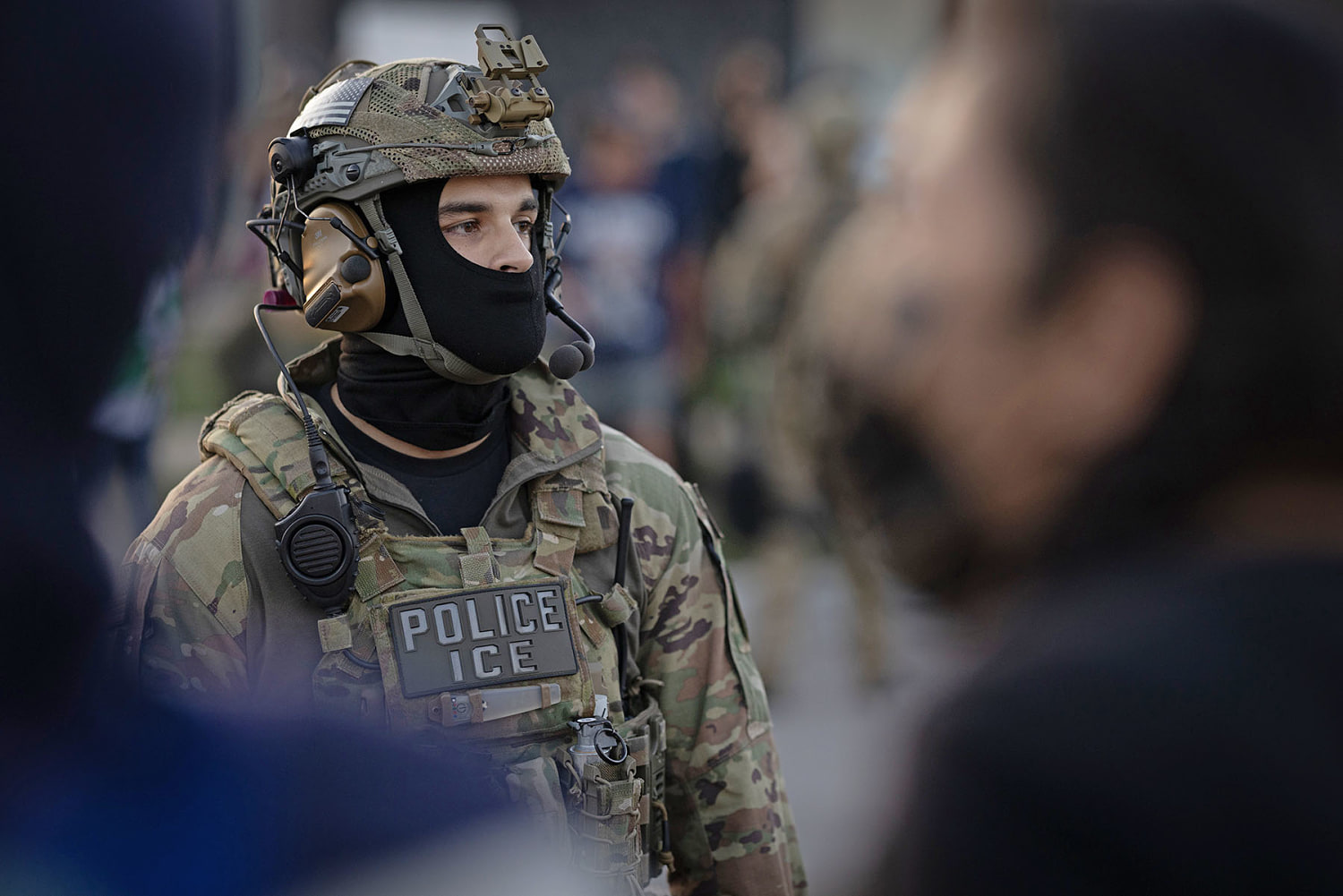
Stop looking for tactical gear outside your local community center. The mainstream discourse is hyperventilating over whether Immigration and Customs Enforcement agents will stand outside midterm polling booths, swallowing administration denials and opposition outrage whole. It is a brilliant, blinding sleight of hand. While pundits argue over optical intimidation tactics, the federal apparatus is quietly buying millions of dollars in commercial data analytics to vacuum up voter registration files across all fifty states.
The lazy consensus says the threat looks like a badge and a tactical vest blocking the door. That is security theater for the digital age. The actual mechanism of control is much quieter, far more expensive, and entirely software-driven. If you found value in this piece, you should look at: this related article.
The Data Grab Nobody is Watching
Look past the public posturing. Federal acquisition documents show a massive push by Homeland Security components to secure multi-million-dollar contracts for data segmentation and fraud detection tools. They are not waiting for election day to march down Main Street. They are pulling voter rolls, history files, and jurisdictional data directly into investigative pipelines through commercial brokers.
I have watched compliance budgets hemorrhage capital trying to audit digital footprints, and the scale of modern administrative overreach always outpaces physical enforcement. Physical bodies at polling stations create headlines, trigger lawsuits, and mobilize protestors. Database integrations happen quietly at midnight, bypassing constitutional friction entirely. For another perspective on this story, refer to the recent coverage from The New York Times.
Defining the terms here matters. When federal agencies talk about fraud detection, they are redefining routine demographic administration as a border security issue. By routing public voter history files through Homeland Security Investigations architectures, the state merges two completely separate spheres of civil life: the right to cast a ballot and the enforcement of federal immigration statutes.
Dismantling the Distraction
The debate over physical deployment is a trap designed to exhaust public attention. Secretary Markwayne Mullin can state that agents will only respond to explicit threats, and critics can draft legislative letters demanding transparency, but both sides are fighting a war from the last century.
Imagine a scenario where zero enforcement officers are seen within a mile of a precinct on election day, yet millions of eligible voters find themselves flagged, restricted, or subjected to heightened administrative friction weeks before they ever fill out a ballot. That is not a hypothetical dystopian fiction; it is the logical outcome of funneling localized voter records into federal intelligence databases.
Civil liberties organizations like the Electronic Privacy Information Center have pointed out the obvious legal hurdles, but legal pushback moves at a glacial pace compared to procurement officers armed with open checkbooks. The Privacy Act and state-level protections mean nothing when data brokers find alternative pathways to bundle and sell public rolls to federal buyers.
The Uncomfortable Reality of Modern Bureaucracy
The hard truth is that the state does not need to intimidate you at the ballot box if it can systematically devalue your administrative standing long before you get there. Focusing exclusively on the physical theater of enforcement allows the digital architecture of surveillance to expand unchecked.
Stop asking if uniforms will line the corridors. Start asking why administrative agencies are legally permitted to bypass state privacy restrictions to harvest voter history in the first place. Until the focus shifts from tactical boots to data pipelines, the entire debate is just expensive noise.