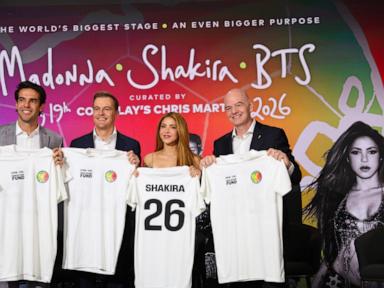
The feel-good machine is back in high gear. Global Citizen is pitching a World Cup halftime show as a "historic" catalyst for education funding. It is a predictable script: shimmering pop stars, emotional B-roll of children in remote villages, and a QR code blinking on a billion screens. They want you to believe that a twenty-minute medley of radio hits can fill the trillion-dollar void in global literacy.
It is a lie. Not a malicious one, perhaps, but a structural one.
When organizations use the world’s biggest sporting stage to "drive money" for social causes, they aren't solving problems. They are subsidizing the failure of nation-states while providing a cheap moral mask for FIFA—an entity with a track record that makes the Borgias look like choir boys.
The Halftime Illusion and the Cost of High-Production Virtue
The math of a World Cup halftime show is staggering, and not in the way the organizers hope you’ll notice. To stage a performance that rivals the Super Bowl on a global scale, the production costs alone will reach into the tens of millions. Security, logistics, lighting, and the "gift" of airtime represent a massive concentration of capital.
If the goal is truly education, why are we spending $50 million to ask the public for $5?
This is the Efficiency Paradox of celebrity-driven charity. I have sat in boardrooms where "awareness" is treated as a currency. It isn't. You cannot pay a teacher in sub-Saharan Africa with Twitter impressions. By the time the production company, the talent agents, the PR firms, and the logistics tiers take their cut, the actual "impact" per dollar spent is abysmal.
Global Citizen argues that the show creates a "movement" that pressures governments to commit funds. This is a fundamental misunderstanding of how sovereign budgets work. Governments don't fund education because Coldplay played a stadium in North America; they fund it because of long-term trade agreements, tax stability, and internal political pressure. The "halftime pledge" is the ultimate get-out-of-jail-free card for politicians. They make a non-binding commitment on a stage, capture the photo op, and then quietly de-prioritize the line item in the next fiscal quarter.
FIFA Does Not Need a Halo
Let’s be brutally honest about the partner here. FIFA is an organization that has faced relentless scrutiny over labor rights, corruption, and the displacement of local populations to build "white elephant" stadiums.
By inviting a humanitarian organization to produce the halftime show, FIFA isn't supporting education. They are buying an insurance policy against criticism. It is Sports-Washing 2.0.
When Global Citizen steps onto that pitch, they aren't just bringing pop music; they are bringing their brand equity to sanitize the event. They are telling the world, "It’s okay to ignore the migrant worker deaths and the backroom deals, because look—we’re helping kids learn to read."
It is a cynical trade. The humanitarian sector gets a massive platform, and the sporting body gets a halo. The losers? The actual causes, which become secondary to the spectacle.
The Trillion Dollar Literacy Gap vs. The Spare Change Model
The global education crisis is a systemic failure of infrastructure, not a lack of "awareness." According to UNESCO data, the annual funding gap for education in low and lower-middle-income countries is roughly $97 billion.
Compare that to the projected revenue of a halftime show. Even if every viewer donated the price of a coffee, you wouldn't even cover the interest on that deficit.
The "Spare Change" model of philanthropy—asking the middle class to donate while the billionaire class watches from the VIP boxes—is an insult to our intelligence. If Global Citizen wanted to move the needle, they wouldn't ask for your phone to scan a code. They would demand a 1% "Humanitarian Tax" on FIFA’s multi-billion dollar broadcasting rights and sponsorship deals.
But they won't do that. Because demanding a cut of the actual revenue would get them kicked out of the stadium. It is easier to ask the fans to pay twice: once for the ticket, and once for the guilt.
Why Awareness is the Enemy of Action
There is a psychological phenomenon known as Moral Licensing. When a person watches a high-energy performance and clicks a "commit" button on an app, they feel they have done their part. Their brain registers a win for humanity.
This feeling is the enemy of actual change. It creates a "slacktivism" loop where the energy required for real political agitation is bled off into a harmless, digital gesture.
- Scenario A: You are outraged that 250 million children are out of school. You write to your representative, you join a local advocacy group, and you track the foreign aid budget of your country.
- Scenario B: You watch a pop star sing about "One World" during the World Cup, you click a heart icon on your screen, and you go back to drinking your beer.
Global Citizen is built on Scenario B. It’s a model that prioritizes the experience of giving over the utility of the gift. I have seen the internal metrics of these "movements." They brag about "actions taken," but when you peel back the layers, an "action" is often just a retweet.
The Logistics of a Failed Promise
Education requires boring, long-term, unsexy investment. It requires:
- Teacher Salaries: Paying people a living wage to stay in rural areas.
- Physical Infrastructure: Buildings that don't collapse and have reliable electricity.
- Localized Curriculum: Not a one-size-fits-all Western digital platform.
None of these things look good in a three-minute video package during a halftime show. A halftime show demands "miracles." It wants to show a kid getting a tablet and suddenly becoming a coder. That isn't how education works. Education is a twenty-year grind.
By framing education as something that can be "solved" via a global concert, we are conditioning the public to expect quick fixes. When those fixes don't materialize—because, surprise, the tablets broke and there was no internet—the public becomes cynical. They stop giving entirely because "nothing ever changes."
The halftime show doesn't just fail to solve the problem; it actively poisons the well for future, more serious efforts.
Follow the Money: Who Actually Profits?
If you want to know the truth about an event, look at the vendors.
- Broadcasters: They get a boost in ratings for a time slot that used to be a bathroom break.
- Advertisers: They get to run "purpose-driven" ads that cost more and drive higher brand loyalty.
- Artists: They get a massive spike in streaming numbers and a "humanitarian" glow that helps their next tour cycle.
- NGO Executives: They get to network in the luxury suites with heads of state and tech moguls.
The children in the B-roll remain in the B-roll.
If this were a serious attempt at education reform, the show wouldn't be a concert. It would be a series of uncomfortable truths delivered to the people sitting in the front rows. It would be a demand for debt cancellation for developing nations so they can fund their own schools. It would be a demand for tax transparency.
But you can’t dance to tax transparency.
The Counter-Intuitive Reality of Global Giving
The uncomfortable truth is that the most effective way to help global education is through the most "boring" channels possible. It’s through multilateral organizations that have been doing the work for decades without needing a stage at the World Cup.
By diverting attention and funds toward a "Mega-Event" model, we are starving the quiet, effective programs that don't have a celebrity spokesperson. We are rewarding the loudest players, not the most efficient ones.
I’ve spent enough time around the "Philanthro-tainment" industry to know how the sausage is made. The budget for the catering at the VIP "Global Citizen" afterparty could likely fund a school in Malawi for a year. That isn't hyperbole; it is a line item.
Stop Clapping and Start Accounting
We need to stop being seduced by the scale of the spectacle. A billion viewers sounds like a lot, but if the conversion rate is negligible and the overhead is astronomical, the scale is a liability, not an asset.
If you want to support education, turn off the halftime show. Ignore the QR code. Find a local organization that builds schools or trains teachers and give them your money directly. Bypass the middleman. Bypass the production company. Bypass the "movement."
The World Cup halftime show isn't a bridge to a better world. It’s a billboard for an industry that has turned poverty into a performance.
The children waiting for an education don’t need a concert. They need the world to stop using their plight as a backdrop for a pop star’s ego and a sports organization’s PR strategy.
Stop clicking. Start demanding the money from the people who actually have it.
The halftime show is over. The bill is still due.